The Rotherham Legionnaires’ disease outbreak has resulted in two deaths, though investigators haven’t established whether the infection caused or contributed to either death. That distinction matters: the deaths are part of the investigation’s context, but the available findings don’t settle their relationship to Legionnaires’ disease. The UK Health Security Agency (UKHSA) says the source remains unknown and the risk to the public is low.
For residents, the combination of an unknown source and a low assessed risk can feel difficult to interpret. It means investigators haven’t linked the cases to a confirmed exposure, while the agency’s current assessment doesn’t indicate a broad danger to the public. That assessment may be reassuring, but it doesn’t answer where the patients encountered the bacteria.
Investigation has found no shared source
UKHSA identified the outbreak in September. The agency said there had been no further reported cases in the area since the beginning of October 2026, a gap that offers some reassurance while the investigation continues. It hasn’t disclosed how many people were affected, so the scale of the outbreak can’t be judged from a case total. Most patients were hospitalised and received medical care.
UKHSA Yorkshire and the Humber is working with Rotherham Council, local authority and environmental health teams, and the Health and Safety Executive. Investigators are interviewing patients and their families to reconstruct movements, look for shared locations and assess possible environmental water sources. These accounts can help investigators compare where people went and whether they may have encountered a common exposure. No common source has been identified, and no buildings have been closed.
The absence of a shared location doesn’t by itself identify what happened; it leaves investigators with a set of possible exposures to examine. Water systems can be complex, and an exposure may not be obvious to a patient after the fact. Here’s the thing: finding no common source so far is a description of the evidence to date, not proof that no environmental source existed.
Dr Andy Irvine, a consultant in health protection at UKHSA Yorkshire and the Humber, said the agency had provided relevant information to the coroner. He said it wouldn’t comment further while that process is ongoing. Irvine also noted that the source of Legionnaires’ disease isn’t found in a substantial proportion of cases. That point helps explain why an investigation may continue without producing a definitive account of where exposure occurred.
How the infection spreads
Legionnaires’ disease is a severe form of pneumonia caused by the bacterium Legionella pneumophila. People become infected by breathing in tiny droplets of contaminated water. The disease isn’t usually transmitted between people, so cases commonly occur in isolation, although outbreaks can happen. That pattern makes the search for an environmental exposure central to an investigation like Rotherham’s.
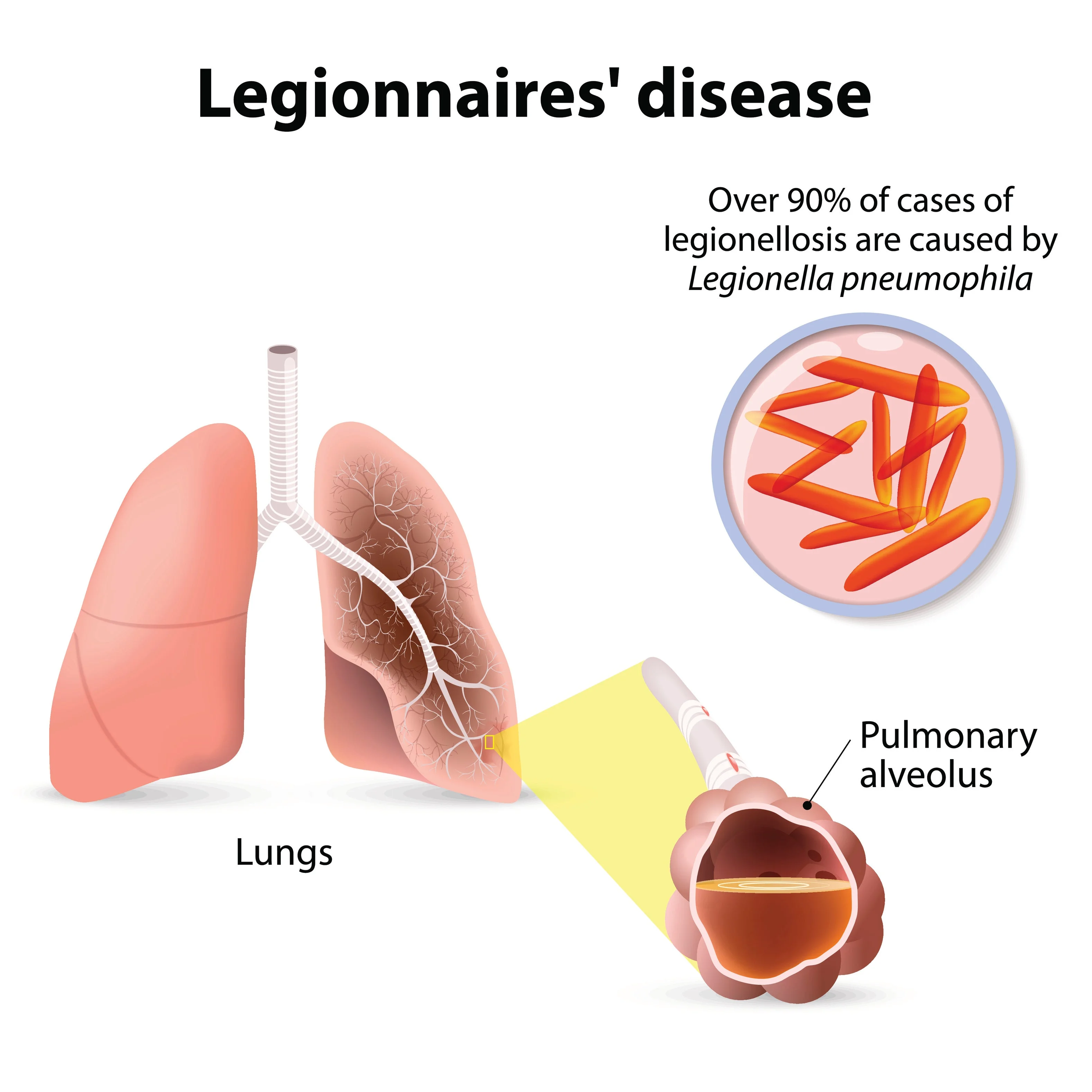
Legionella can grow in water systems such as air conditioning equipment, showers and taps that haven’t been properly installed or maintained. It multiplies to dangerous levels in standing water with nutrients at temperatures between 20 and 45C. Below 20C, the bacteria remain dormant; above 60C, they can’t survive. These conditions provide a general explanation of how the bacteria can persist in water systems, but they don’t establish that any particular system was involved in Rotherham.
The illness mainly affects people over 50 and is more common in men, although anyone can be affected. Symptoms can include muscle aches, tiredness, headaches, a dry cough and fever. They typically begin two to 19 days after exposure, with an average incubation period of six to seven days. That delay can make it harder to reconstruct where exposure happened, since patients may have visited several places before feeling unwell.

Treatment and public health context
Doctors routinely treat Legionnaires’ disease with antibiotics, though patients may need hospital care. Anyone with flu-like symptoms including muscle aches, tiredness, headaches, a dry cough or fever can contact NHS 111 or their GP for advice. Because those symptoms can occur with other illnesses, the guidance points people toward clinical advice rather than asking them to identify the cause themselves.
UKHSA recorded 472 Legionella cases in the UK in 2024. That figure gives national context, but it doesn’t show how many people were affected in Rotherham or explain the source of this outbreak. The Rotherham investigation is continuing, with the next step being to determine whether patients’ movements point to a shared exposure.
What the findings mean for residents
This is more significant than it looks: the investigation has a clear public health question to answer, but no confirmed source to point to yet. Interviews and environmental enquiries can narrow the possibilities, though the agency’s own account indicates that some cases never have an identified source. And this is the part most people overlook: the lack of a confirmed source doesn’t mean investigators have stopped looking.
If you’re working in this space, the Rotherham case illustrates why outbreak reports can remain provisional even after health agencies have identified a cluster. Investigators need to compare patient histories with possible environmental exposures, and the time between exposure and symptoms can complicate those comparisons. For residents, UKHSA’s stated assessment remains that the risk to the public is low, while the cause of the outbreak is unresolved. More questions than answers, for now.

