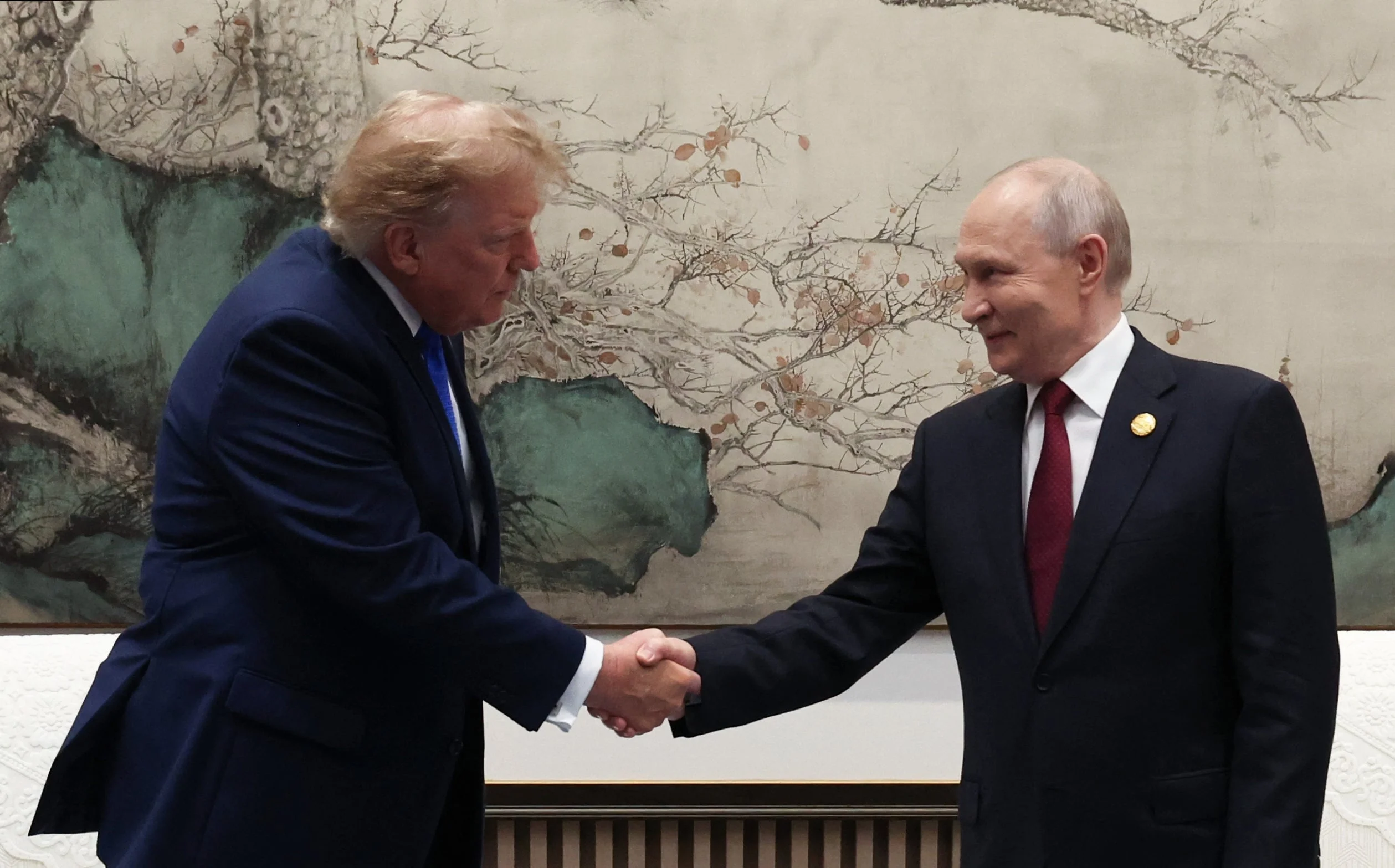
The most consequential image from the Shenzhen summit may have been Donald Trump greeting Vladimir Putin as a friend. The most consequential document was quieter: a three-leader statement that offered familiar language on nuclear risk, but no agreement to reduce arsenals or limit warheads.
That gap captures the tension in Trump’s approach. He has spent decades presenting himself as a would-be dealmaker on nuclear weapons. Yet his public warmth toward Russia’s leader—and the summit’s modest written result—left little evidence that personal rapport had produced progress on the arms control issue he has long said he wants to tackle.
A striking greeting, and an unusual setting
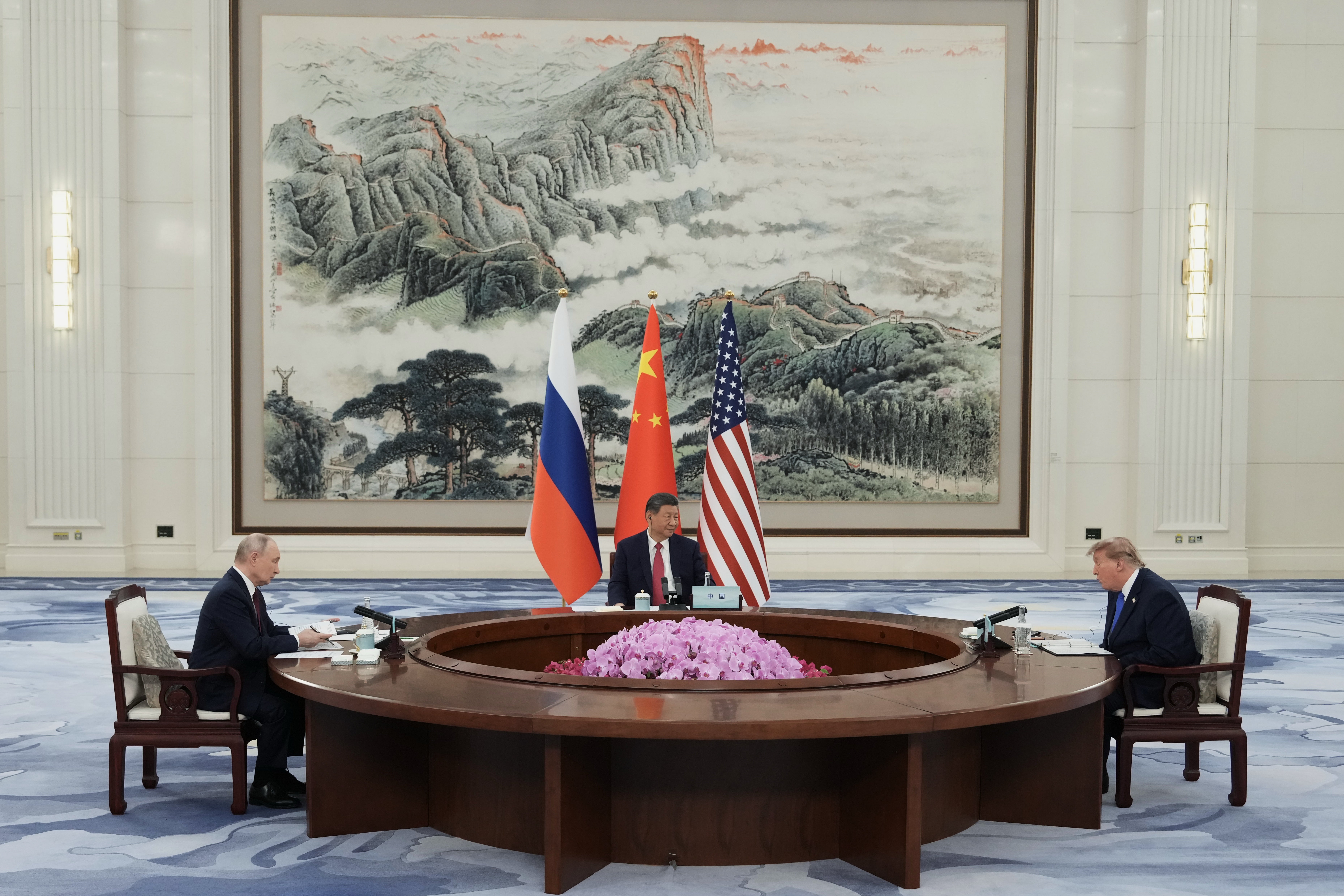
Trump and Putin met in Shenzhen on Thursday, on the sidelines of the Asia-Pacific Economic Cooperation Summit. It was their first meeting since a turbulent summit in Anchorage, Alaska, just over a year earlier. The day also brought together the leaders of the United States, Russia and China for the first trilateral summit of its kind.
When Trump arrived for the hastily arranged bilateral meeting, he pointed toward Putin and jokingly asked, “Who is he?” Then he answered with a smile: “He’s my friend!” The exchange was playful, but its setting gave it weight. Putin leads a country at odds with the United States on major security questions, and his government has sharply curtailed political freedoms at home.
The scene stood out because American presidents have generally had to navigate difficult relationships with Moscow and Beijing, shaped by nuclear rivalry and decades of geopolitical conflict. Sharing a stage with both leaders made the usual diplomatic balancing act more visible. Trump, however, appeared at ease.
Trump has shown similar comfort with leaders whose power is concentrated in their own hands, including Saudi Crown Prince Mohammed bin Salman and North Korea’s Kim Jong Un. His relationships with Recep Tayyip Erdogan of Turkey and Hungary’s Viktor Orban have also fit that pattern, as have his dealings with Putin and China’s Xi Jinping.
My read is that Trump finds the direct exercise of power easier to work with than democratic politics, where leaders face competing demands and constraints. That preference may help explain the easy tone in Shenzhen. It also raises a practical question: can personal familiarity deliver results when the interests at the table remain far apart?
A long-running ambition to negotiate nuclear limits
Nuclear weapons have been a recurring subject in Trump’s public remarks since the 1980s. In 1984, he told The New York Times that conversations with his uncle, MIT professor John Trump, had shaped his fear of nuclear war. That November, he told The Washington Post he wanted to lead U.S. arms negotiations with the Soviet Union.
Trump argued that a negotiator should know how to make a deal. “It would take an hour-and-a-half to learn everything there is to learn about missiles. I think I know most of it anyway,” he said. He also recalled being urged by his friend and lawyer Roy Cohn to pursue the role.
In 1986, cardiologist Bernard Lown, who shared the 1985 Nobel Peace Prize for campaigning against nuclear war, said Trump had told him he would ask Ronald Reagan to appoint him “a plenipotentiary ambassador for the United States with Gorbachev.” Lown said Trump believed that, if Reagan trusted him, “within one hour the Cold War would be over.” Trump later told writer Ron Rosenbaum that he was dealing with the Reagan White House on nuclear matters at a high level. He never received such a negotiating role.
He did get the chance to shape U.S. policy during his first presidency. His administration declined to extend the New START treaty, the last agreement capping U.S. and Russian nuclear arsenals, unless China joined a broader deal. Beijing refused. At talks in Vienna in June 2020, U.S. envoy Marshall Billingslea posted a photo of empty seats marked with Chinese flags and wrote, “China is a no-show.” China called the proposal “unserious, unprofessional and unappealing.”
Joe Biden extended New START without China in 2021. The treaty lapsed in February after Trump declined Moscow’s offer to renew it. Less than a month into his second term, Trump told reporters that he wanted to meet Xi and Putin and propose: “Let’s cut our military budget in half.”
Talk of risk, without a deal to cut arsenals
Before the Shenzhen summit, a senior U.S. official described it as “the first conversation” and said the administration did not expect an agreement. China’s foreign ministry said trilateral arms control talks would be “neither fair, reasonable nor realistic.” Those signals pointed to the limits of what the meeting could achieve.
The joint statement, titled “Declaration toward Peace,” did not mention arms reductions, treaty commitments or limits on warheads. Its nuclear section said the three countries “reaffirmed that a nuclear war cannot be won and must never be fought” and would “conduct a dialogue on reducing nuclear risks and preventing the proliferation of nuclear weapons.”
That language matters as a shared statement of principle, but it falls well short of the reductions Trump had said he wanted to discuss. Its central formulation has a long diplomatic history: Ronald Reagan and Soviet leader Mikhail Gorbachev used similar words at their November 1985 Geneva summit. Russia and China later joined Britain and France in repeating the formulation in January 2022.
Here’s the thing: a trilateral meeting among the leaders of the United States, Russia and China creates an opening for nuclear diplomacy, but a joint declaration alone can’t establish that the three governments are ready to negotiate limits. Shenzhen produced a commitment to keep talking and a familiar warning about nuclear war. The next measure of Trump’s decades-long ambition will be whether those conversations produce concrete proposals on the arsenals themselves.

