As Turkey hosts COP31, plans to expand coal power at Afşin-Elbistan sharpen questions about its climate commitments and residents’ health concerns.
A coal plant at the center of Turkey’s climate test
The human cost of Afşin-Elbistan is hard to separate from the political question facing Turkey as it hosts Cop31. Omer, a longtime worker who lives near the plant in Kahramanmaraş, says three of his brothers died in recent years: two from lung cancer and one from chronic obstructive pulmonary disease, or COPD. Another brother has COPD and asthma. Omer says there was no family history of those illnesses; his father, born in the same village, lived to 97.
“I believe working at this plant killed them,” Omer says, pointing toward its chimneys. “And I’m not going to see 65, I know that.”
The plant’s smoke hangs over the plateau, where residents describe the air as dry and heavy. Its emissions rise in large columns through the day, and some say they continue at night. The claims are serious, though the evidence available in the area is incomplete: no official health study has been commissioned, and restricted access to information makes it difficult to establish a direct link between the plant and residents’ illnesses.
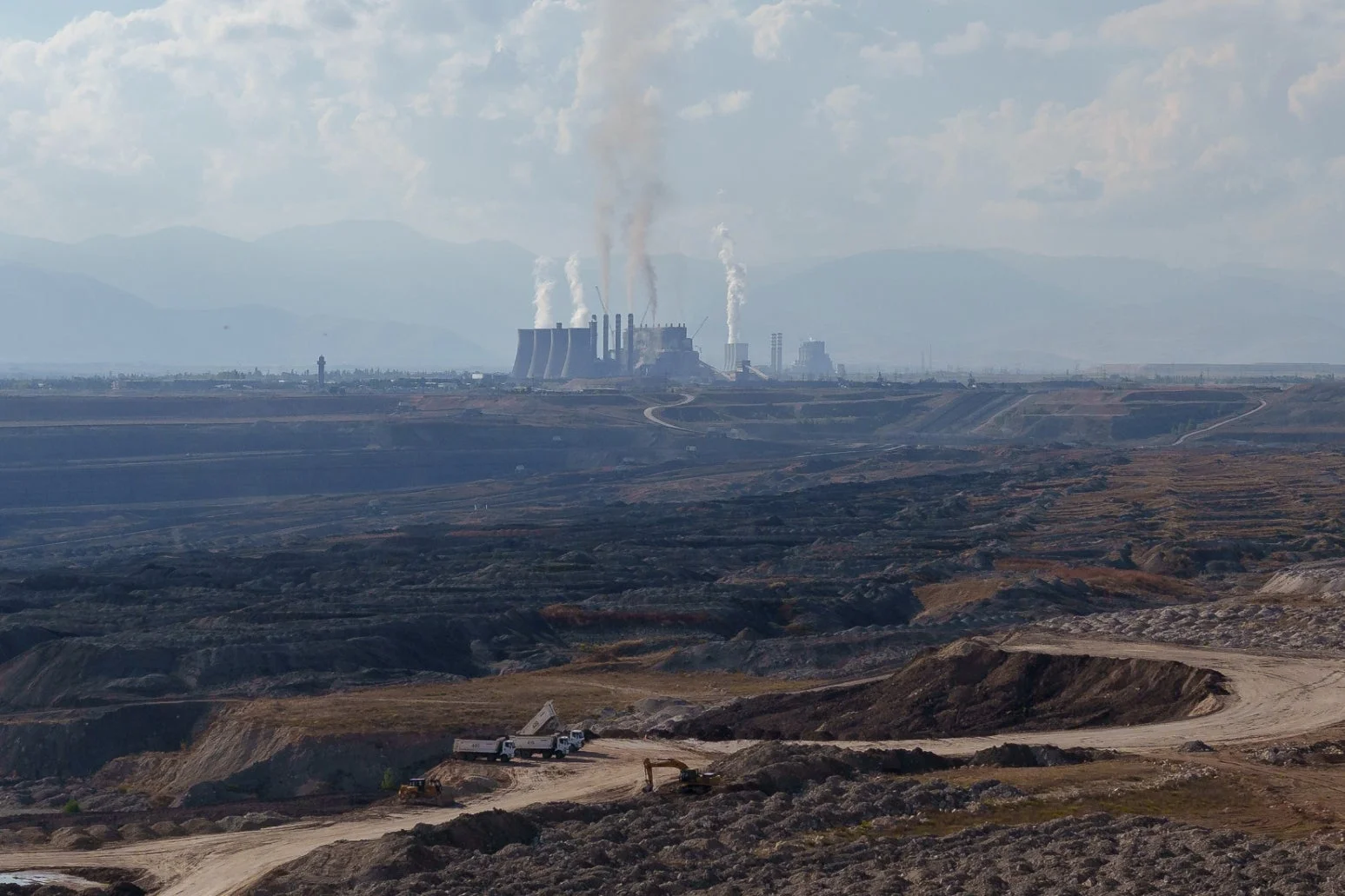
*An open-cast coal mine near Elbistan, with the Afşin-Elbistan station in the distance. (Liz Cookman)*
Turkey is preparing to welcome world leaders to Antalya for Cop31. The summit has an unusual arrangement: Australia will lead formal negotiations, while Turkey says it wants to turn existing commitments, including the Paris Agreement, into measurable policy. At the opening, leaders called for faster action amid a year marked by climate-driven disasters. A UN report released that day said the year was on course to rank among the four hottest on record.
“A drought in one part of the world is felt at the dinner table in another,” said Turkish president-designate Murat Kurum. UN climate chief Simon Stiell said progress had been “nowhere near fast enough,” and warned that fossil-fuel price shocks had hit households and fuelled inflation.
Kurum, Turkey’s minister of environment, urbanisation and climate change, has cast Antalya as an “Implementation Cop,” focused on electrification, waste reduction, climate finance and green industry. He also set a voluntary global goal: electricity should meet 35 per cent of energy needs by 2035.
Here’s the contradiction. Electricity currently accounts for about 22 per cent of Turkey’s total final energy consumption, while coal supplies just over a third of its electricity and gas almost another quarter. Turkey is Europe’s largest producer of coal-fired electricity. Climate Watch describes its dependence on coal as high, and it remains the only OECD member that has not banned permits for new coal plants.
Critics say the country’s domestic energy choices undermine its climate message. Ankara continues to invest in oil, coal and gas without a credible phase-out plan. It is also pursuing expansions at Afşin-Elbistan and at the smaller Cenal plant near Çanakkale, which could burn substantially more coal.
Residents describe illness and a town in decline
More than a dozen people living near Afşin-Elbistan questioned Turkey’s climate credentials, saying they believe the plant contributes to cancer, breathing problems and cardiovascular illness. Many residents declined to speak publicly for fear of reprisals, since the plant is now the area’s main employer. The names of some interviewees have been changed to protect them.
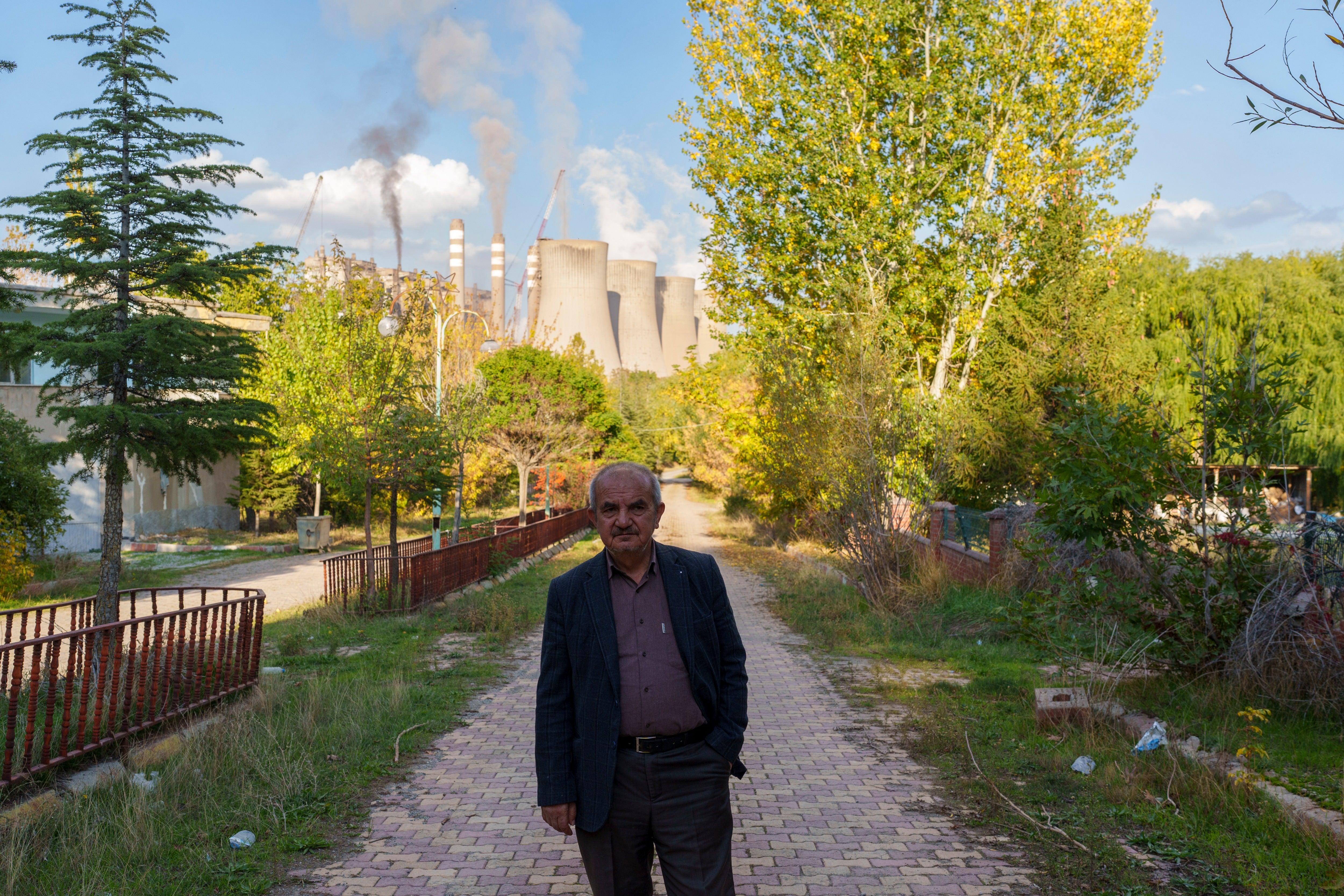
*Local campaigner Mehmet Dalkanat in Çoğulhan, with the plant’s chimneys behind him. (Liz Cookman)*
Dr Mehmet, who has worked at a hospital in the Elbistan area for 15 years, says respiratory problems account for 70 per cent of the patients he sees. Many are children or pregnant women. He describes frequent persistent coughs, breathing difficulties, mucus, high blood pressure and heart palpitations. He says the volume of cases, their appearance among young people and their apparent concentration in this area stand out. In his experience, some patients develop problems after moving there, while symptoms seem to ease for those who leave.
He attributes the pattern to oxidative stress from toxic emissions, but without a formal study the cause remains unconfirmed. “Whatever comes out from those chimneys goes straight into your lungs and stays there for a long time until your body can’t take it anymore,” he says. “We have a population of 140,000 people and it’s like they’re forcing everyone here to chain-smoke. It’s really a horrible place.”
The Afşin-Elbistan complex consists of two stations. Plant A began operating in 1984; Plant B opened in 2006. Plant A was ordered to close in 2020 because it lacked legally required pollution controls. Kurum allowed two of its four units to reopen five months later.
Plans to add two units to Plant A, increasing capacity by 688 megawatts—enough to serve an estimated 500,000 to 700,000 additional homes—were proposed two years after that. Residents say the plant has harmed health, water supplies and farming, and that thousands of people have left the area.
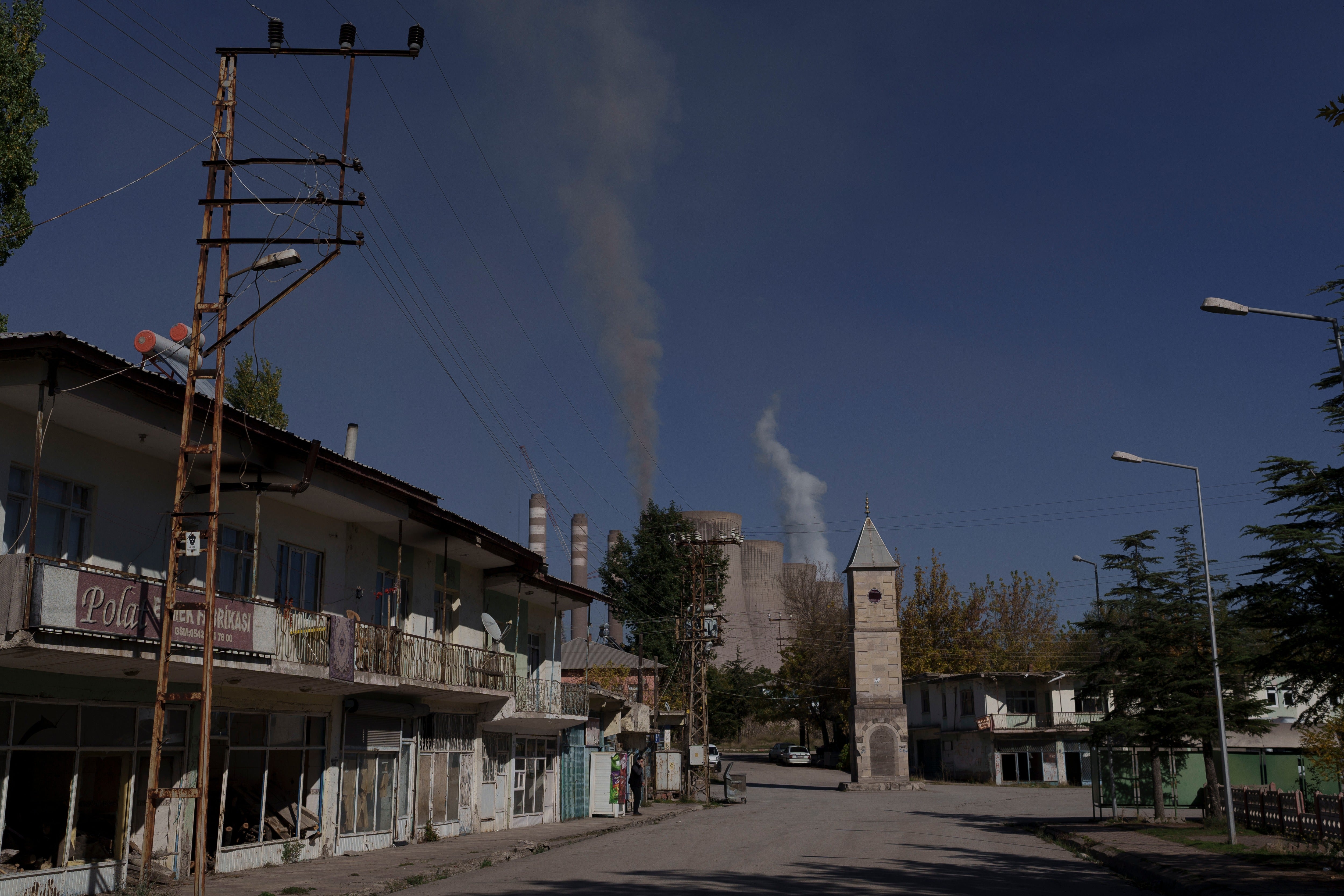
*Businesses and homes in Çoğulhan, near the station. (Liz Cookman)*
A 2022 analysis commissioned by Greenpeace Mediterranean estimated the expansion could cause about 1,900 premature deaths. A later Human Rights Watch report said that, despite early warnings of an expected “cancer explosion,” the government “has failed to monitor and reduce the harm.”
The expansion received approval in 2024. A court overturned that decision in July this year, ruling that the project’s effects on health and the environment had not been properly assessed. The government and plant operator, Celikler Holding, have appealed. They are continuing to pursue the project as Turkey hosts Cop31 a few hours’ drive away.
Duygu Kutluay, a campaigner with Beyond Fossil Fuels, calls the push for electrification alongside new coal capacity a “fundamental contradiction.” Afşin-Elbistan, she says, is a public-health and environmental issue as much as an energy-policy debate. Turkey could use its role as host to commit to no new coal, speed up renewable energy and support a fair transition for workers and communities. Instead, she says, domestic energy decisions risk undermining the country’s climate ambitions.
The coal plans extend beyond this region. In Adana, proposals would increase coal mining by almost half; the Cenal expansion in Çanakkale would raise generating capacity by almost 80 per cent. Mining also continues in Zonguldak, where a long record of fatal accidents includes a methane explosion last month at a private mine in Gelik that killed three miners and injured five.
Human Rights Watch has also raised concerns about the treatment of environmental campaigners ahead of the summit. [Rights groups accuse the government of arbitrarily arresting and prosecuting climate activists and people involved in environmental protests](https://www.hrw.org/news/2026/10/13/turkiye-cop31-host-curbs-environment-defenders).
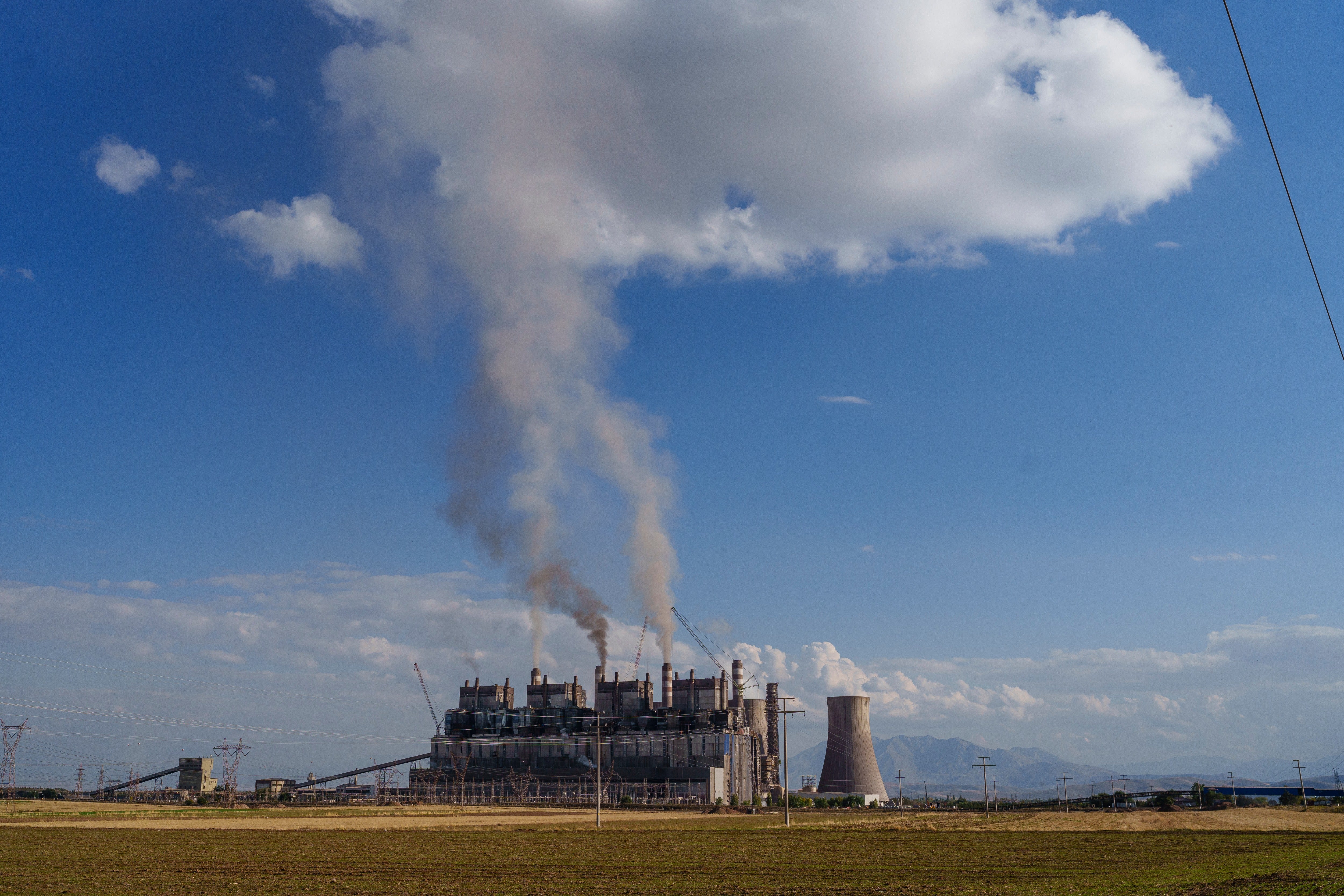
*Part of the Afşin-Elbistan station. (Liz Cookman)*
Deniz Bayram, an assistant researcher for Europe and Central Asia at Human Rights Watch, says data from Turkey’s air-pollution monitoring system, combined with satellite information, points to “dangerously high levels of air pollution in the area surrounding the plant.” During the 2023 earthquakes, which killed more than 50,000 people, damage forced the power stations to shut for much of the year. Bayram says air-pollution levels fell sharply while they were offline.
Plant A operated for decades without the technology needed to reduce harmful emissions, Bayram says, and she calls the government’s appeal of the expansion ruling “disappointing.” She points to research suggesting Turkey could phase out coal by 2030 while maintaining its existing development indicators. Hosting Cop31, she says, gives the country a chance to send a clear message.
“Talking is easy. Now let’s act.”
For local campaigner Mehmet Dalkanat, 71, the effects go beyond illness. Before Plant A was built, he says, fertile land supported wheat, barley, chickpeas, beans and lentils. Now more than a thousand large pumps draw groundwater to dry coal deposits for mining. Dalkanat says the pumping has dried natural springs and left the land parched.
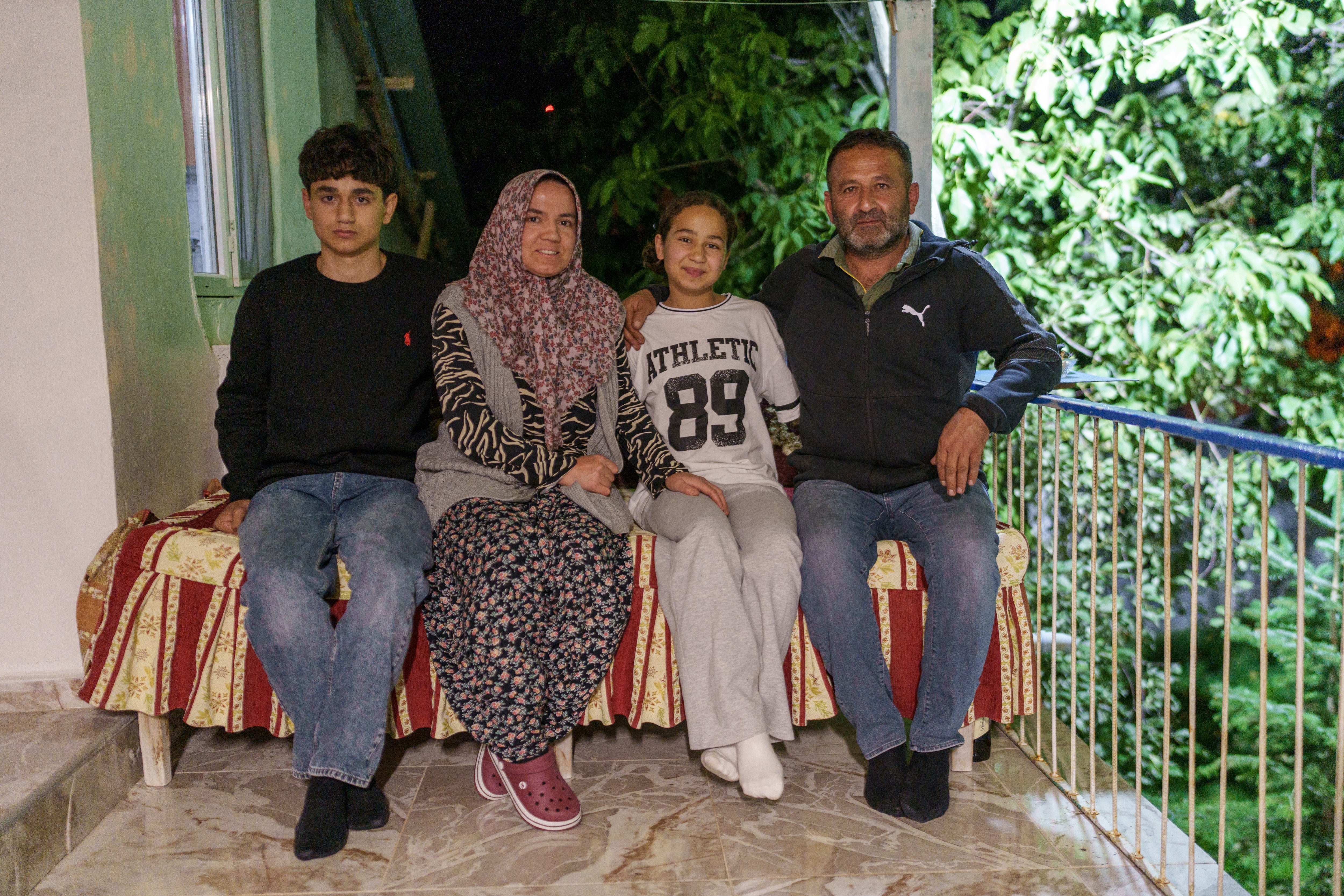
*Cuma with his family; his son had leukaemia as a child. (Liz Cookman)*
Dalkanat says Çoğulhan, once a prosperous town of 11,000, has shrunk to perhaps 300 or 500 residents, many elderly, impoverished or with nowhere else to go. The abandoned municipal building, empty shops and derelict homes make the decline visible. He describes the settlement as a ghost town where illness has touched everyone.
Cuma, a construction worker in his forties, believes the plant’s emissions caused his son’s leukaemia. He says tests found no genetic cause and that an unusual number of children in the area were diagnosed with disease. Coal-plant pollution can contain carcinogens such as benzene, which has been linked to leukaemia; the cancer affects just under five in every 100,000 children each year. Cuma’s son recovered, but he says two other children in the settlement died of leukaemia around the same time.
“This country is talking a lot, but it doesn’t actually do anything,” Cuma says. “You saw what’s going on here – everyone knows this plant is killing us and that we don’t want it here. Now let’s act.”
Celikler Holdings and Turkey’s ministries of Energy and Environment, Urbanisation and Climate Change did not respond to requests for comment.

