The FAA’s nationwide halt on US departures is creating uncertainty for UK–US travel, with three Virgin Atlantic flights scheduled to leave Manchester for the United States on Saturday morning potentially affected if the ground stop remains in place. For passengers, the uncertainty is practical as well as technical: a restriction on US departures can disrupt the arrival plans of flights originating abroad, even when those flights are not taking off from a US airport.
The FAA ordered the pause, citing “extraordinary circumstances and for reasons of safety.” Virgin Atlantic said it was monitoring the situation and assessing the effect on its schedule, and advised customers to check their flight status on the airline’s website. That guidance reflects a familiar problem during fast-moving disruptions: an airline may not be able to give passengers a firm answer until it knows how long the restriction will last and which services it affects.
For anyone due to travel, the immediate priority is to check the airline’s latest information before heading to the airport and again before departure. A flight listed as scheduled can still be affected by changes to the destination airport’s operations, while a delay can have knock-on effects for connections and onward plans.
Communications failure prompts nationwide pause
US Transportation Secretary Sean Duffy said the FAA was investigating a communications failure that affected regional air traffic control facilities, according to the Associated Press. Homeland Security Secretary Markwayne Mullin said the outage was telecommunications-related and that officials had no indication of a deliberate attack. The statements identify the reported category of problem, but they don’t explain its precise cause, duration or the systems involved.
That distinction matters. Air traffic control depends on reliable communications among facilities and aircraft; when a failure affects those links, officials may restrict operations while they assess what remains available. The pause is a precautionary response to uncertainty about safe coordination, not a public finding that aircraft were in immediate danger.
Mullin said aircraft already in the air would be handled case by case, with incoming flights prioritized as they arrive. He also said all flights were accounted for and urged the public not to fear for passengers’ safety. In practice, handling aircraft individually gives controllers room to manage different routes and circumstances as they arise, while the departure freeze limits additional traffic entering a system under review.
Airlines brace for schedule disruption
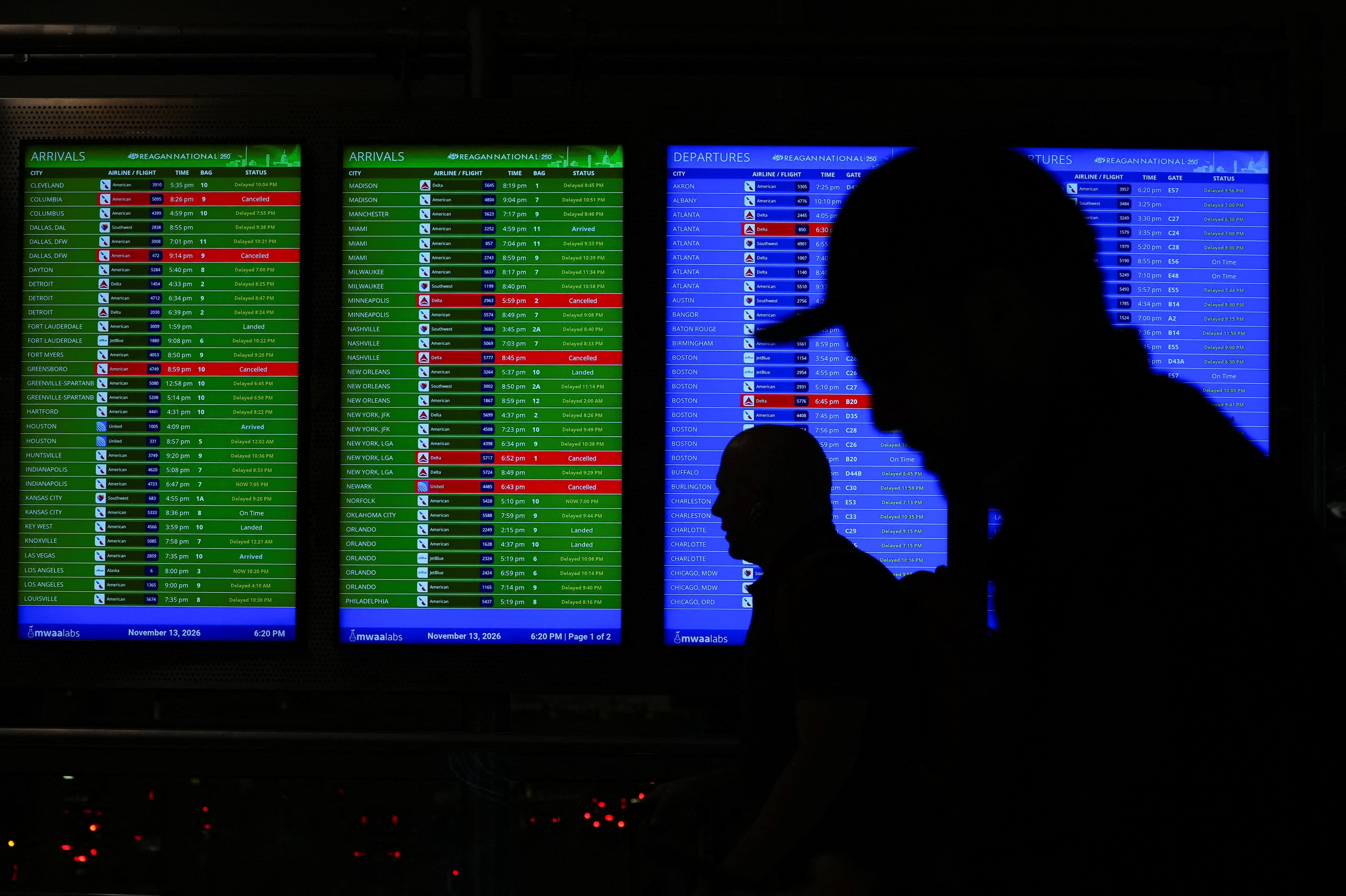
American Airlines said departures had been paused across the country, while flights already airborne could continue to their destinations. The carrier expected disruption for the rest of the day, depending on how long the FAA restriction lasted, and said it would work to move customers once departures resumed. That leaves the scale of the disruption tied to a key unknown: how quickly the agency can restore normal operations.
When departures stop across a large network, the effects can extend beyond the period when the restriction is formally in force. Aircraft and crews may be out of position, and passengers may miss connections even after flights begin operating again. These are common pressures during widespread interruptions, though the source doesn’t establish how much they’ll affect this particular episode.
For Virgin Atlantic’s Manchester services, the immediate question is whether the ground stop remains active when each flight is due to leave and whether operations at its US destination can receive it. If you’re working around a US connection, keep checking both the airline’s flight status and any updates to the rest of your itinerary. (And this is the part most people overlook: a flight’s departure time alone doesn’t tell you whether the onward journey is still workable.)
What the earlier shutdown tells us
A nationwide US flight freeze of this scale has happened once before since the September 11 attacks: in January 2023, when a system error led the FAA to halt flights. That precedent gives this event a point of comparison, but it doesn’t establish that the current outage has the same cause or will follow the same course. The source identifies a communications failure and an investigation, not a confirmed technical explanation.
The numbers here are underwhelming in one sense: the source identifies three Manchester departures at risk, but offers no broader count of affected flights or passengers. The wider significance lies in how quickly a problem at air traffic control facilities can reach international travel schedules. This is more significant than it looks. A pause designed to protect safe operations can still leave airlines, airports and travelers waiting for clarity across several stages of a journey.
For now, the outcome depends on how quickly the communications problem is resolved and the ground stop lifted. Until then, airlines can share status updates and rebook customers when departures resume, but they can’t promise a stable schedule while the FAA’s restriction remains in place. The immediate story is uncertainty; the next useful information will be whether normal departures can restart and how carriers manage the resulting backlog.

