David Walliams has cut £1.45 million from the asking price of his north London home after it spent five months on the market. The four-bedroom property is now listed at £10.5m, down from £11.95m when it went up for sale in June. That’s a substantial adjustment in cash terms, though the revised figure still places the house at the top end of the residential market.
The reduction follows a period in which the property has been available without a sale being reported. A lower asking price can be a way to attract fresh attention after an initial listing fails to find a buyer, though it doesn’t by itself establish why a home hasn’t sold. There’s no evidence in the information available here that the change is connected to the allegations facing Walliams.
The price reduction comes as Walliams faces allegations of sexually inappropriate behaviour from women, including two who say they were groomed when they were 15. Walliams denies wrongdoing and says he has not broken the law. Those allegations and his response are separate from the property listing, but their timing means the sale is taking place amid heightened public scrutiny of the entertainer.
A period home with modern technology
Estate agent Marcus Parfitt describes the gated, white stucco-fronted house as occupying a sought-after north London position. The property extends to about 4,527 square feet (421 square metres) across several levels. That scale, along with the period exterior and private entrance, gives the listing a profile aimed at buyers seeking a substantial London home rather than a standard family property.
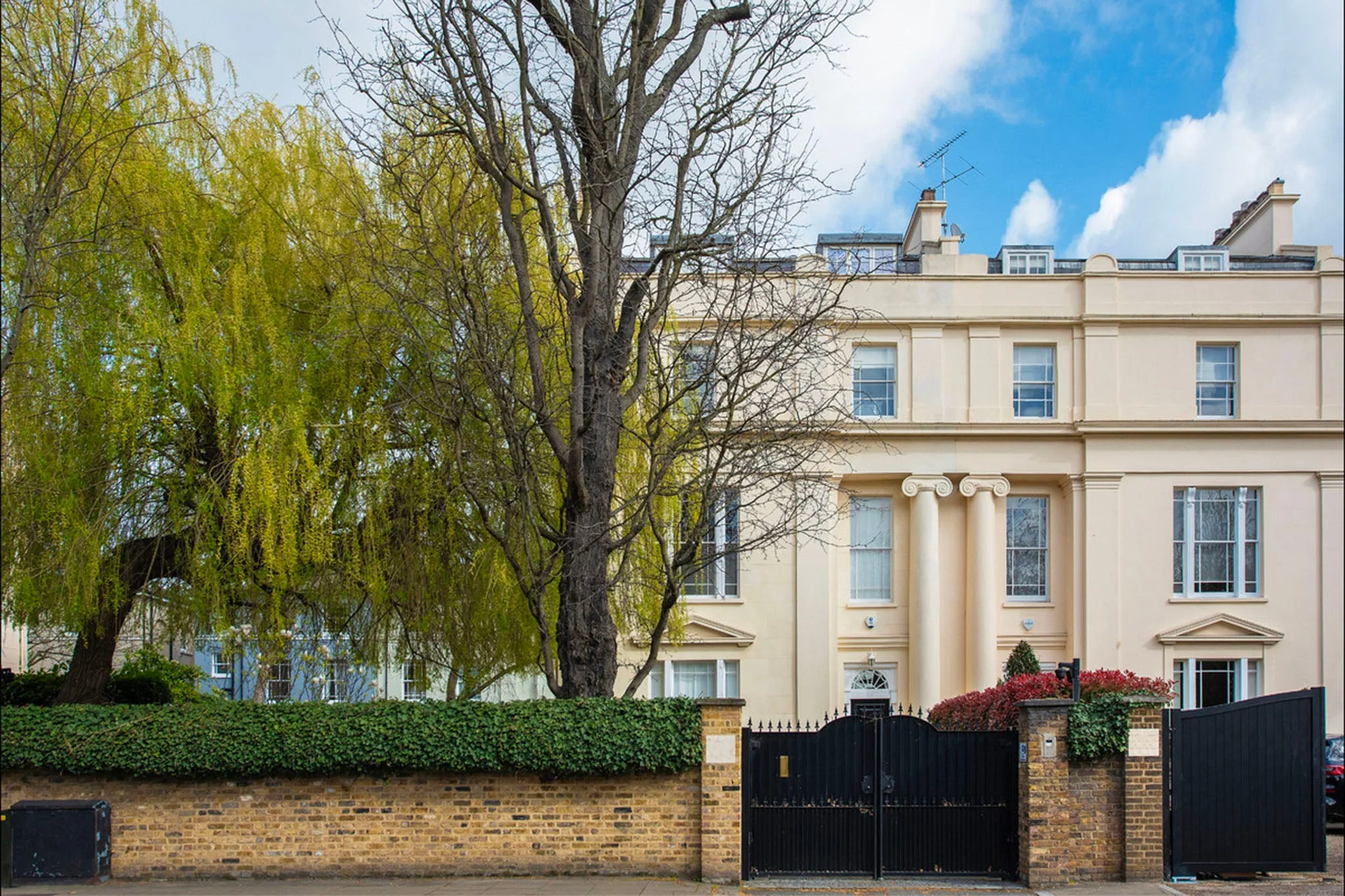
The listing says the home was refurbished and extended by its current owner over the past five years, combining period details with what the agent calls “21st-century technology throughout”. The description points to a familiar selling proposition in older homes: retaining architectural features while updating the systems and layout for present day living. The phrase “21st-century technology” is the agent’s characterization; the listing details supplied here don’t specify the equipment involved.
Photographs show sash windows, fireplaces, white walls and monochrome images and film posters. The images suggest a restrained presentation that puts the building’s period character alongside a contemporary interior. But photographs and marketing language can only show part of a home; they don’t establish how a prospective buyer will value its condition, technology or layout.
Property records show the house sold for £8.45m in 2013. That provides a past sale price for comparison, but it doesn’t explain the current asking price or indicate what a buyer might pay today. Asking prices are seller expectations, and the reduction shows that the initial figure has been revised after the house remained available for five months.
Walliams denies allegations
Walliams has been identified as the public figure who took legal action against two media organisations to prevent publication of allegations about him. One woman, identified as Jade in an investigation, said she met Walliams in August 2007, when she was 15 and he was 36. She alleged that after he invited her to his home, she experienced what she described as “sexual assault” and “grooming”.
A second woman alleged she had sex with Walliams when she was 17 and said: “I think I was groomed. 100 per cent.” The accounts are allegations attributed to the women. Walliams has denied wrongdoing, and the material provided here doesn’t establish the allegations as fact.

Walliams told journalists he was not a sexual predator and had not broken the law. He said he had sometimes acted thoughtlessly in casual sexual relationships and regretted not always taking others’ feelings into account. He also said that while fame creates a power imbalance, he had never abused that power.
His remarks acknowledge that fame can affect personal relationships, while rejecting the claim that he abused that position. The women’s allegations and his denial remain in direct dispute. That distinction matters: a public account of allegations, a response from the person named, and a property transaction are different kinds of information, even when they converge in the same news story.
What the price cut tells readers
The price change is the clearest development in the home’s sale. A reduction of £1.45 million is large enough to reset the listing’s headline figure, but the article offers no indication of buyer interest, negotiations or the seller’s reasons. The numbers here are underwhelming as evidence of a wider property trend: one listing can show that its asking price changed, but it can’t tell us what is happening across the market.
If you're working in property, the more useful signal is the gap between the original ask and the revised one, alongside the five months on the market. And this is the part most people overlook: a price cut records a change in strategy, not a completed sale or proof that a buyer has emerged.
This is more significant than it looks as a story about public scrutiny, though its limits are clear. Walliams’ home is being marketed while serious allegations are being reported and denied; the available facts don’t show that one caused the other, or that the listing price reflects either. For now, the house returns to the market at £10.5m, and the allegations remain contested.

