TG Limcaoco’s five years leading the Bank of the Philippine Islands (BPI) leave a clear imprint: a much larger bank, a broader customer base and a stronger push to bring basic services closer to Filipinos. He is due to step down as president and CEO in April 2027, with consumer banking chief Maria Cristina “Ginbee” Go set to succeed him as BPI’s first female CEO.
Limcaoco will stay on the board and take on other senior roles in the Ayala Group. His departure marks a transition at the country’s oldest bank, but he is hardly leaving BPI behind. Before becoming CEO in 2021, he led BPI Capital and BPI Family Savings Bank, then served six years as Ayala Corporation’s chief financial officer.
A larger bank, with more customers
The figures capture the scale of BPI’s growth during his tenure. Annual net income climbed from P23.88 billion in 2021 to P66.62 billion in 2025. Assets rose from P2.42 trillion at the end of 2021 to P3.9 trillion by September 2026, while the customer base more than doubled to over 19 million. The 2024 merger with Robinsons Bank helped drive that expansion.
Growth alone doesn’t explain Limcaoco’s approach. He has been unusually willing to discuss the mechanics of banking in public, translating subjects such as bank secrecy and reserve requirements into direct answers. When asked why BPI made transfers free, he pointed to new central bank rules that would have allowed a charge of only around P1.50. “You’re just needling the customer,” he said.
BPI became one of the first major commercial banks to permanently waive fees for InstaPay and PESONet transfers. The move also made commercial sense: removing a small friction point could help retain customers and attract new business.
Taking services beyond branches
The same customer-first calculation shapes BPI’s agency banking program. Customers can open accounts, deposit and withdraw money at participating supermarkets and convenience stores, often without a fee. BPI, in turn, can reach customers while avoiding some of the expense of building branches and installing ATMs.
“Our philosophy is, if you cannot come to the bank, we will bring the bank to you,” Limcaoco told McKinsey in a March interview.
Bangko Sentral ng Pilipinas Deputy Governor Bernadette Romulo-Puyat has followed the program closely and praised his efforts to widen access. “Ang galing ni TG (TG’s great),” she told Rappler in a recent conversation about financial inclusion. “My experience with him, he was really looking for ways to help give everybody a bank account. He’s made it so simple.”
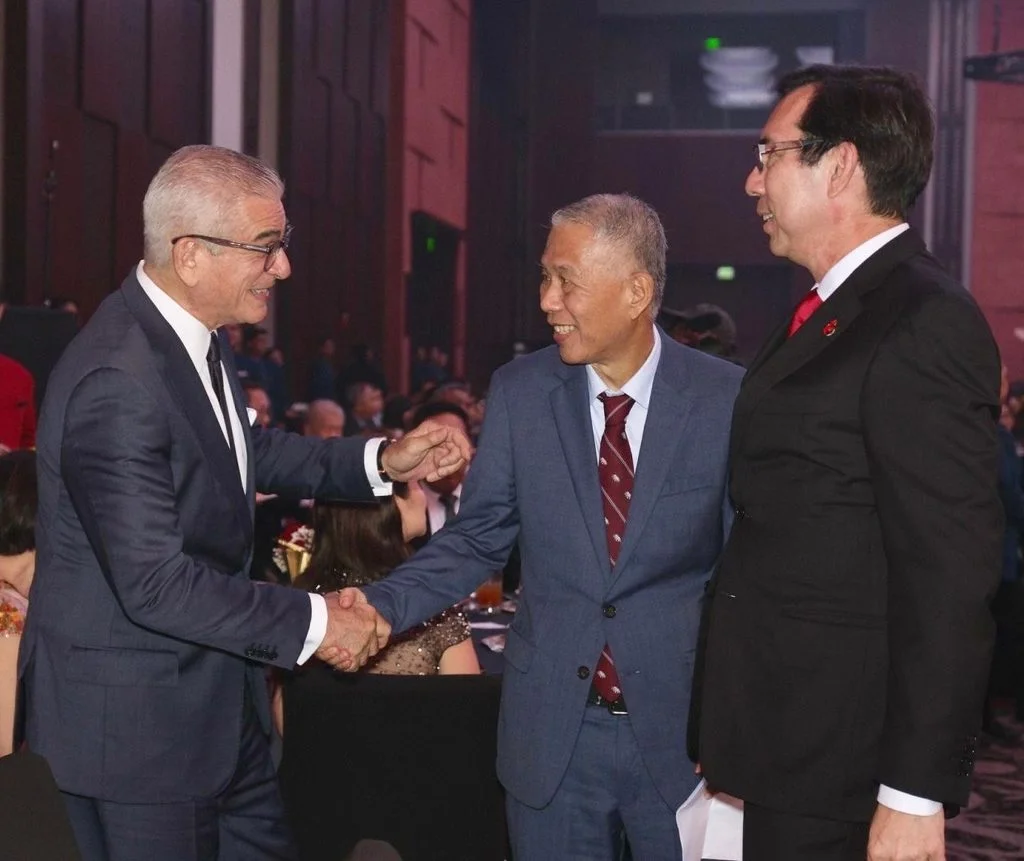
That focus also framed Limcaoco’s remarks at BPI’s 175th anniversary gala in October. Chairman Jaime Augusto Zobel de Ayala credited him with bringing “real dynamism” to the bank and welcomed its next chapter under Go. Limcaoco looked further ahead, wondering what banking might be like when BPI reaches its 200th anniversary in 25 years.
“I don’t think any of us can predict exactly what banking will look like by then,” he said. One problem, though, was already plain: “Millions of Filipinos still have limited access to formal financial services.”
Making saving concrete
Limcaoco’s public manner can be frank, but his advice to children is deliberately simple. On August 1, BPI’s birthday, the bank introduced a Disney-themed savings account for children. Limcaoco, a grandfather, spent the day at Glorietta after a morning of golf, explaining to children why they might save part of their allowance.
Rather than start with compound interest, he offered goals children could picture: a bicycle or a dog. “Maybe a kid puts P100 a month,” he told Rappler afterward. “The magic of interest, even though it’s small, really is meaningful.”
Go, who would be named his successor a few months later, joked during her remarks about whether the children should call him “Lolo TG.” The moment fit the wider theme of his tenure: financial access can begin with practical, familiar choices, while the bank works to bring its services within easier reach.
As Limcaoco hands the role to Go, BPI’s challenge is to build on its expanded scale while reaching the millions still outside formal banking. For him, that work remains unfinished.

