The seizure of 78kg of cocaine in Northampton exposed a carefully coordinated smuggling operation, but one participant’s role was to follow the lorry carrying the drugs. Craig Le-Mare has been jailed for 20 years after a court found him guilty of conspiracy to supply class A drugs. The sentence reflects the court’s view that his part in the plan mattered even though he wasn’t described as the person who removed the packages from the lorry.
A roadside stop exposed the shipment
The plot came into view on 26 November 2021, when a lorry driver stopped at a layby to buy tea from a burger van. Witnesses saw a grey Transit van arrive and men take wrapped packages from the lorry before driving away. The stop was ordinary; what followed gave investigators a brief, visible account of a transfer that had otherwise depended on concealment.
The lorry was carrying a container that should have held 29 pallets of steel furniture parts. Sealed before leaving Mexico in September 2021, it instead contained seven holdalls of cocaine. Within two hours, Northamptonshire Police found the Transit and recovered 11 more holdalls. The difference between the declared cargo and the contents points to the central challenge in this kind of smuggling: a legitimate shipment can provide cover until someone notices that the handling on the ground doesn’t match the paperwork or the expected cargo.
Police seized 18 holdalls in total. The 78kg of cocaine had an estimated street value of more than £80 million. At the time, Northamptonshire Police described it as the force’s largest class A drug seizure. That figure gives a sense of the scale, though street value is an estimate, not a record of money actually made. The seizure interrupted the intended supply before the group could turn the shipment into sales.
Investigators traced the group’s movements
The discovery led to a two-year investigation by specialist Metropolitan Police officers. Financial records showed the smugglers had arrived in Ipswich on 12 November 2021, the same day the shipment reached Felixstowe port. That connection helped place the roadside events within a wider sequence: the lorry’s arrival, the group’s movements and the attempt to move the drugs onward.
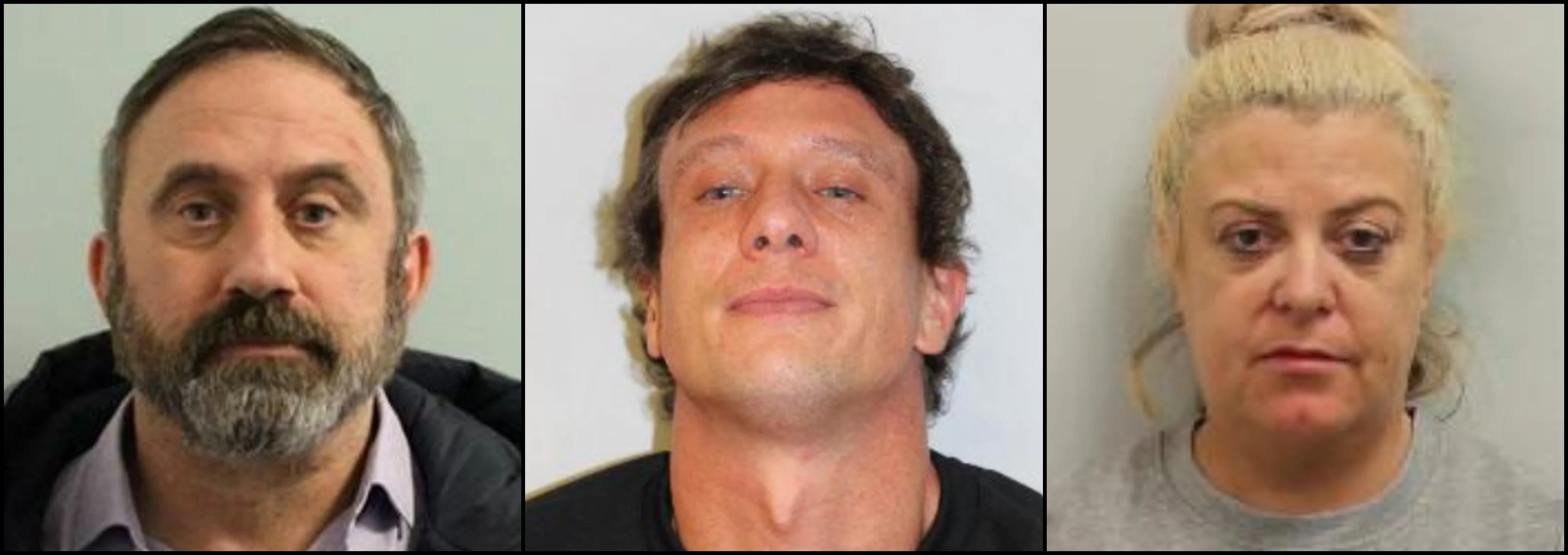
Kelly Robertson was arrested in December 2023. Le-Mare, 36, from Watford, had left the UK soon after the seizure; he was arrested at Gatwick Airport on 25 January 2025. The gap between the seizure and those arrests shows why a case like this doesn’t end when officers find the drugs. Investigators still have to establish who was involved, what each person did and how the operation was organised.
Le-Mare was sentenced at the Old Bailey on Wednesday. Michael Weston, 57, who has no fixed address, and Robertson, 46, also from Watford, had admitted their roles. Weston received 12 years and nine months in prison, while Robertson was sentenced to 15 years. Their admissions and Le-Mare’s conviction brought the court’s attention to distinct roles within the same conspiracy, rather than treating the seizure as the work of an unidentified group.
The court rejected Le-Mare’s account
Judge Richard Marks KC said Le-Mare had played a significant part in the multimillion-pound operation. His task, the judge said, was to wait in a vehicle and follow the lorry to make sure the drugs reached their destination. It was a supporting role, but not a passive one: the court’s description places him in the operation’s chain of custody, helping keep track of the shipment as it moved.
The judge accepted Le-Mare’s description of his past as an “aimless existence” in which he had been “bumming about”, but said that account didn’t sit with his role in the conspiracy. He rejected as “entirely fanciful” Le-Mare’s claim that he had been paid only £6,000. The disagreement mattered because it went to how the court understood his place in a scheme involving drugs valued at more than £80 million. This is more significant than it looks: following a lorry may sound like a minor task, yet the judge treated it as meaningful participation in a large operation.
Detective Inspector Dean Grafton, who led the Metropolitan Police investigation, said officers had spent two years piecing together the operation and establishing the defendants’ roles. He said the group had hoped to make millions from cocaine sales across the UK. His comments describe the investigators’ view of the plan, while the convictions and sentences record what was established in court.
Northamptonshire Police Assistant Chief Constable Emma James credited the force’s initial response with securing evidence and disrupting the plan. She said the investigation, led by the Metropolitan Police, showed the value of the two forces working together. The case illustrates how a local response to a visible incident can feed into a longer investigation led by specialist officers, with the initial seizure preserving evidence for work that follows.
What the case shows about organised smuggling
The arrests and sentences close a case that began with an opportunistic roadside stop. The investigation’s financial trail and evidence from the seizure helped turn that brief encounter into a detailed account of the group’s movements and roles. A single stop didn’t explain the whole operation; it gave officers a starting point from which they could test the connections between people, transport and money.
For readers following drug trafficking cases, the practical lesson is that logistics can be as revealing as the cargo itself. Similar operations typically depend on several people handling separate tasks, which can make an individual’s contribution difficult to assess from the roadside scene alone. Here, the court’s account of Le-Mare’s role and the investigation’s reconstruction of events supplied that broader picture. (And this is the part most people overlook: the person keeping watch may be central to a plan even if someone else physically handles the drugs.)
If you’re working in this space, the case is a reminder that an apparent routine stop can expose vulnerabilities in a much larger chain. And yet, the seizure’s scale shouldn’t obscure the work required afterward: evidence has to connect the shipment to the people involved and distinguish their roles. The two-year investigation did that work in this case. A roadside interruption, followed by painstaking reconstruction.

