Making candy scarce can give it more power at the table. For parents weighing holiday treats against healthy eating, the more useful question may be how children learn to respond to food, rather than how many pieces they’re allowed today. Research discussed by registered dietitian and mother of three Bryn Beeder suggests that reducing restrictions and helping children notice hunger and fullness may support a healthier relationship with sweets over time.

That can be a difficult shift for caregivers. Halloween, Easter, birthdays and community events often bring home bags of sweets, followed by familiar negotiations: one more piece, or enough for today? Parents may be trying to encourage a varied diet without turning childhood traditions into a source of conflict. Beeder’s argument is that everyday feeding habits can help reduce the sense that candy is a rare prize.
Food rules can carry a moral message
Foods differ in their nutritional content. A salad and a slice of cake don’t provide the same mix of vitamins and minerals. But labeling one “good” and the other “bad” can add a judgment that goes beyond nutrition. Such labels can shape grocery choices and mealtime language, teaching children to associate food with virtue, guilt or willpower.
That framing can follow a child beyond the dinner table. When food choices become a test of whether someone is making the “right” decision, eating can feel like a source of shame or pride instead of an experience that includes nourishment and enjoyment. Those feelings may also influence which foods caregivers serve freely and which they keep off limits.
Parents often restrict food for practical reasons: they want to limit sweets and make fruit and vegetables more appealing. Yet children can become especially focused on foods that adults describe as forbidden or save for rare occasions. A rule intended to moderate candy may instead make it harder for a child to stop when the opportunity to eat it finally arrives.
Visible limits can intensify interest
Restriction can be overt or covert. With overt restriction, children know a food is available but understand that an adult is limiting access—for example, candy stored in a cupboard they can’t reach. With covert restriction, caregivers simply don’t buy the candy, so children may not see it in the home.
Research cited by Beeder suggests that overt limits can increase children’s interest in the foods being restricted. When a child expects access to be brief or unusual, they may concentrate on eating as much as possible while it’s allowed. That can make it harder to notice fullness. The pattern can extend beyond the treat itself: early experiences with food rules may shape how children think about eating later on.

Giving children more autonomy doesn’t mean asking them to manage every part of feeding. The Division of Responsibility in Feeding, developed by the Ellyn Satter Institute, sets out distinct roles: caregivers decide when food is offered and what’s served; children decide what and how much to eat from what’s available. This approach aims to reduce power struggles while giving children room to respond to their bodies.
Build trust in hunger and fullness cues
That division of roles fits with age-appropriate intuitive eating: supporting children in recognizing when they’re hungry and when they’ve had enough. Neutral language and a low-pressure atmosphere can help. Caregivers can let children decide when to stop, rather than insisting that they clear their plates or praising them for eating a particular food.
Repeated exposure matters, too. When sweets appear as part of ordinary meals at times beyond holidays and parties, they may feel less like a special, high-stakes reward. The goal isn’t to claim that candy and vegetables do the same nutritional job. It’s to describe food without dividing it into moral categories, while helping children understand that different foods affect their bodies in different ways. Some provide energy for activity; others support muscle growth or eye health.
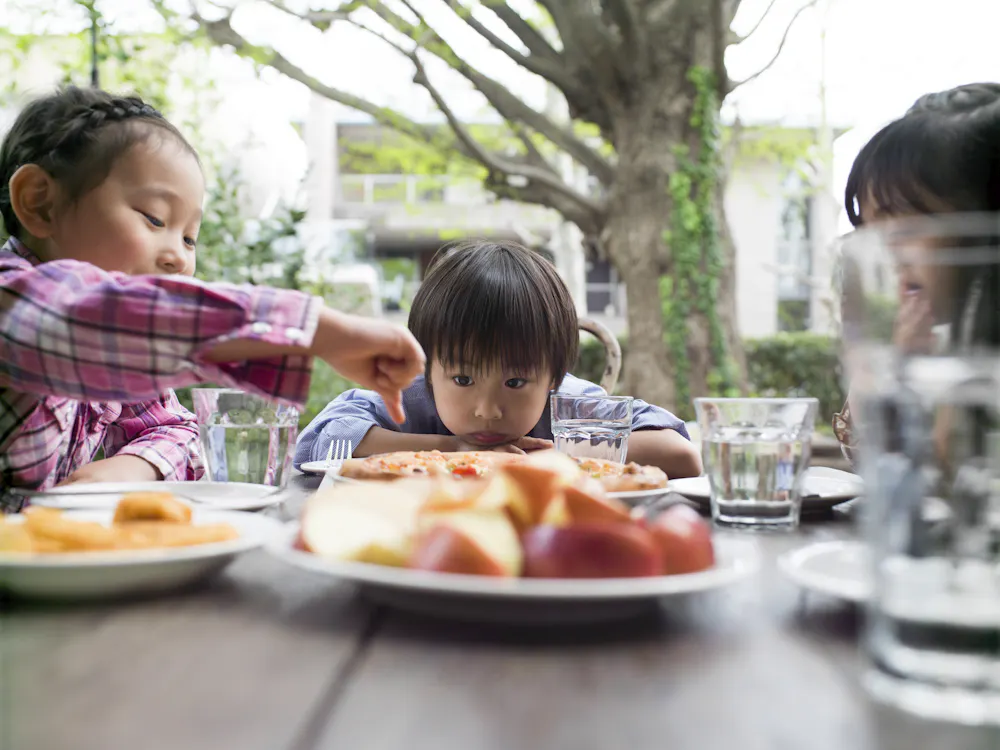
For families putting the idea into practice, Beeder offers several starting points:
Give children a role in planning. Invite them to help choose meals and shop for groceries, including selecting a treat to serve with a few meals each week. Putting all the foods on the table at once, rather than making dessert conditional on finishing dinner, can reinforce that food doesn’t have to be earned.

Keep comments about eating neutral. Praising a child for trying broccoli may seem harmless, but repeated approval for certain foods can create a hierarchy in which eating becomes a way to earn praise. A calmer response leaves room for children to decide what they want to eat.
Look at the example adults set. Children observe how caregivers respond to their own hunger, cravings and favorite treats. Adults who punish themselves for eating or feel unable to stop may unintentionally teach the same tension around food that they hope to avoid for their children.
Make room for holiday treats. Beeder says she doesn’t limit how much candy her three children eat on Halloween night. They may eat a lot, and if they later mention a stomachache, she talks with them about how their bodies feel without scolding. She says their interest tends to fade over the following days when candy continues to appear alongside meals; eventually, some of it becomes part of their trick-or-treat play.
One evening doesn’t set a pattern
A day of holiday eating doesn’t define a child’s health. The longer-term aim is for treats to remain enjoyable without becoming so scarce or charged that children feel compelled to overeat whenever they’re available. For families, that means pairing a varied food routine with less judgment, more opportunities to choose, and conversations that help children connect what they eat with how their bodies feel.
Bryn Beeder does not work for, consult, own shares in or receive funding from any company or organization that would benefit from this article, and has disclosed no relevant affiliations beyond her academic appointment.

