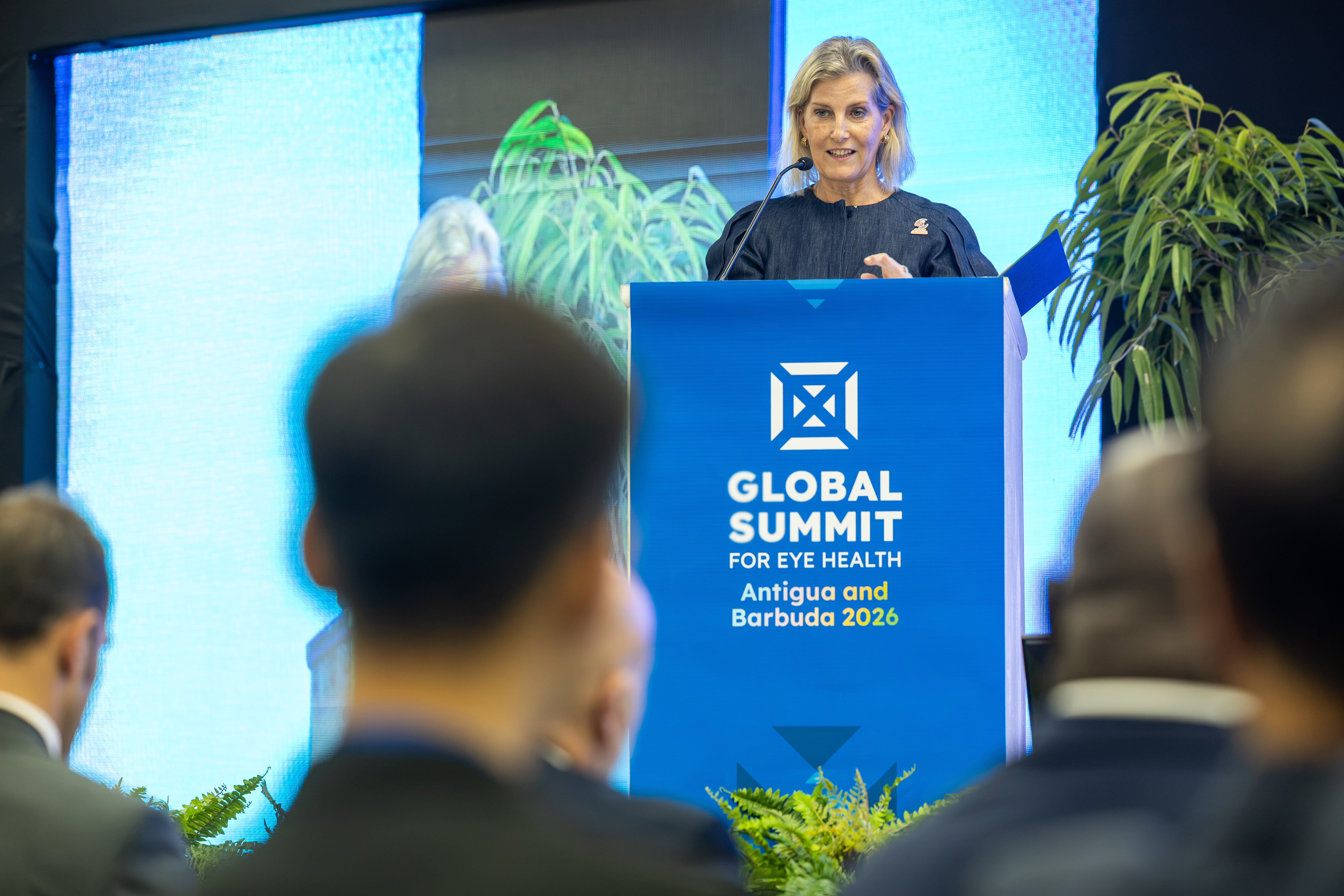
Preventable blindness remains an overlooked health challenge, the Duchess of Edinburgh told delegates at the first Global Summit for Eye Health in St John’s, Antigua and Barbuda. Her argument was that affordable care can restore more than sight: it can widen a person’s choices and strengthen family and community life. That framing matters because discussions of health access can focus on survival while giving less attention to conditions that shape whether people can study, work, care for relatives or manage everyday tasks independently.
Sophie, a global ambassador for the International Agency for the Prevention of Blindness, spoke on Monday as the summit met alongside the Commonwealth Heads of Government Meeting. She argued that treatable sight loss is too often seen as a lower priority because it’s not generally considered life-threatening. That distinction can obscure the way vision affects ordinary decisions and responsibilities. A condition needn’t be fatal to restrict someone’s participation in daily life, or to place added demands on the people around them.
“For too long treatable and avoidable blindness has been overlooked, perceived perhaps as a non-vital and non-life-threatening condition,” she said. Yet, she added, addressing it is “as imperative as any other health challenge” because effective, low-cost interventions can prevent sight loss and produce “huge returns”. Her case rests on a practical point: if a problem can be prevented or treated with accessible care, leaving it unaddressed carries human costs that extend beyond the person whose vision is affected. The precise benefits will differ from one patient to another, but the wider effects are easy to understand.
“Simply put – it just does not have to happen and the rewards are huge.”
Summit commitments target access to care
Delegates made about 200 commitments to improve eye health around the world. These included more than US$1 billion in government pledges, 68 million glasses and 13 million cataract surgeries. The figures span different kinds of support, from public funding to direct provision of corrective lenses and operations. Together, they suggest an attempt to address several points where care can fail: identifying sight problems, supplying treatment and making it possible for people to see clearly in daily life.
But commitments are a starting point, not proof that patients have received care. Turning pledges into results depends on practical follow-through: services must reach people who need them, and treatment must be available in forms they can use. Similar health programmes often rely on workers, equipment and access to clinics as well as funding. The summit’s totals offer a measure of ambition; their lasting value will depend on whether those resources translate into screening, glasses and operations for patients.
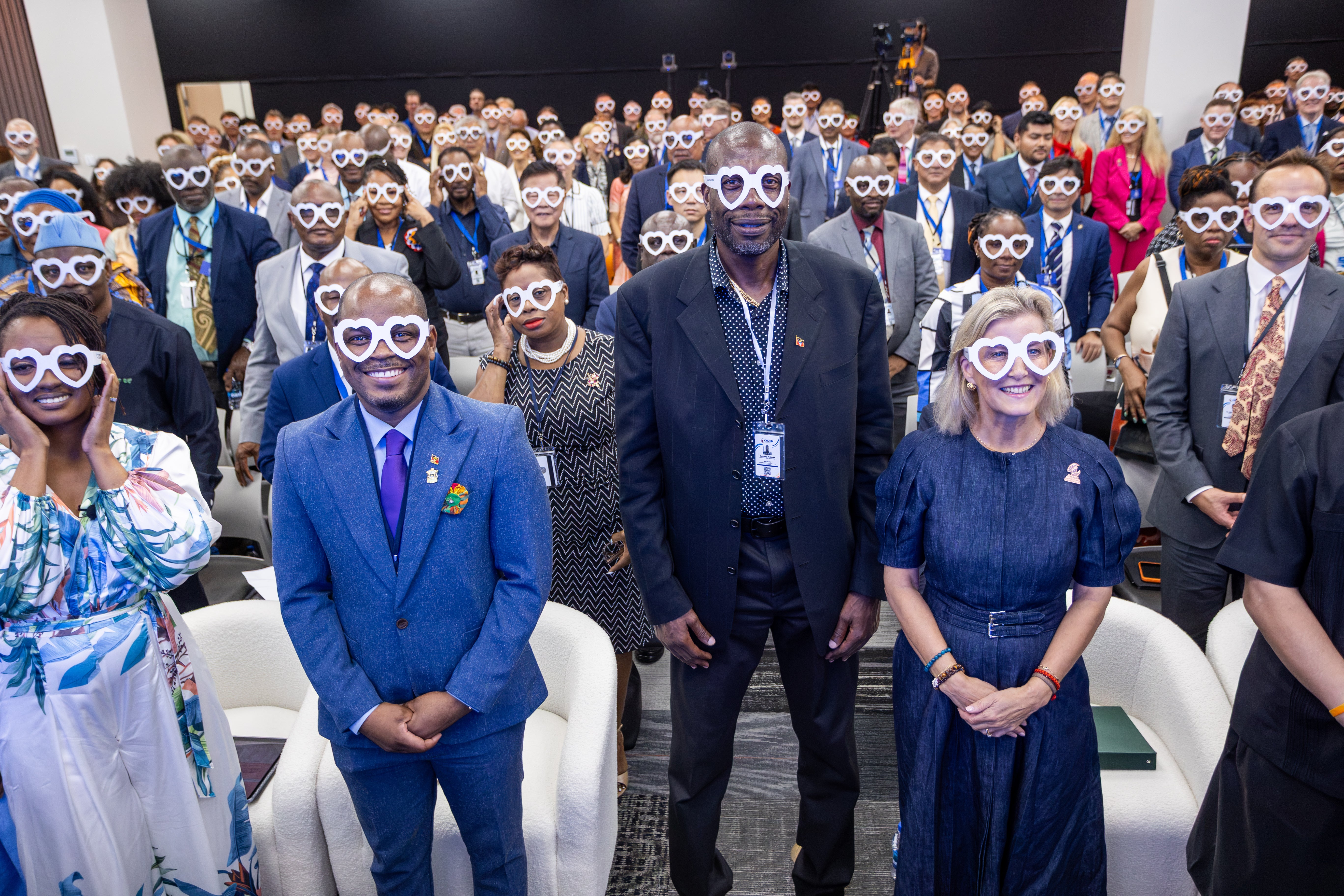
Sophie joined attendees in wearing white, heart-shaped novelty glasses to draw attention to the campaign. The gesture gave the cause a visible symbol during the summit, though the underlying issue demands attention beyond a public moment: people need access to suitable care when they need it. Her visit coincided with the King and Queen’s official tour of Antigua, though the royals didn’t meet during her short trip because of their busy schedules.
Personal stories show the impact of restored sight
Speaking from her work with the agency, Sophie described how screening and operations can change daily life. She recalled a mother able to prepare meals safely and read to her children, a student who could see the classroom board after receiving prescription lenses, and a father able to return to work. These examples cover different needs, but share a common point: treatment can restore practical abilities that support a person’s role at home, in education or at work. The value of care is measured in those ordinary activities as well as in clinical outcomes.
She also cited a grandmother whose independence and dignity had been restored. “I have seen so many times how one person’s sight being restored changes a whole family, as well as a whole community,” she said. That is a persuasive account of why eye health has effects beyond an individual patient. When someone can once again manage daily tasks, relatives may have more time and freedom too (and this is the part most people overlook). The change can be quiet, but its reach may be wide.
During the visit, Sophie toured an eye clinic supported by the Cure Blindness Project. She met Antiguan nurses who had recently completed specialist ophthalmic training and are helping widen access to eye care in the country. Their work points to a basic requirement for any expansion of services: care depends on trained people being available to provide it. New pledges can help, but they can’t replace local capacity or the relationships through which patients reach clinics.
What the commitments will mean for patients
The summit’s commitments put a practical measure behind Sophie’s central point: preventing avoidable sight loss depends on making screening, treatment and corrective lenses available to more people. The next test is whether the stated support reaches patients through services that can identify problems and respond to them. That may sound less striking than a billion-dollar pledge or a large tally of operations. It’s where the promise becomes real.
If you’re working in this space, the message is familiar: public attention can help set priorities, but access depends on the everyday delivery of care. The numbers here are substantial, yet the article offers no detail on how each commitment will be delivered or measured. That leaves a clear question for the work ahead: will the announced resources make routine eye care easier to reach? This is more significant than it looks. Preventing avoidable sight loss can preserve independence, learning and work, while the cost of overlooking it may be borne by whole households.

