Remote access turned supermarket refrigeration into a business risk across Europe: systems were reportedly manipulated to raise temperatures, threatening stock and disrupting operations. The incidents highlight how connected equipment can become an entry point when controllers are exposed online or run outdated software.
Reports on Monday came from at least six countries: Sweden, Belgium, Luxembourg, Ireland, Italy and Estonia. The affected businesses ranged from supermarket chains to independent shops. The attacks followed earlier incidents affecting retailers, mainly in France and the Netherlands, with reports also involving Belgium.
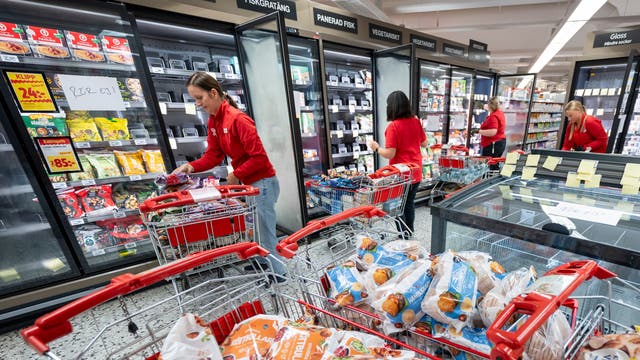
Temperature controls were remotely altered
One Swedish supermarket said intruders set its fridges and freezers to 50 degrees Celsius, or 122 degrees Fahrenheit. In Athens, a butcher shop owner, George Boubas, told private Greek broadcaster Skai TV that a refrigeration unit’s temperature controls were changed to 150 degrees Celsius (302 Fahrenheit).
Employees arriving for a 4 a.m. shift at Boubas’s shop in the Kifisia suburb spotted the problem. A technician needed two hours to regain control of the settings. Boubas said the meat was not affected, and that the technician had heard of similar problems at a nearby supermarket and fast-food restaurant. The shop disconnected the units from Wi-Fi to limit outside access.
These accounts show the operational stakes in concrete terms: a refrigeration system can be tampered with before staff arrive, and the response may depend on a technician restoring control. The reported incidents did not all produce the same outcome, but they put temperature monitoring and remote access under scrutiny.
Connected equipment saves money, but expands the attack surface
Supermarkets connect refrigeration equipment to monitor temperatures across many locations, receive alerts when a unit develops a fault and arrange remote repairs. Those capabilities can help retailers reduce energy costs and prevent food from spoiling. They also mean that controllers need protection comparable to other internet-connected systems.
“Every connected fridge is also an entry point that needs to be secured like any other IT system,” said Katerina Mitrokotsa, a cybersecurity professor at the University of St. Gallen in Switzerland. She described the attacks as a warning about the way businesses treat devices that look like ordinary appliances despite containing networked computing components.
The incidents in France and the Netherlands weeks earlier point to a possible weakness in older refrigeration controls. French cybersecurity investigators linked those problems to outdated remote-control modules from Denmark-based Danfoss and U.S.-based Copeland. Danfoss said most affected systems were older products that no longer received software or security updates. Copeland identified a vulnerability in discontinued controllers.
France’s national cybersecurity agency, ANSSI, said it had been investigating refrigeration-system breaches since mid-October and coordinating protective measures with sectors that could be affected. In a statement to The Associated Press, it identified compromised remote controllers in Danfoss’s AK-SM and AK-SC ranges, as well as Copeland and Dixell xweb systems. ANSSI said it was assisting potential victims in France and referred to a security alert first published on Oct. 12 and updated regularly.
Known weaknesses, not evidence of an AI attack
Cybersecurity specialists said the available information did not point to artificial intelligence as a tool used in the attacks. Nicole Carignan, senior vice president of security and AI strategy at Darktrace, said there was “no evidence AI was used, and the techniques did not require it.” Paul Chichester, director of operations at the U.K.’s National Cyber Security Center, also said the activity relied on vulnerabilities that had been known for a long time.
Carignan characterized the suspected access routes as internet-facing controllers, end-of-life firmware and default passwords, rather than an undiscovered software flaw. Her assessment underlines a familiar maintenance problem: the systems that support daily operations can remain in service long after security updates stop. Investment in newer digital projects does not by itself resolve exposure in older equipment.
U.K. cyber minister Liz Lloyd said the earlier French supermarket incident resulted from exploitation of known vulnerabilities. Richard Horne, head of the National Cyber Security Center, told reporters the French refrigeration systems were “connected directly to the internet with default passwords.” The center said its team issued warnings and contacted organizations with vulnerable technology exposed during Monday night.
For operators, the immediate lesson is practical: remote access, device age, software support and password settings all matter to the security of refrigeration. Disconnecting Wi-Fi, as Boubas’s shop did, can restrict access in the moment, but the broader challenge is identifying exposed equipment and managing it throughout its working life.
Investigations have not identified a culprit
Authorities had not established who carried out the attacks or why. Italy’s cybersecurity and intelligence officials were scheduled to meet Tuesday morning, according to Italian news agency ANSA. Officials at the European Commission were also holding meetings. Commission spokesperson Thomas Regnier declined to speculate about responsibility, saying the bloc’s 27 national authorities would investigate.
Regnier said the incidents “are not isolated” and called for Europeans to be collectively prepared for cyber incidents. For supermarket operators, the expanding list of affected countries makes the refrigeration network a clear part of the organization’s security picture. Keeping food cold depends on equipment that must be monitored, maintained and protected as deliberately as the business systems around it.

