Connected refrigeration brings cyber risk into the food chain
The UK incidents show how connected refrigeration can expose food businesses to disruption far beyond supermarket tills. A handful of members of the Association of Independent Meat Suppliers (Aims) found their systems affected by cyberattacks targeting software used across Europe, but no meat was lost. The episode shows how a digital intrusion can reach equipment that has a direct role in keeping food safe, even when the attacker’s target or motive isn’t clear from the available information.
Some abattoir refrigeration units began defrosting on Monday night. In one case, a unit’s temperature rose as high as 100C. The affected units were empty, Aims said, so no food was spoiled. That kept the immediate consequences limited, but the same settings applied to a full unit could create a more serious operational problem.

That the equipment was empty limited the immediate damage. The broader concern is that refrigeration settings can be changed remotely, leaving suppliers to spot a problem before stock is at risk. Aims said a few of its roughly 300 members were “unexpectedly become collateral” in the attacks. That description points to a difficulty common to incidents involving widely used software: businesses can be exposed through systems they depend on, even if they weren’t the intended target.
“None who have been affected have lost any meat, but once again this must act as a reminder to all in the food industry, at whatever point in the supply chain they are, that their businesses may be seen by some as targets,” an Aims spokesman said. The association urged members and other food businesses to stay alert. The numbers here are underwhelming as a measure of direct damage, but a small incident can still reveal a weakness that matters across a supply chain.
Retailers and suppliers check refrigeration systems
The National Cyber Security Centre (NCSC) is working with affected organisations and described the UK-wide impact as “minimal”. Paul Chichester, the agency’s director of operations, said at the launch of its annual report on Tuesday that officials were monitoring the incidents and helping organisations address vulnerabilities before attackers exploit them. That response suggests the immediate focus is containment and prevention, while organisations establish which equipment and systems may be exposed.
No major supermarket chain is understood to have been directly affected. Retailers have been advised to watch their systems, keep software up to date and prepare plans to move food if refrigeration is compromised. Those steps address different parts of the problem: monitoring may reveal a change, updates can reduce known weaknesses, and contingency plans give staff options if equipment stops keeping stock at the required temperature.
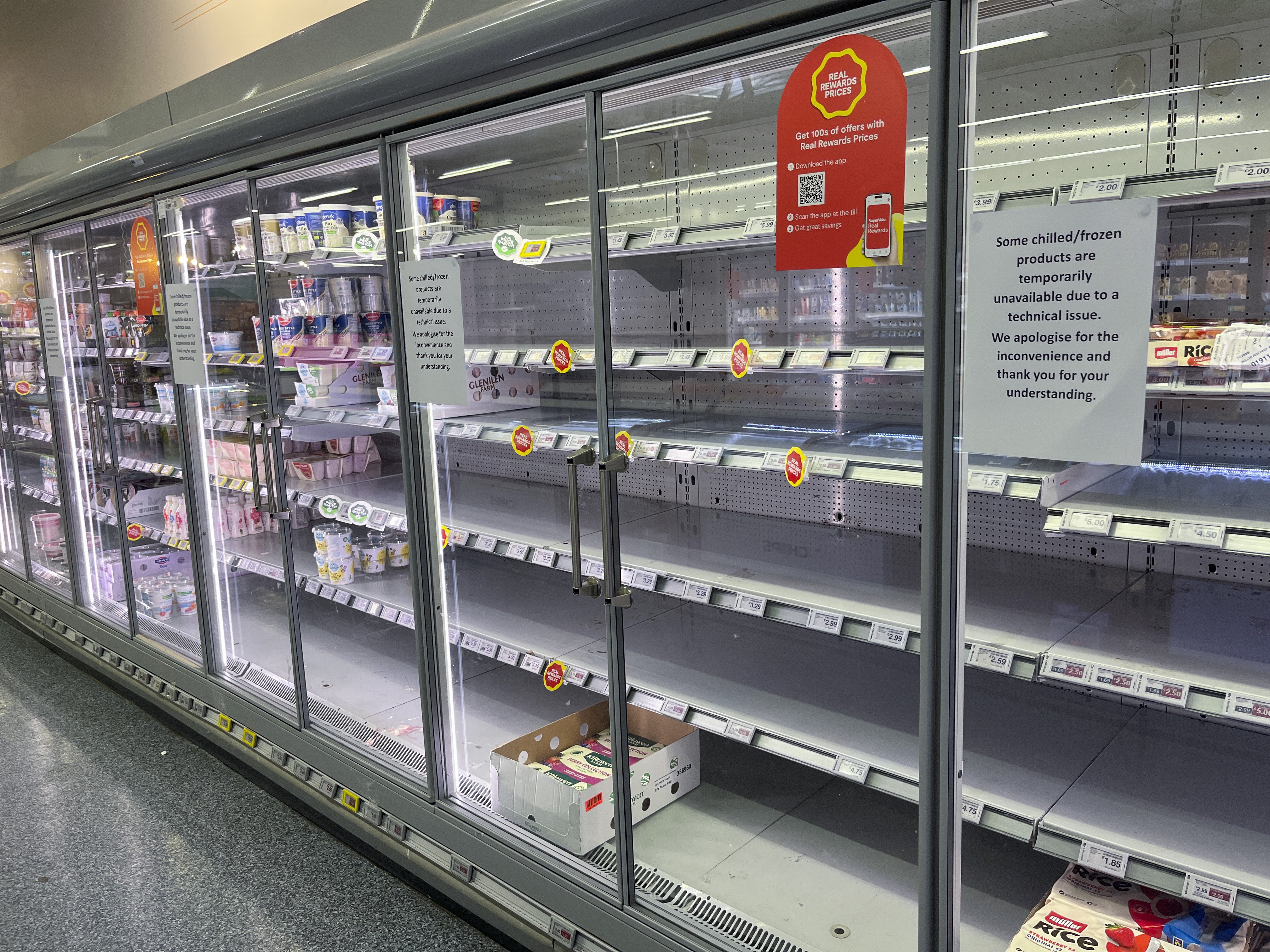
Graham Wynn, assistant director of regulatory affairs at the British Retail Consortium, said retailers were working with the NCSC to secure refrigeration equipment. Rupert Ashby, chief executive of the British Frozen Food Federation, said members were reviewing freezer systems and assessing their exposure. Their comments indicate that checks extend beyond the businesses already reporting disruption, though the article gives no figure for how many organisations are carrying them out.
The incident also reached Langridge Organic, a fruit and vegetable wholesaler. Managing director Alex Pearce told BBC Radio 4’s PM programme that six of the company’s 10 fridges were hacked on Monday morning, although no stock was affected. That account makes the risk concrete: the systems involved weren’t confined to meat suppliers or large retailers.
Manual checks revealed abnormal temperatures and defrost settings. Pearce suspected an intrusion and disconnected the Cat cable. He said that appeared to interrupt the activity, allowing staff to reset settings across the fridges; six, seven or eight parameters on each unit had been changed. The intervention depended on staff noticing the readings and knowing which connection to isolate. Here’s the thing: when equipment is monitored remotely, people still need a clear way to recognise when its behaviour no longer makes sense.
Legacy equipment remains a weak point
The attack on French supermarket fridges involved older technology connected to the internet with default passwords. NCSC chief executive Dr Richard Horne said teams worked overnight to warn UK businesses considered vulnerable. He told BBC Radio 4’s Today programme that the agency had alerted a small number of UK organisations and knew of a couple of impacts. Default passwords are a basic access-control weakness, but older connected equipment can be harder for owners to assess and maintain than newer systems.
The NCSC’s annual report recorded 1,831 cyberattack reports received by its incident management team during the year. Of those, 337 required support and 80 were classed as nationally significant. The team also warned 8,500 organisations that attackers had compromised their systems. These figures cover the agency’s broader incident work, not just refrigeration attacks; they offer context for the scale of its responsibilities, rather than a measure of this episode’s reach.
For food suppliers, the practical lesson is already visible: refrigeration needs the same attention to access controls and software as other business systems. The UK incidents caused no reported stock losses, but they exposed how quickly altered settings can put perishable goods at risk. If you're working in this space, routine temperature checks and a response plan can matter as much as the technical safeguards around a connected unit. A short disruption. A potentially costly consequence.
Why the incident matters beyond the affected sites
This is more significant than it looks because refrigeration sits at the point where digital access can affect physical stock. A compromised setting doesn’t need to shut down an entire business to create pressure: staff may have to inspect units, reset controls, move goods or decide whether stock remains safe. The reported UK cases didn’t result in lost food, but they show why early detection matters.
The next test will be whether organisations can identify vulnerable equipment before it behaves unexpectedly. The NCSC has warned some businesses and is working with affected organisations; suppliers and retailers are reviewing their systems. That said, the article doesn’t establish how widespread the weakness is, or how quickly every business can replace or secure older equipment. The immediate outlook is therefore practical rather than dramatic: check access, watch temperature changes, and make sure staff know what to do when readings or settings suddenly look wrong.

