The biggest risk from Tuesday’s bomb threats across Europe may be the disruption that spreads after an aircraft is cleared. Flights were diverted or made emergency landings, an airport temporarily closed, and experts warned that crew changes and tightly packed airline schedules could keep delays going for days. The security search is only the visible part of the response: once a plane and its passengers have been moved, the airline still has to work out where its aircraft and crew are, and whether they can resume their scheduled duties.
Threats affected flights across several routes
The incidents involved flights from London, Manchester, Copenhagen, Israel, Dublin, Bergamo and Lisbon. Hundreds of passengers were aboard the affected aircraft. The spread across routes matters because an interruption at one airport can affect people who’ve never been near the original flight: an aircraft diverted from its route may be unavailable for its next departure, while its crew may also be unable to continue working.
Authorities cordoned off part of Murcia airport in southern Spain. Warsaw-Modlin airport in Poland was closed while officials searched a plane. No devices were found, and the Polish airport has since reopened. Who made the threats remains unknown. The absence of a device doesn’t erase the operational consequences: officials still have to treat the warning as a security matter until they’ve completed the checks they consider necessary.
The disruptions followed a separate incident on Monday, when a Wizz Air flight from London to Sofia was diverted to Budapest airport after a bomb threat. That earlier diversion shows how the effects can begin before a later cluster of incidents: aircraft and staff are already being moved away from their planned routes, and each change adds another problem for the airline to solve.
Clearing a plane can take time
Justin Crabbe, a commercial pilot and founder and CEO of private jet booking app Jettly, said there’s no standard timetable for investigating a threat. The response depends in part on whether the warning is specific or vague, but authorities treat threats to commercial aircraft seriously regardless of how credible they first appear. That caution reflects the stakes: a rapid return to service may help restore a schedule, but the aircraft can’t be treated as ready until the relevant checks are complete.
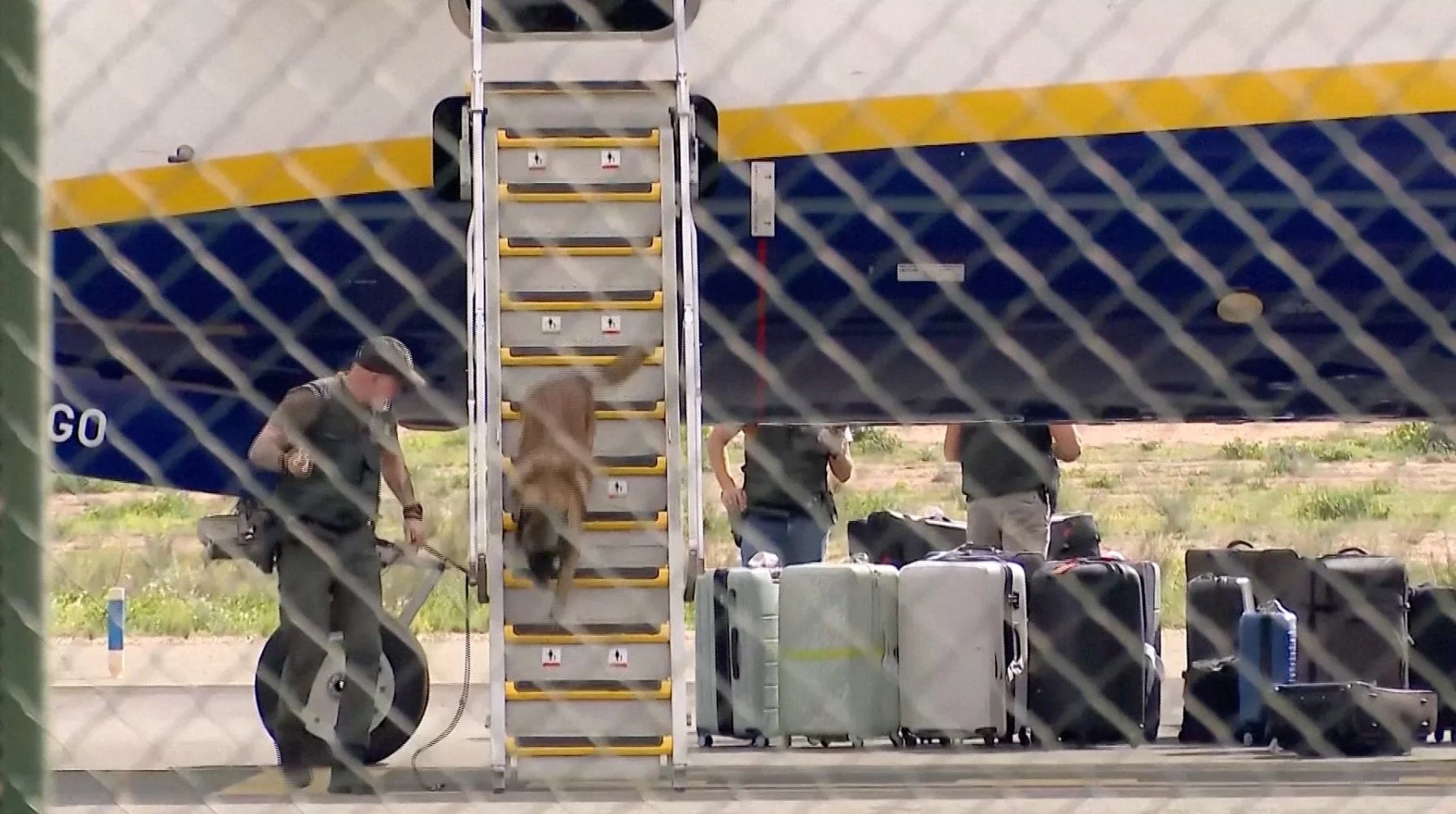
That can mean unloading baggage for further screening and bringing in trained dogs and bomb technicians. Aircraft generally remain out of service until authorities are satisfied they’re safe to fly. The work may involve several people and steps, so the time needed won’t be determined by the flight schedule or by how quickly passengers want to leave. Each aircraft and warning can bring different questions for the authorities assessing it.
“The guiding principle is always to treat the threat as potentially genuine until authorities have sufficient reason to conclude otherwise,” Mr Crabbe said.
Even after a plane is cleared, the crew may be close to its maximum permitted duty hours. Airlines can then need replacement pilots or flight attendants before passengers can continue their journey, extending delays beyond the security search itself. In other words, resolving the immediate safety question doesn’t automatically put the original flight back on track. The people and aircraft have to be available at the same place, at the same time.
Knock-on delays may reach other cities
The effects can spread across an airline’s network. Aircraft may be held in the air or diverted, while other flights wait on the ground. At busy airports, a brief interruption can leave aircraft, gates and crews out of position because their schedules are closely connected. And once those pieces are out of place, getting them back into sequence can take longer than the initial interruption.
A delayed plane may have been due to operate several more flights that day, putting passengers elsewhere at risk of disruption. Travellers on the affected flights could wait a day or more for replacement services, Crabbe said, while the wider operational impact may reach much further. For passengers, that can mean a missed connection or a changed departure even when their own flight wasn’t the one searched. If you’re working in this space, the distinction between a cleared aircraft and a recovered schedule is the one to watch.
Sheldon Jacobson, a computer science professor at the University of Illinois, said the scale of the disruption could itself have been the objective. “Given that so many flights were impacted, this was likely a planned threat attack,” he said, adding that the incidents underscore the role of airport security screening in keeping air travel secure. That interpretation is his assessment; the article says the source of the threats remains unknown.
Why the disruption can outlast the threat
This is more significant than it looks. The public often sees a diversion or airport closure as a single event, but airline operations depend on aircraft, crews and airport capacity lining up repeatedly through the day. When one part of that arrangement changes, the effects can reach later flights and other cities. The security response may end at one airport while the schedule problems continue elsewhere.
That said, the scale of any knock-on disruption depends on how long aircraft remain unavailable, what replacement staff can be arranged, and how much room the airline has to adjust its plans. The available information doesn’t establish how many later flights were affected or how long each delay lasted. It does show why the clearance itself can’t be treated as the end of the story. The search ends. The recovery takes longer.
(And this is the part most people overlook.) A threat that proves unfounded can still impose real costs in time and disruption, because the response has to account for the possibility that it isn’t. That’s a difficult trade-off for airlines and authorities: passenger schedules can be rebuilt, but the initial safety decision has to come first.

