Sister June Carpenter’s work organizing the records of Maine’s Sabbathday Lake Shaker Village helped preserve a history now held by the movement’s last active community. Carpenter, one of its longtime members, died Tuesday at 88, the village announced. Her death marks a loss for a small religious community, but her years of archival work also left practical tools for people trying to understand its past.
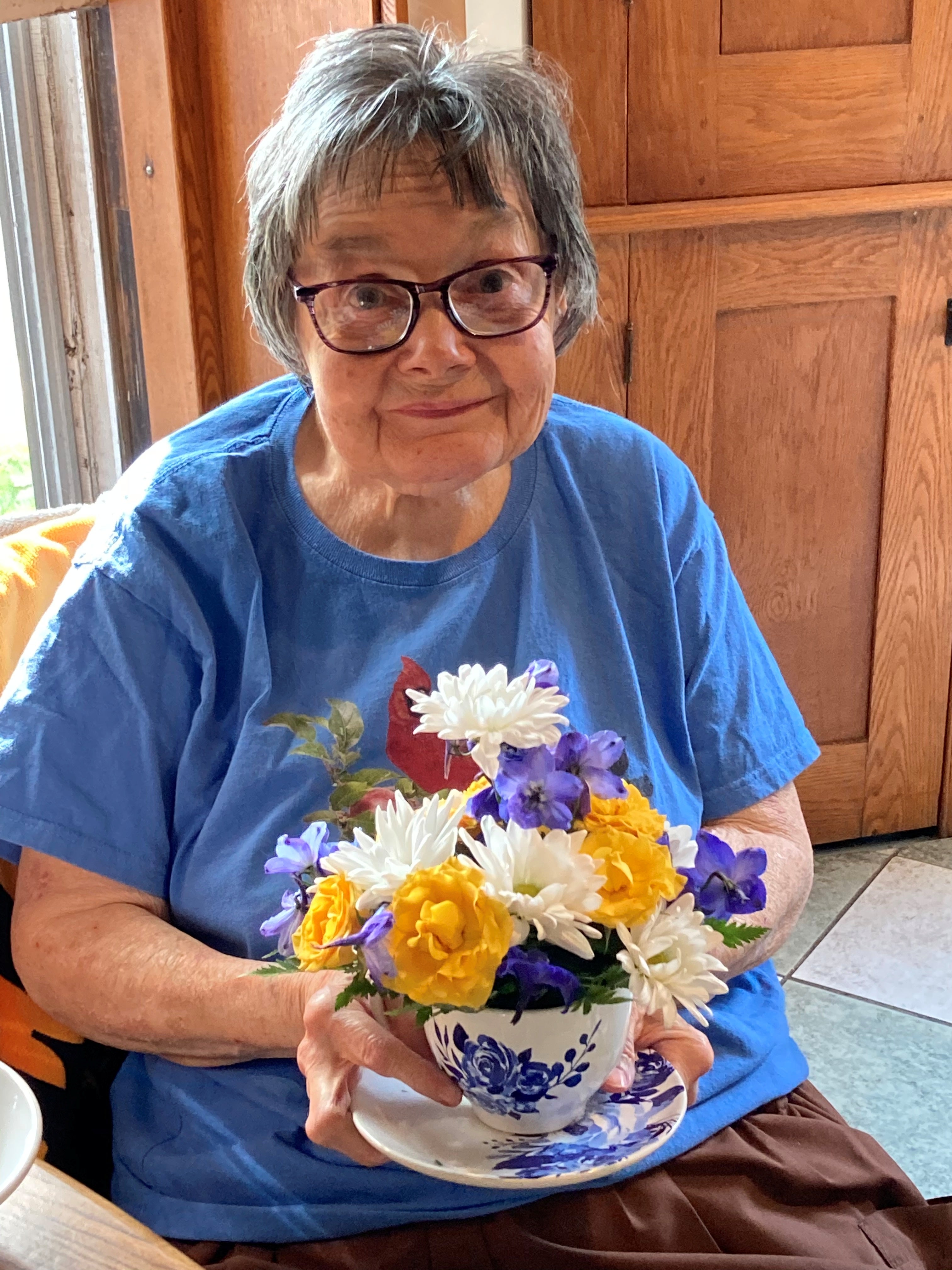
Carpenter had faced health problems and limited mobility, according to the announcement. She lived at Sabbathday Lake in New Gloucester, where the community now includes Brother Arnold Hadd and Sister April Baxter, who joined last year. Mac Imes joined as a novice earlier this year. Those few names make the village’s role as a living community distinct from its role as a historic site: it continues to practice a tradition that has otherwise largely passed into the record.
From librarian to Shaker
Born in Boston, Carpenter earned a master’s degree in library science from Simmons College and worked as a librarian. She first visited Sabbathday Lake in 1988, attending the dedication of its library, and volunteered to organize and catalog its collections. The path from a professional library career to religious membership wasn’t immediate; her first contribution was a practical one, rooted in the skills she’d developed outside the community.
Her work brought the village’s historical materials, writings and other records into better order and made them easier for researchers to use. Cataloging can sound like background labor, but it determines whether a document can be found, connected to other materials and interpreted in context. The community said her efforts would help ensure “that the Shakers’ remarkable legacy could be studied and understood for generations to come.” That’s a claim about more than storage: records become useful history when people can locate and make sense of them.
David Richards, the village curator, recalled Carpenter’s character with a line quoted in the announcement: “If the meek are to inherit the earth then she will get the whole thing.” She became a member of the community in 1989. The remark suggests how those around her understood her temperament, while the sequence of her visits, volunteer work and membership shows how archival service became part of a larger commitment.
A small community with a long history
The Shakers, formally the United Society of Believers in Christ’s Second Appearing, are a celibate Christian movement that grew out of the Quakers. Founded in the late 18th century by Mother Ann Lee, an English immigrant, the movement once had thousands of adherents in communities across several states. Its formal name reflects the movement’s religious identity, while its better-known shorthand points to a history that has often been encountered through its distinctive worship and material culture.
Shaker communities dwindled after the Civil War. Sabbathday Lake is the sole active community remaining from that network, carrying forward a tradition whose influence is also visible in its spare furniture and architecture and in the song “Simple Gifts.” The gap between a once-widespread movement and one active community gives the village’s records particular weight: they preserve evidence of a broader history while remaining connected to people who continue to live within the tradition.
Care beyond the archives
Carpenter’s life at the village extended beyond its archives. She tended the gardens, visited Shakers living in nursing homes and cared for the community’s birds and cats. Those activities aren’t simply details alongside her cataloging; they show a pattern of care that joined the preservation of records with attention to people and daily life. For a small community, such work can be part of how a shared way of life is maintained.
The announcement said she would be remembered for “her steadfast faith, her kindness toward all living things, and her dedication to the Shaker way of life.” The description is broad, but the examples given are concrete: gardens, visits and animals, alongside a library collection made more usable. A life remembered through both institutional work and routine acts of care offers a fuller picture than an archive alone could provide.
What preservation means for the future
For a community with few members, preserving its records is a practical way to keep its history available to future generations. Carpenter’s cataloging work made that legacy easier to study. This is more significant than it looks: when a tradition has few active practitioners, the ability to consult its own records can help keep its history connected to the people who carry it.
Archives can’t preserve a living religious practice by themselves. They can, however, give future researchers and community members a clearer route into the writings and materials that remain. If you’re working in this space, Carpenter’s career is a reminder that preservation depends as much on patient organization as on the documents themselves. The records are only part of the inheritance.
And this is the part most people overlook: cataloging is a form of stewardship. It doesn’t settle what the Shaker legacy will mean to future generations, and Carpenter’s work can’t answer that for them. But it makes the evidence more accessible, so that questions can still be asked. A quiet contribution, with lasting reach.

