The most useful feature of a university-backed local newspaper may be the one readers never see: a steady supply of people and institutional support that lets experienced journalists keep reporting. In Iowa and Georgia, partnerships have helped two weeklies stay open, add digital products and keep their community focus. The arrangement also gives journalism students real newsroom work, but it takes sustained effort from faculty and professional staff.
Keeping community knowledge in the newsroom
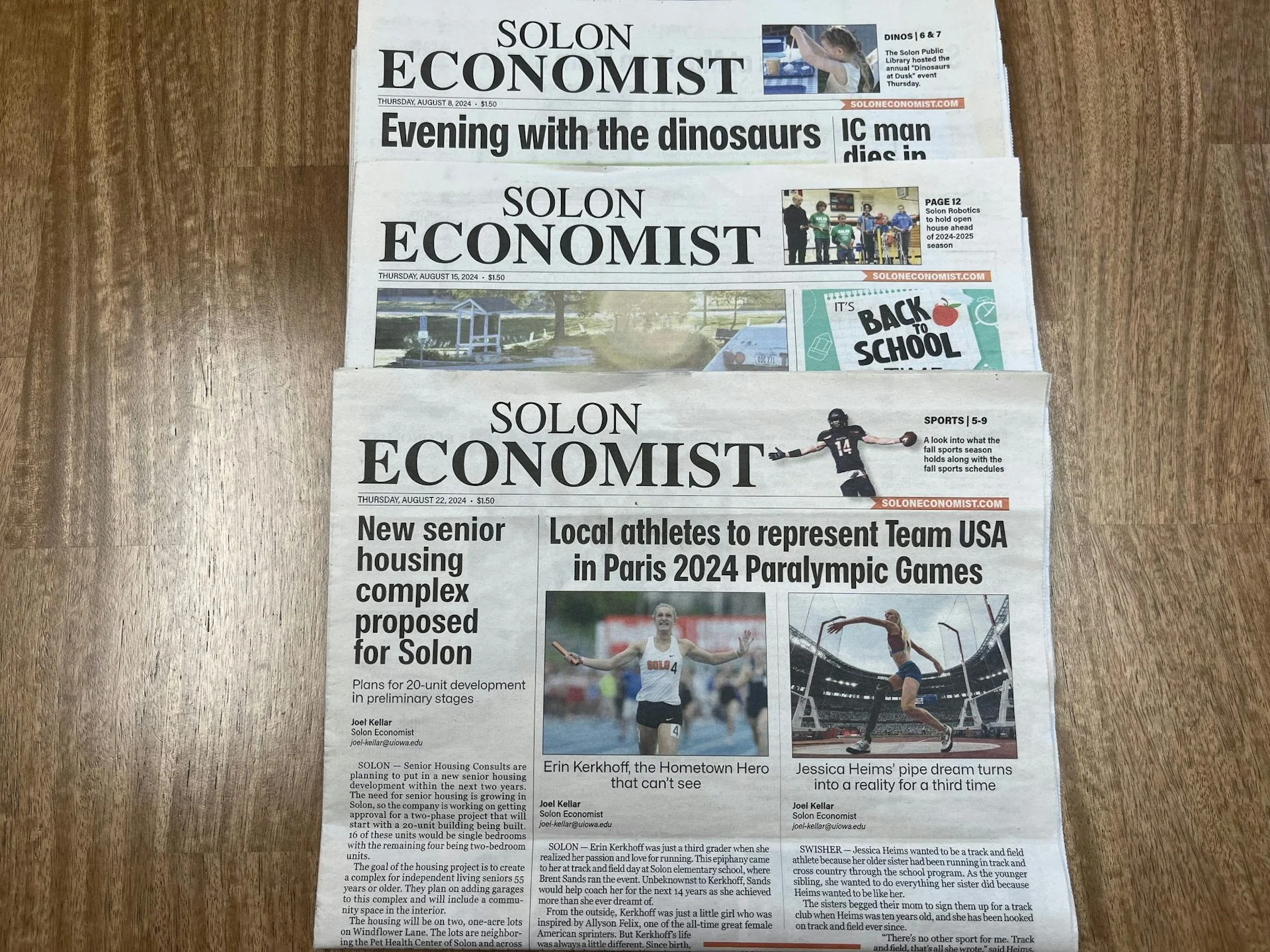
When the University of Iowa’s Student Publications bought the Solon Economist and the Mount Vernon-Lisbon Sun in 2024, the deal came with a condition from journalism school director Melissa Tully: keep the papers’ existing professional staff. Editors, advertising employees and circulation workers already knew the towns and their readers. Replacing that knowledge with a student newsroom would have undercut the point of saving the papers.
That decision mattered to Catherine Bilskie, the Economist’s advertising and office manager. She had watched local outlets close and expected to lose her job on a Friday morning in February 2024. Instead, new owner Jason Brummond told her and a colleague they would stay. He also offered raises if they joined the new operation.
Brummond publishes the University of Iowa’s student paper, the Daily Iowan, which is owned and operated by the nonprofit Student Publications. The student paper works independently, even though its office sits inside the journalism school. Student Publications began discussing a purchase of the two weeklies in August 2023, after their previous owner approached it about a sale. Both papers are 20 to 30 minutes from campus, close enough for students and faculty to contribute.
Student Publications paid $10,000 for the pair. Brummond says circulation at both has stayed stable since the acquisition, a measure that stands out as print outlets across the country lose readers. Students now contribute through classes in community news, high school sports, social media marketing and photography, while others take paid internships.
For Solon Economist editor Chris Umscheid, the student pipeline means more help with the work. He welcomes interns because, as he put it, he’s “actually going to have staff for once.” He also wants readers to understand that the paper’s identity hasn’t shifted with its ownership. “People thought we were going to be the university’s paper, and we’re not,” he said. “I don’t anticipate anything changing there. We’re still going to focus on everything Solon that we can.”
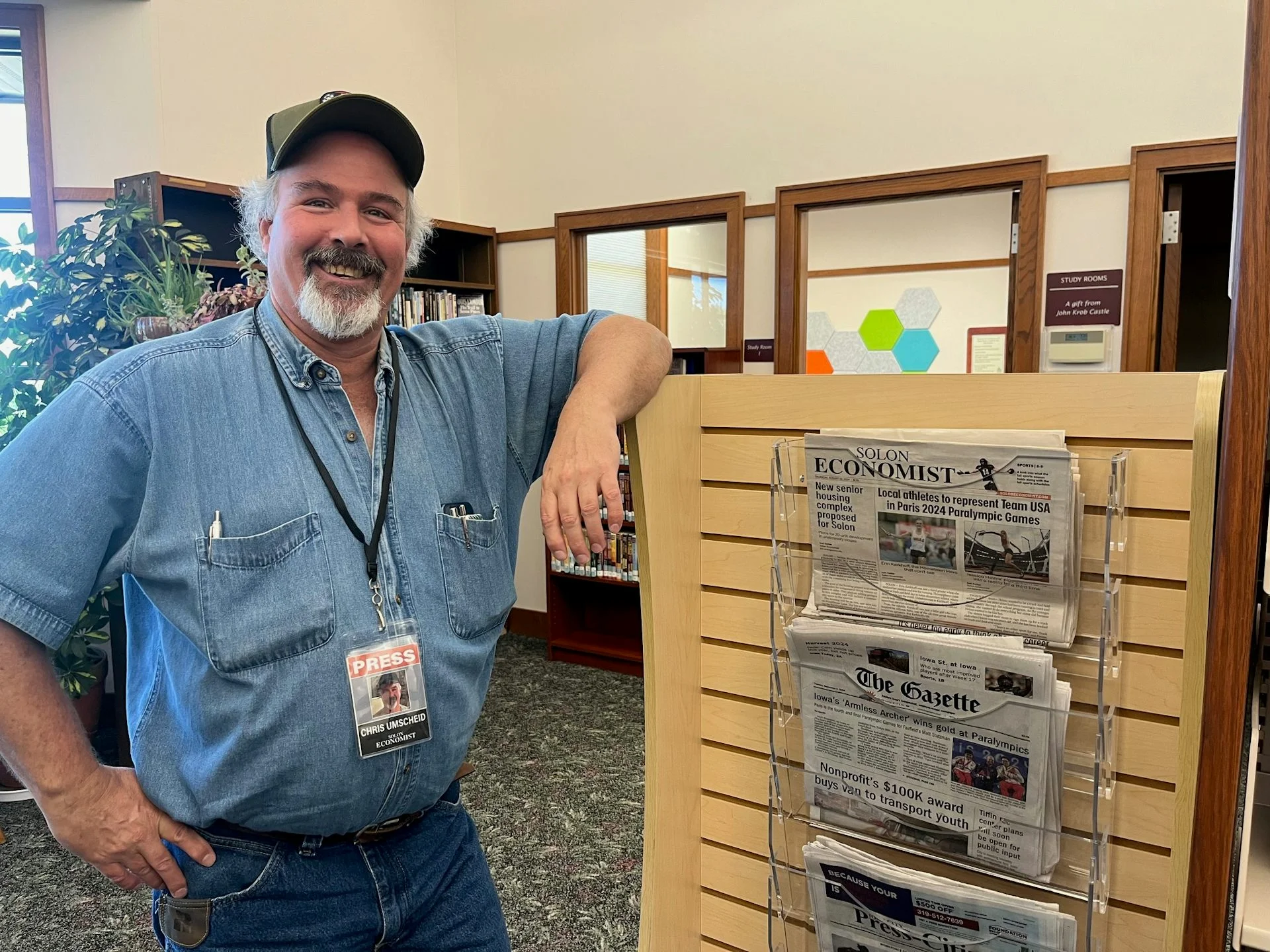
The paper’s value is especially visible to residents who rely on print. Liz King, formerly director of the Solon Public Library, said many people feared its closure would leave a serious gap in a town of about 3,000. Some readers, she said, get their news only from the paper because they aren’t comfortable with online sources.
The university does not own either Iowa paper. The relationship instead brings together Student Publications, the existing staff and student contributors. The model has prompted other newspapers to ask Student Publications about a sale. Tully says the organization is developing criteria for assessing future opportunities. Brummond cautions that a purchase requires close attention to finances, newsroom workflow and the practical complications of bringing operations together.
A nonprofit structure in Georgia
The Oglethorpe Echo faced its own closure threat in 2021. Owner Ralph Maxwell was dealing with health problems, falling revenue and a lack of prospective buyers. He told his longtime friend Dink NeSmith, a retired newspaper owner, that he planned to shut the weekly down. NeSmith’s answer was direct: “I don’t know that I want to live in a town that doesn’t have its newspaper.” He urged Maxwell, “You can’t close the Echo.”
NeSmith then approached the University of Georgia’s journalism school. He set up a separate nonprofit, Oglethorpe Echo Legacy, to own the paper. Keeping the Echo’s finances outside the university was central to the arrangement, Dean Charles Davis said: it protects the paper from the “whims” of future university administrations and signals to the county that its purpose is community service. In October 2021, the nonprofit bought the newspaper for $10. Maxwell never cashed the check; it has since been framed.
Andy Johnston, an adjunct professor with decades of journalism experience, became the Echo’s full-time editor. Since November 2021, he has worked with journalism faculty, students, adult staff and county volunteers. The paper serves more than 16,000 people across 442 square miles. Its office in Lexington is 18 miles (29 kilometers) from the university’s Athens campus.
Journalism professor Amanda Bright’s capstone class supplies 20 student reporters each semester. Students work in pairs on a beat, rotating between reporting and editing or production. Each must complete eight stories per semester, along with assignments that can include video, an email newsletter and social media. The journalism school, grants, subscriptions and advertising all contribute funding.
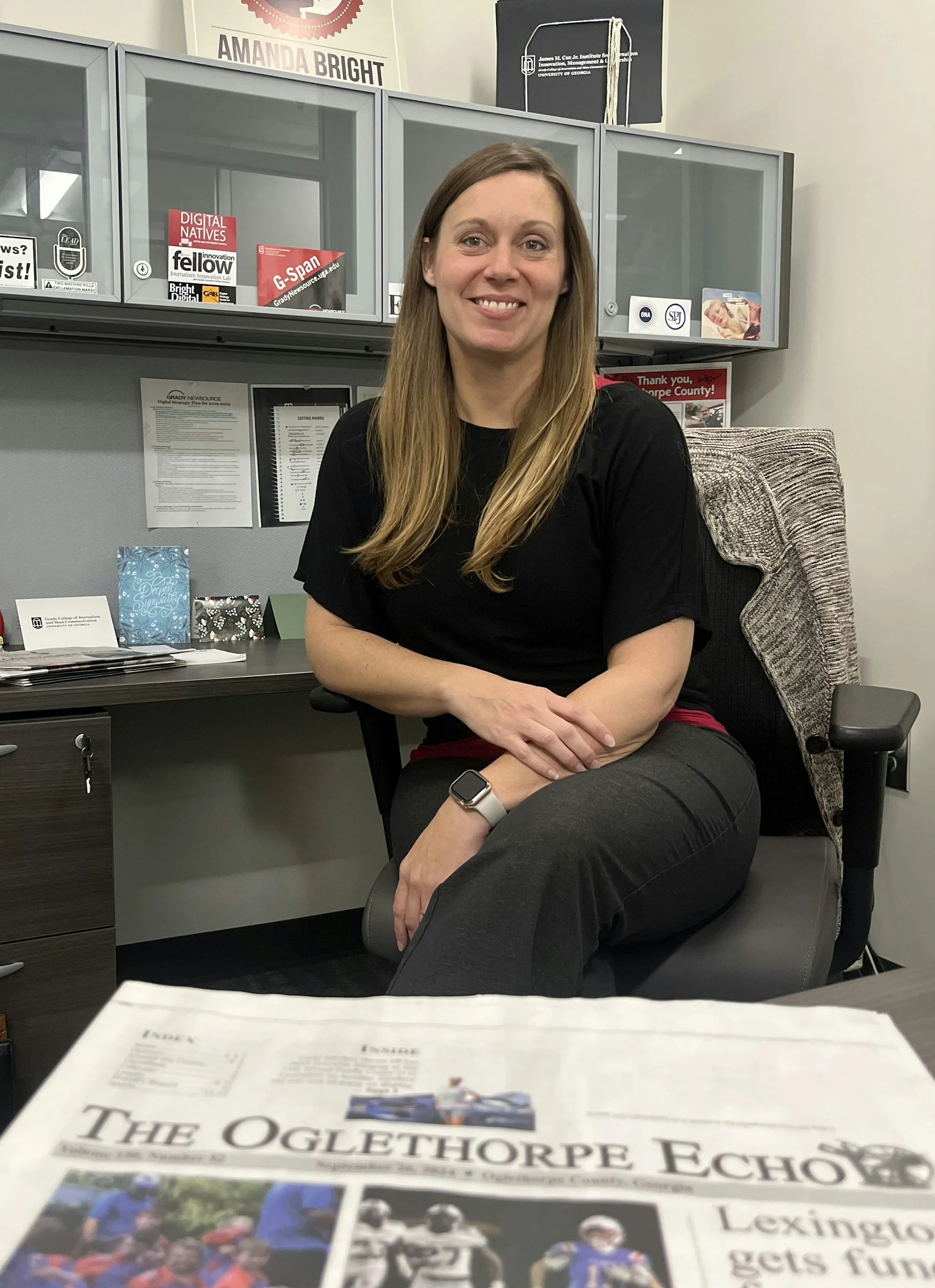
The student newsroom helped the Echo build a digital presence. When the journalism school took over, the weekly had a print edition but no website or social media accounts. Editors used the first new edition to explain the plan to readers and introduce student reporters, a practice they repeat each semester.
Bright says print subscriptions have doubled and the digital audience has quadrupled since the new products launched. Advertising revenue has tripled, too, although NeSmith says local businesses needed time to get comfortable advertising in the paper again. The work has also shaped careers: Bright says more than two dozen students who worked at the Echo have gone on to local news jobs.
The staffing model has limits
Student participation brings energy and labor, but the semester schedule creates a recurring training burden. Reporters covering public meetings and other events need guidance, and the extra editing required can slow publication. Faculty and staff often put in long hours to keep the paper running. Bright says a university considering this structure needs at least two people in leadership, such as two faculty members or a faculty member and a professional editor. “That’s a bottom-line necessity for sanity,” she said.
These projects can draw on university salaries, health insurance, equipment and classrooms, so their managers don’t have to rely on the newspaper alone for a living wage. Students gain practical experience for credit or pay. Yet those advantages don’t make the operations simple. Brummond says a partnership can look easier from the outside than it is once finances and workflows are examined.
The broader need is substantial. More than 3,000 U.S. newspapers have closed in the past 20 years, including about 170 in 2025, according to Northwestern’s 2026 State of Local News report. The university’s 2025 report estimated that print newspaper circulation fell 70% over two decades. Declining advertising, an aging business model and hedge-fund acquisitions have all contributed to the pressure. Communities have also lost local outlets, with thousands left without a newspaper over that period, a trend often described as the growth of a “news desert.”
University-linked efforts take different forms, from the Spanish-language site Noticiero Móvil at the University of Nevada, Reno, to Good Morning Indian Country at the University of Kansas and The Scope at Northeastern in Boston. The Iowa and Georgia examples suggest there’s no single template: one relies on a student publications nonprofit that bought two weeklies, while the other places the newspaper under a separate community nonprofit.
Journalism professors Teri Finneman and Pamela Walck, co-authors of News Desert U, see community service as the shared priority. Their research points to patient experimentation and a willingness to adjust as practical requirements. Tully’s advice to universities interested in the work is to take their time: “Doing this slowly is OK. In the end, it’s going to be better. So far, that’s been a good recipe for us.”

Teri Finneman and Pamela Walck are co-authors of the book "News Desert U."
Pamela E. Walck does not work for, consult, own shares in or receive funding from any company or organization that would benefit from this article, and has disclosed no relevant affiliations beyond their academic appointment.
===
