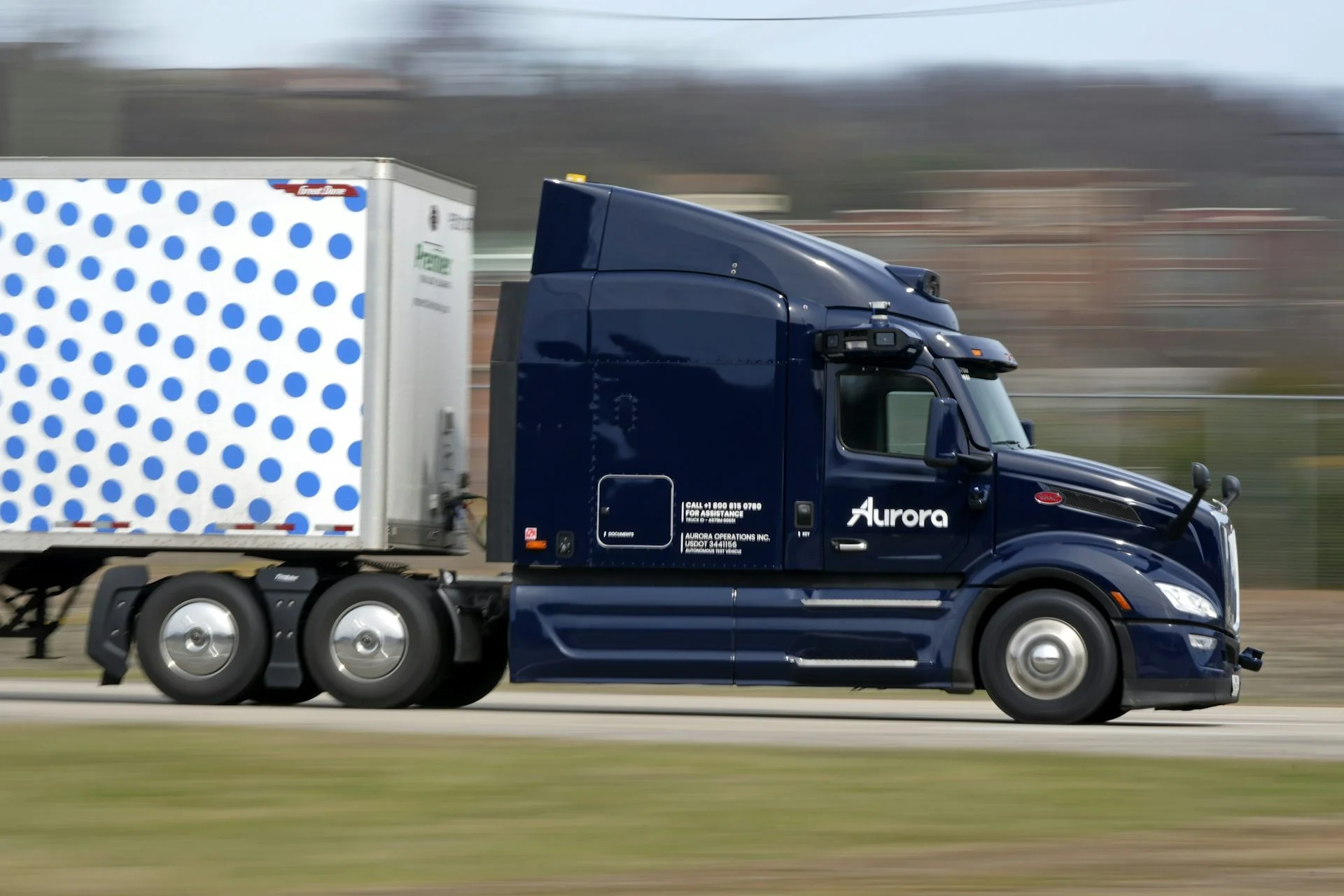
Autonomous trucks have begun carrying freight on a handful of carefully selected routes, but the bigger shift in trucking still depends on solving a practical problem: roads rarely stay predictable. For now, human drivers and automated systems look more likely to share the work than to replace one another across the freight network.
Companies are testing trucks in Texas and California. Simulation studies point to possible gains in crash reduction, fuel use and travel time. Yet snow, rain, construction zones and busy streets remain difficult settings for automated systems, which depend on cameras and other sensors to read their surroundings.
As an engineer who studies human factors and transportation safety, I expect drivers to remain part of truck operations for years. Automation may take on the less demanding stretches of a trip, while people handle complex transitions and respond when conditions exceed what the system can manage.
Where automation could improve trucking
Fully automated trucks are designed to travel on interstate highways in good weather without a person controlling the vehicle. They combine artificial intelligence, machine learning, computer vision, pattern recognition and adaptive decision-making. Torc, an autonomous truck developer, uses AI to combine data from multiple sensors and model how a truck is likely to perform.
Evidence from trucks equipped with features such as automatic emergency braking and lane-keeping assistance suggests that automation could reduce both the frequency and severity of crashes. It could also lower fuel costs by managing acceleration and braking more efficiently. Trucks traveling in close formation, or platoons, may further reduce fuel consumption.
Driverless operations could change how trucks use time and parking. Automated vehicles could run for much of the day without driver rest breaks, and they wouldn't need to idle while parked, as conventional trucks often do at truck stops. That could cut emissions from idling and reduce demand for parking.
Automation may also help address the ongoing shortage of truck drivers. The effect on the job itself could be more nuanced than simple replacement: if technology takes over some of the most tiring tasks, driving may become less physically demanding and stressful, potentially improving job satisfaction.
Weather and road changes remain difficult
The technology's limits show up when roads depart from the conditions used to develop and test it. Rain and snow can interfere with the cameras and sensors automated vehicles use to interpret the road. Waymo, for example, operates its driverless cars in areas that don't get snow.
Construction zones create another challenge. Temporary lanes, orange cones and missing road markings can leave a vehicle without the clear surface cues its system expects. Even autonomous car companies try to avoid some of these areas. Research has also found that human drivers may crash into driverless cars more often than into cars driven by people.
Those complications help explain why current truck trials favor routes with fewer surprises. Aurora operates freight trucks on I-45 between Dallas and Houston, a relatively flat, straight highway. Kodiak's robotrucks deliver sand to industrial sites in Texas along lightly traveled roads. Testing in dense city traffic, where trucks would encounter pedestrians, cyclists, signals and unpredictable interactions, remains rare.
The sector's setbacks offer another measure of how hard it is to expand beyond controlled routes. Embark, TuSimple and Locomotion shut down in 2023. Waymo ended its autonomous trucking program and concentrated on cars. Other developers narrowed their plans to a small number of routes between major cities or industrial sites.
Designing a workable handoff
A more practical near-term arrangement pairs a driver with automated highway driving. The person could steer through the crowded first mile, from a warehouse or local streets to the highway, then let the truck's system take over on a suitable stretch. Near the destination, the driver would resume control for the last mile.
That model depends on clear communication between the vehicle and the person in the cab. Research by my colleagues and me points to human-machine interfaces as a key part of safe operation. A dashboard screen or heads-up display could show how the system is performing. If it encounters a situation it can't handle, a spoken alert or vibrating seat could prompt the driver to take control.
Those handoffs bring their own risks. Automation bias can lead drivers to trust the system so much that they defer to it even when they should intervene. Algorithmic bias raises a different concern: sensors might detect some people on the road more reliably than others, for example if recognition performs differently across pedestrian sizes or shapes.
The long-term goal for some developers is to remove the driver and lower operating costs. But large-scale driverless trucking still faces unresolved road, weather and human-factors challenges. For the foreseeable future, the strongest case for automation may be as a tool that lets drivers and trucks divide the work according to what each can handle best.

Shannon Roberts receives funding from the Massachusetts Department of Transportation, National Science Foundation, NYSEARCH, Sloan Foundation, and US Department of Transportation. She has previously received funding from Belron, GM, and Toyota Collaborative Safety Research Center.

