Parasites don’t need to take over an animal’s entire mind to steer it toward danger. A fungus can prompt an ant to climb and bite onto a plant; a wasp can make a cockroach less inclined to move; a worm can draw an insect toward water. Each change serves the parasite’s life cycle, and each offers a window into how behavior arises from signals across the body.
Popular culture turns this idea into spectacle, from the coordinated corpses in Michael Jackson’s “Thriller” to the fungal infection in HBO’s “The Last of Us.” Real parasites don’t resurrect dead hosts or transform people into coordinated monsters. Their influence is narrower and more biologically plausible: They alter living hosts’ movement, sensory responses or motivation in ways that can help the parasite reproduce.
That distinction matters. The familiar image of a parasite invading the brain and seizing control suggests a single command center. But behavior depends on communication among the nervous system, muscles and other tissues. The best studied examples point to several routes of influence—and leave important questions open.
An ant’s final climb
The fungus Ophiocordyceps, often called the zombie ant fungus, has a life cycle built around getting its spores into position. Spores land on an ant, attach to its exterior and eventually penetrate the body. The fungus then grows inside its host while the ant remains alive. The infection may take weeks to reach the stage when the ant’s behavior changes noticeably.
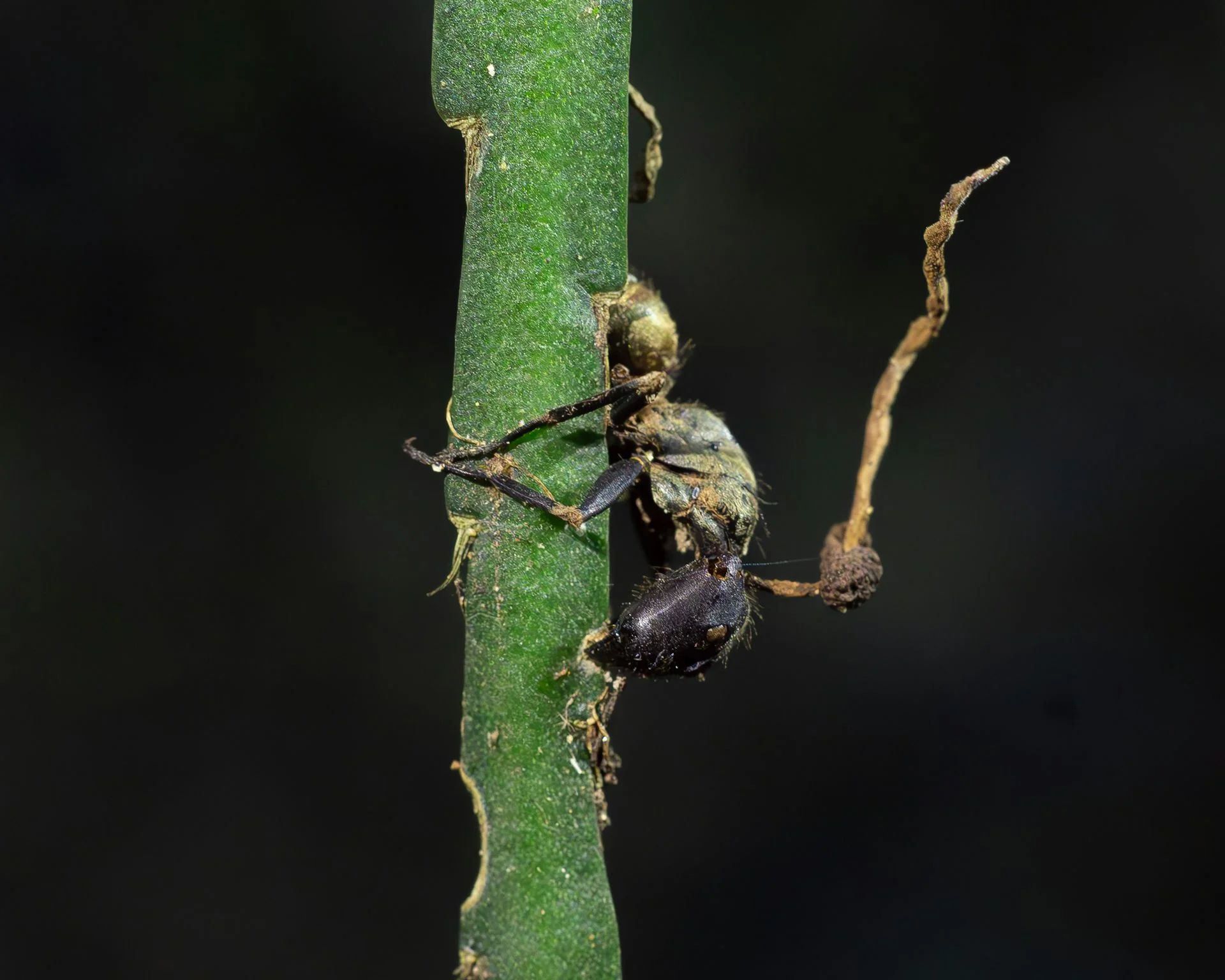
Near the end of that process, an infected ant leaves its colony, wanders and climbs vegetation. It eventually clamps its jaws onto a leaf, twig or another plant surface in what researchers call a “death grip.” The ant dies there. The fungus consumes tissue and grows a stalk from the body; that stalk releases spores that can reach ants below and start the cycle again.
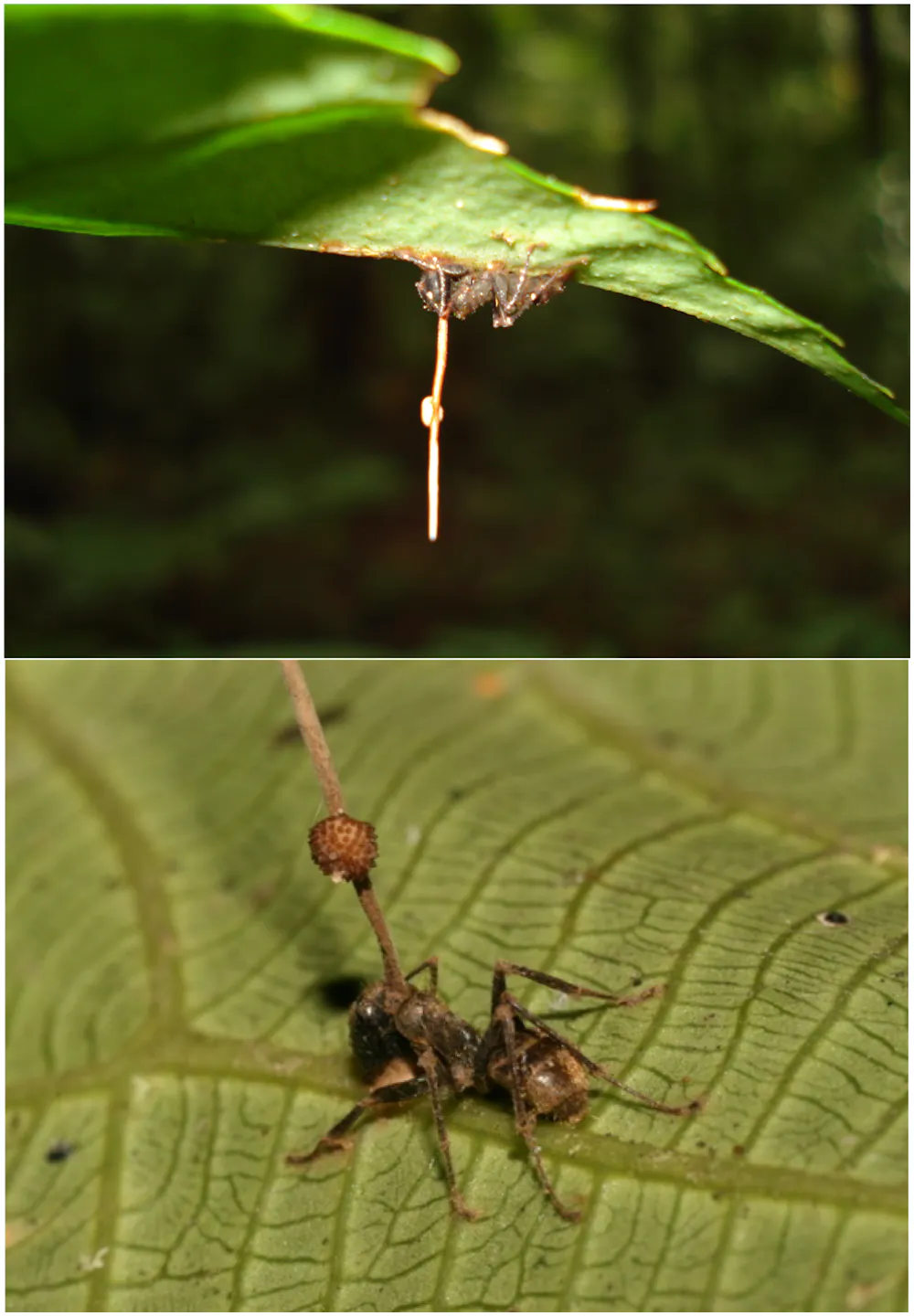
The fungus’s route to that outcome isn’t as simple as brain invasion. Researchers examining infected ants before death found fungal growth throughout the body and around muscle fibers, but not inside the brain. Fungal cells can form networks around muscles, a pattern consistent with effects that involve multiple tissues rather than direct occupation of the brain.
The ant’s jaw muscles offer a closer look. Infected muscles can be heavily colonized and show signs of extreme contraction. Researchers have also found that motor neurons and the connections between nerves and muscles may remain intact. The fungus may therefore affect the machinery that governs contraction, potentially through molecules released near muscle tissue, instead of simply destroying the nerves that control it.
That’s a compelling mechanism, but the full sequence remains unresolved. Scientists have identified fungal genes associated with proteins, toxins and other compounds that could influence chemical signaling in the host. Many of those possible effects haven’t been demonstrated. The current picture is less a proven “zombie switch” than a set of clues about how infection could disrupt several systems at once.
Different parasites, different points of control
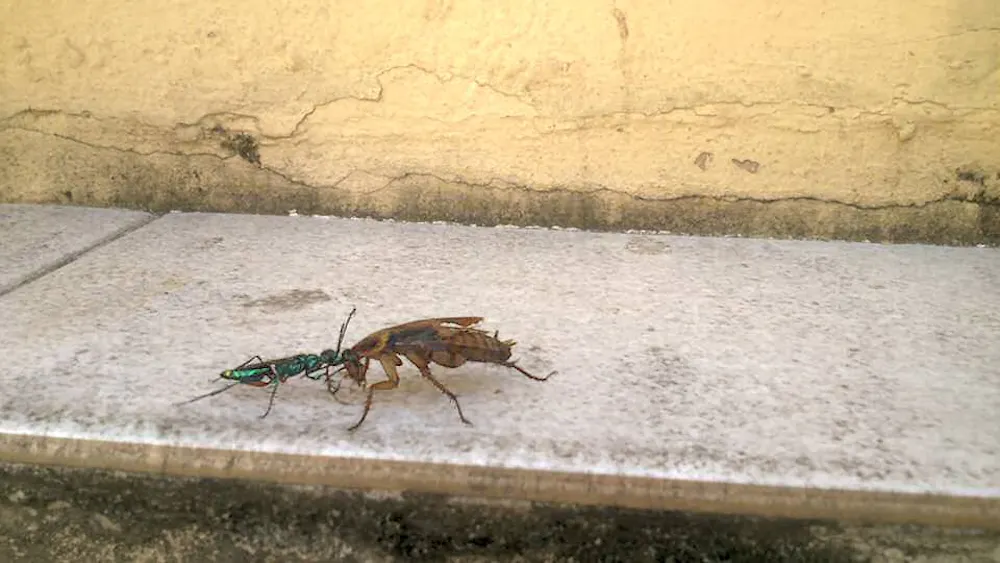
The emerald jewel wasp, Ampulex compressa, manipulates a host through venom. It injects the venom into a cockroach’s nervous system, leaving the insect able to walk but much less likely to start moving or flee. The wasp can then guide the cockroach into a burrow and lay an egg on it. Research indicates that the venom reduces activity in parts of the nervous system involved in initiating movement. The host’s capacity to move remains; its drive to move changes.
Hairworms push host manipulation toward a more perilous destination. Some species grow inside crickets or praying mantises. When the worm is ready to reproduce, the infected insect may become attracted to light, drawing it toward water. The host enters the water, and the worm emerges to continue its life cycle. For an insect that can’t swim, the behavior can be fatal.
Researchers are still investigating how hairworms produce that response. Studies have found changes in proteins in the host’s brain during infection, suggesting that the parasite may affect sensory and behavioral processes. The exact chain linking infection to the host’s altered attraction remains under study.
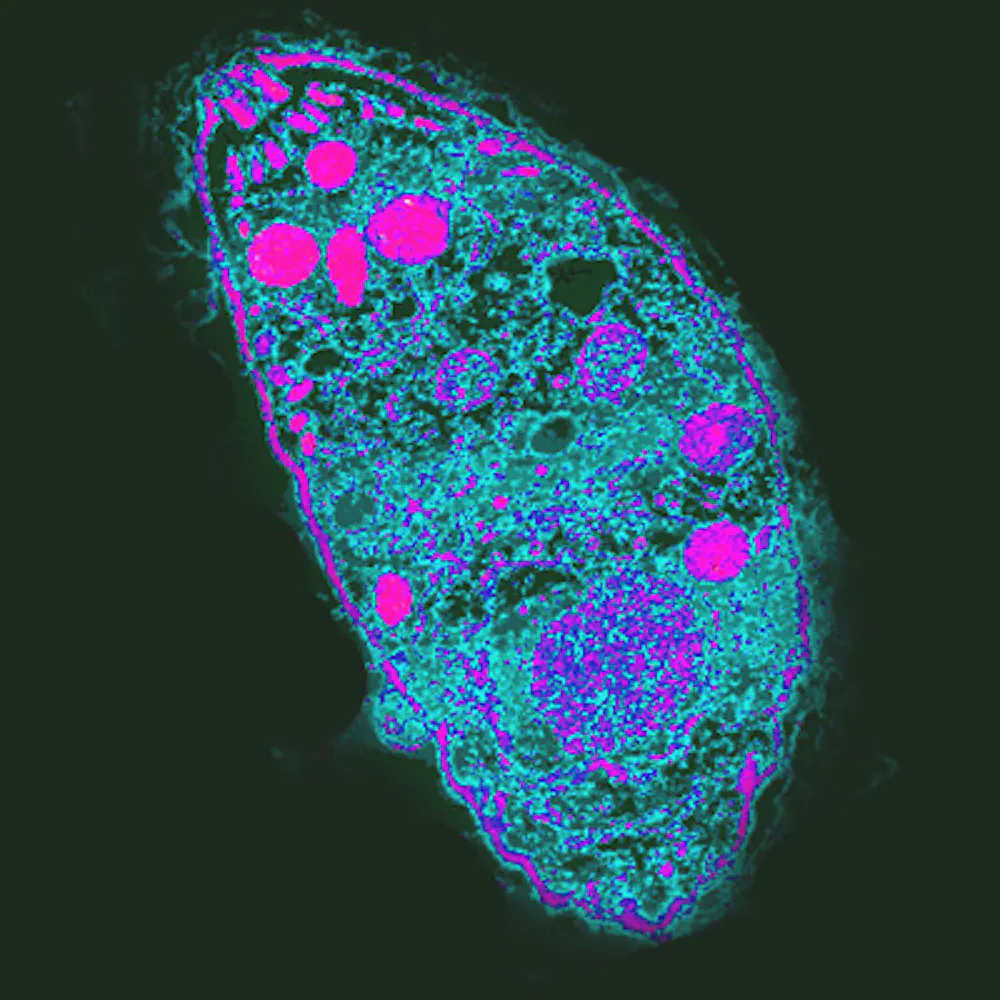
There’s a mammal example, too. Toxoplasma gondii infects many warm-blooded animals, but reproduces in cats. Rodents usually avoid cat odors. Infected rodents can lose some of that aversion and may even become attracted to the smell. That shift could make them more likely to be eaten by a cat, bringing the parasite to a host where it can reproduce.
Small changes, large consequences
Calling these cases “mind control” makes for a vivid shorthand, but it can obscure what the evidence shows. A parasite may only need to change one consequential choice: climb or stay put, begin walking or hesitate, approach water or avoid it, fear a predator or tolerate its scent. A modest shift can redirect a host into a place that suits the parasite.
There’s no single mechanism shared by fungi, wasps, worms and protozoa. Their effects may involve nerves, muscles, sensory systems or chemical signals between tissues. Even in the ant fungus, where the behavioral outcome is striking, scientists have not pinned down how the full pattern of wandering, climbing and biting is produced.
Nature’s zombies don’t dance after death, and they don’t resemble the infected humans of “The Last of Us.” They are living animals whose behavior can be redirected by another organism. Studying how that redirection happens may reveal not only how parasites succeed, but how ordinary behavior is assembled from signals across the body.

Tara Deans receives funding from the National Institutes of Health.



