AC Milan and Inter Milan plan a 71,500-seat shared stadium for 2031–32, designed to bring supporters closer to the pitch while carrying San Siro’s spirit forward.
A shared stadium, again
The clearest signal in AC Milan and Inter Milan’s new stadium plans is that both clubs have returned to a shared venue after years of debate. They’ve unveiled a replacement for the San Siro, officially the Stadio Giuseppe Meazza, and secured naming rights from Generali, Italy’s largest insurance firm. The proposed Generali Stadium is intended to open for the 2031–32 season; the old ground, more than a century after its opening, is slated for demolition.
[AC Milan](/topic/ac-milan) and [Inter Milan](/topic/inter-milan) presented the plans at Castello Sforzesco. Before the briefing, Inter supporters protested in the courtyard with a banner reading “you will never extinguish the lights at San Siro” and chants of “hands off San Siro.” That reaction points to the project’s central challenge: the clubs are replacing a stadium that means more to supporters than its architecture.
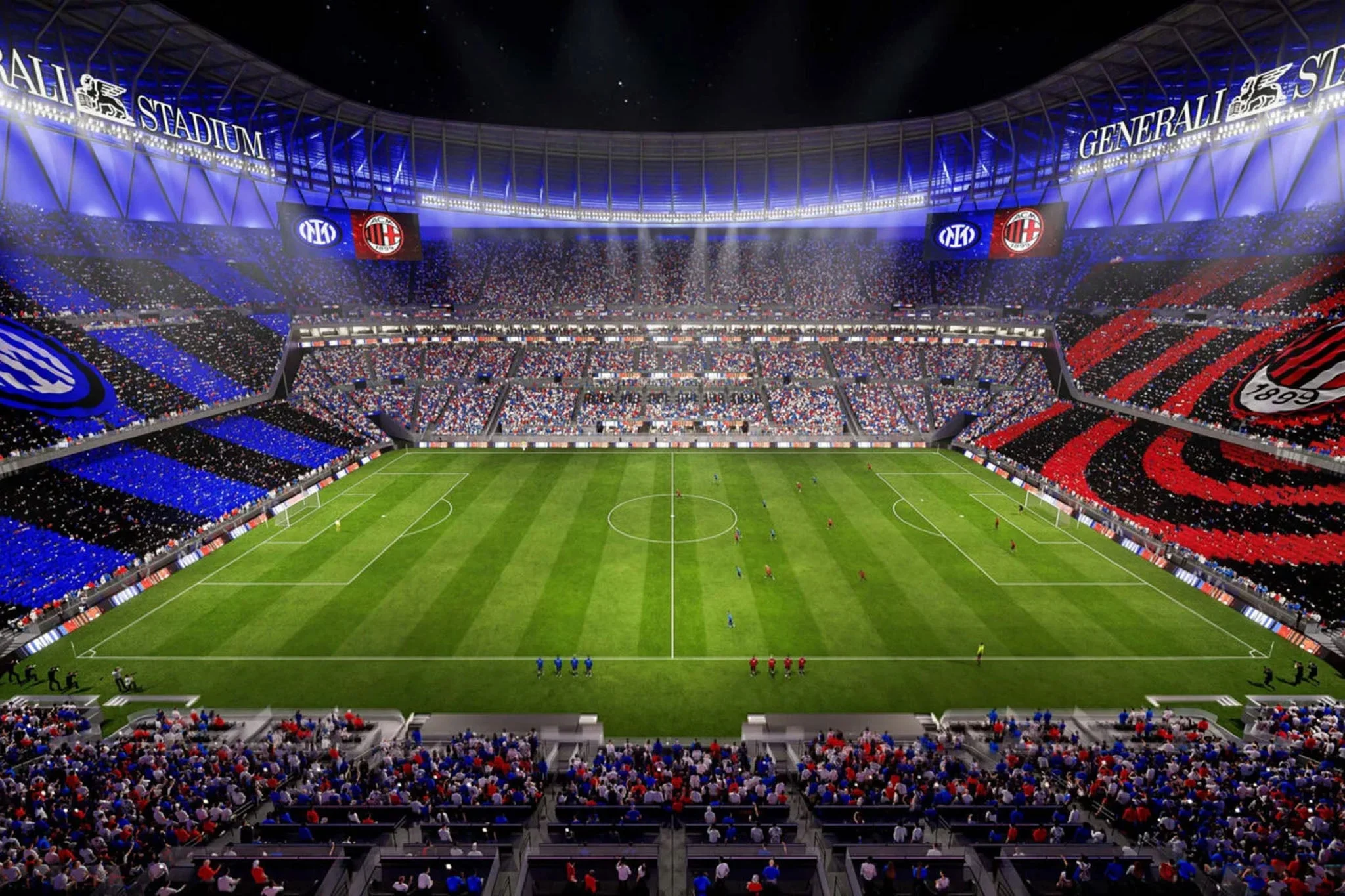
*Internazionale and Milan have unveiled plans for their new Generali Stadium, which is due to replace the shared San Siro from the 2031–32 season. (Foster + Partners)*
Designing around the supporters
Foster + Partners and Manica were appointed to design the stadium after the clubs announced their agreements with the firms last year. Their previous work includes Wembley Stadium in London, Chase Center in San Francisco and Lusail Stadium in Qatar. Norman Foster and David Manica presented the new plans.
Manica described the brief as preserving the old ground’s character in a new building: “same soul, different building.” He argued that San Siro is “a feeling, more than a building,” and said the design aims to carry that feeling into its successor. That’s an appealing ambition; whether a new arena can recreate the attachment supporters have to San Siro is harder to design for.
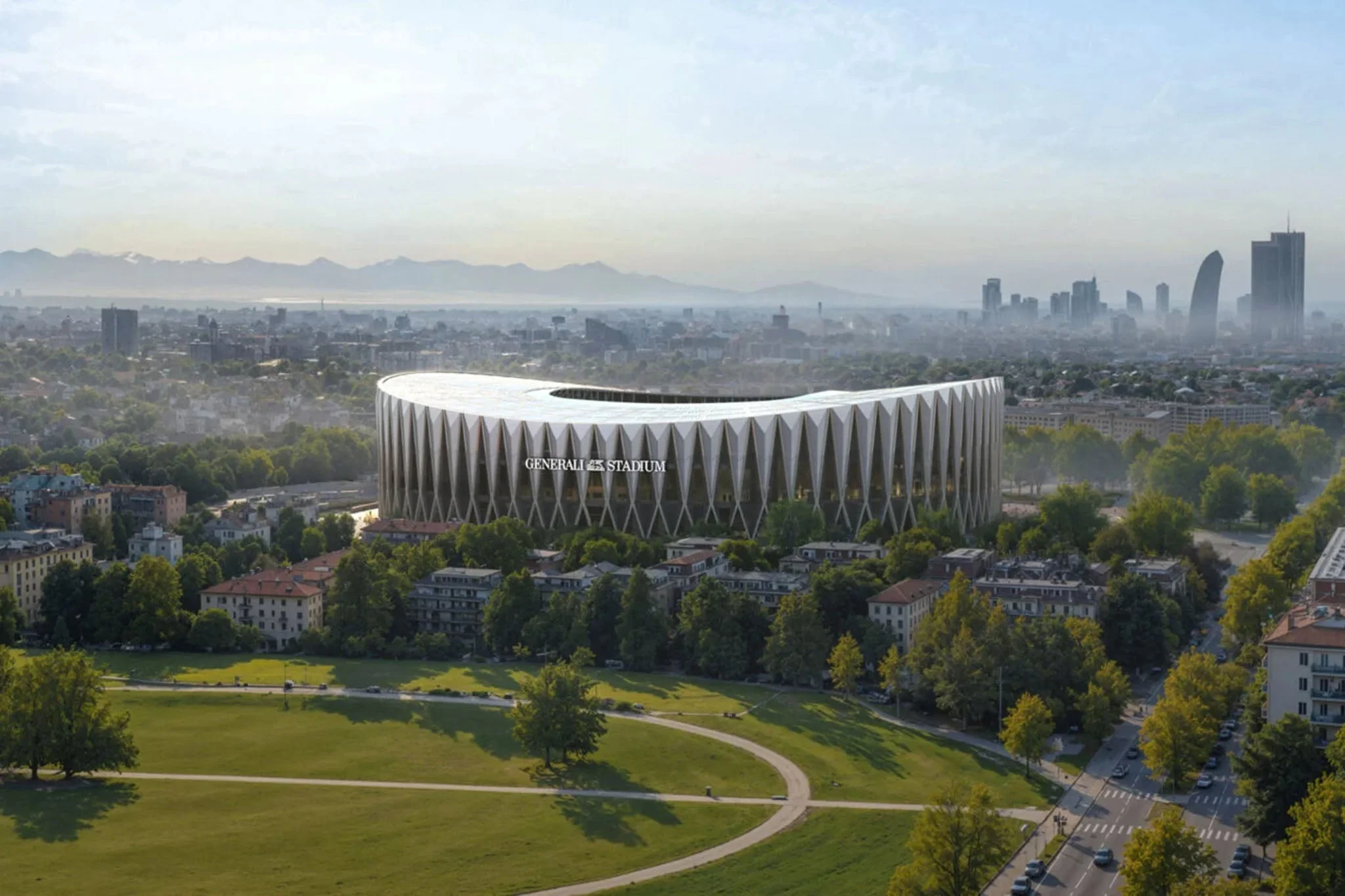
*The clubs’ proposals would replace the Stadio Giuseppe Meazza, better known as the San Siro. (Foster + Partners)*
The stadium’s oval frame will be formed from 80 large diamond shapes beneath a double-curved roof. The diamond points will rise to 60 metres behind each goal, at the ends known in Italian as “the curva,” where the most committed supporters sit. Foster said the shape responds to those fans: the stadium stays low through its body and rises at either end.
The venue will sit on a podium, with parking, a museum and club stores below. The wider development is planned to cover about 281,000 square metres, or more than three million square feet.
A closer, louder bowl
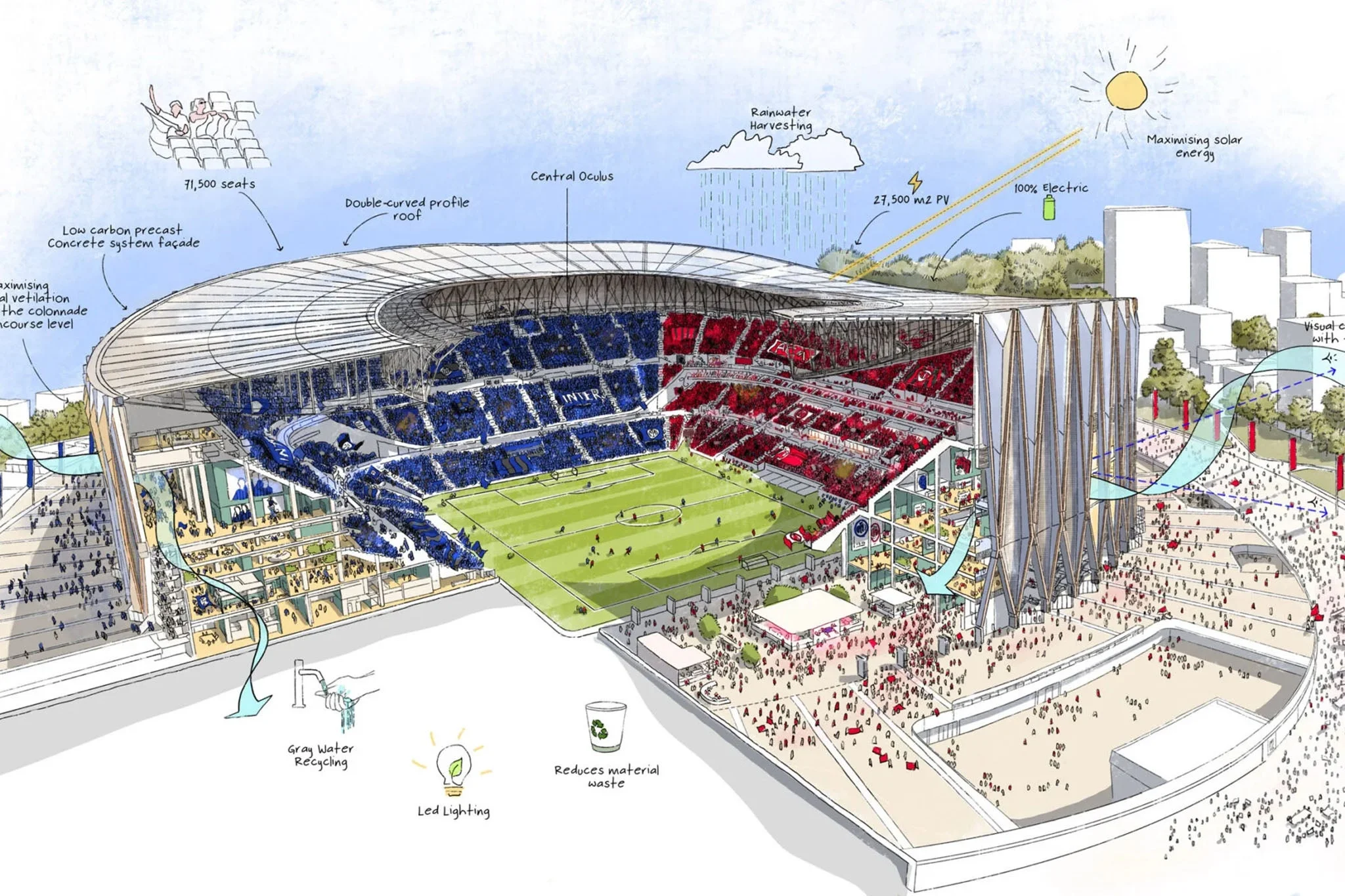
Inside, the 360-degree bowl is planned to hold 71,500 people across two tiers, replacing San Siro’s three rings. Manica says the seats will bring spectators so close to the pitch that it will feel “as though you’re sitting on the grass.” Seating will rise at angles of up to 37 degrees.
The two curvas are the centrepiece of the atmosphere plan. Manica said they would work like “two walls of people,” extending as far as possible over the goals; their front rows will be closer to the pitch than those at the existing stadium. The design is also meant to contain crowd noise and reduce disturbance outside. That balance is the test: the clubs want an intense matchday sound inside without simply exporting it to the surrounding area.
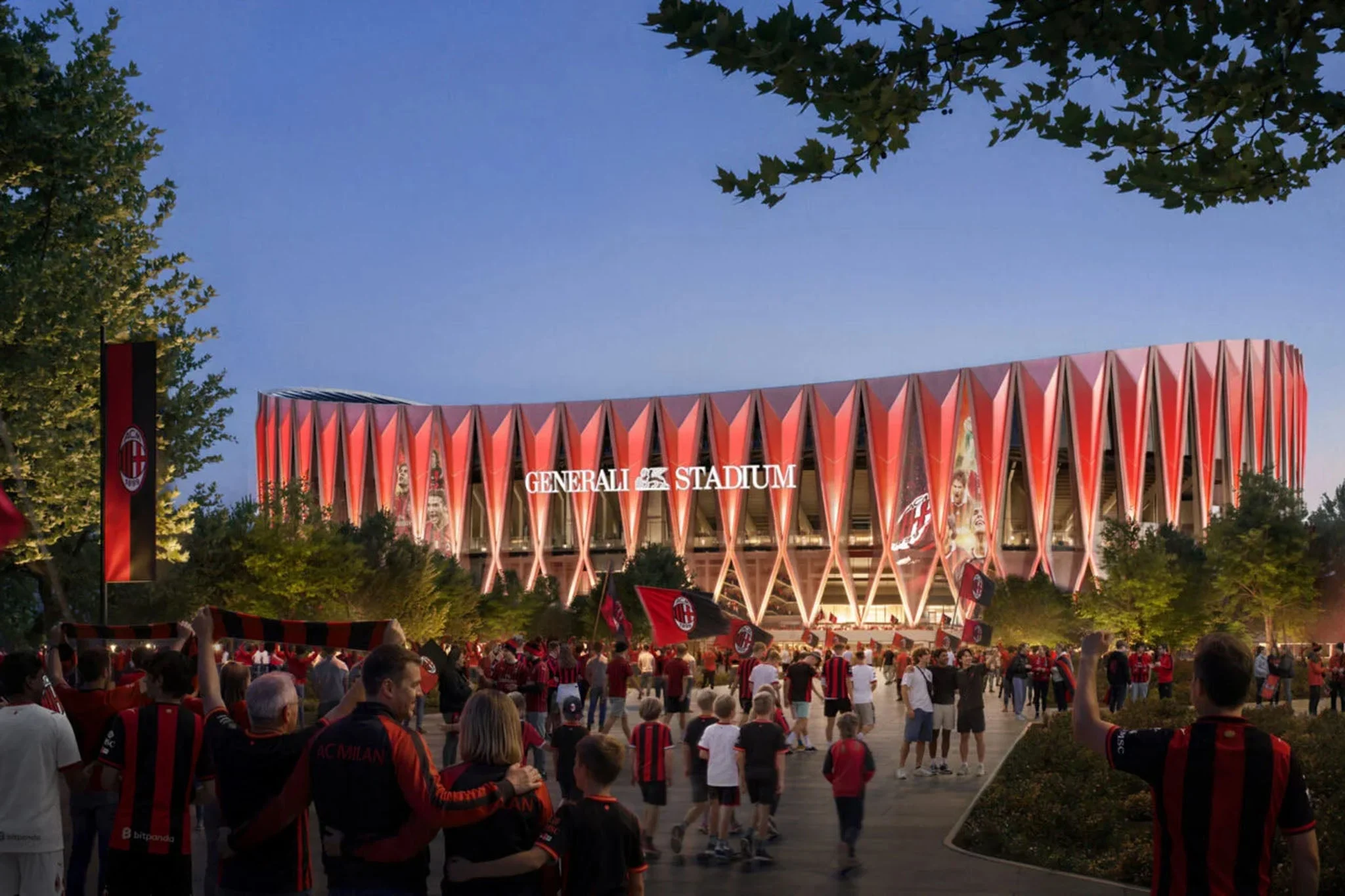
The exterior will have coloured LED lighting and the ability to display images on its facade. The stadium is also planned to host concerts and other events.
*The proposed bowl has 71,500 seats in two tiers, compared with San Siro’s three rings. (Foster + Partners)*
The schedule has slipped before
Construction is expected to start in 2028, with the first match targeted for the 2031–32 season. That timing would put the stadium in place for the 2032 European Championship, which [Italy](/topic/italy) will co-host with Turkey. The clubs plan to keep playing at San Siro while construction takes place on an adjacent parking lot; the old stadium would then be mostly demolished.
The schedule deserves some caution. Inter president Giuseppe Marotta warned last year that Italian bureaucracy could delay the project, and the clubs have already seen earlier plans stall. Proposals unveiled in 2019 included Populous’s “The Cathedral,” selected two years later over Manica-Cmr Sportium’s “The Rings of Milano.” The new venue was once expected to be ready by 2024 or 2025, but public debate and bureaucratic delays pushed the clubs to consider other options before they returned to a shared-stadium plan at San Siro.
*Construction is forecast to begin in 2028, with the first match planned for 2031–32. Marotta has warned that bureaucracy could hold the project up. (Foster + Partners)*
The financial case
The clubs’ purchase of San Siro was valued at €197 million ($226 million). Milan president Paolo Scaroni has said they expect to invest more than €1 billion in the new stadium.
The revenue projections are ambitious: estimates suggest each club could earn as much as €180 million ($208 million) annually at the new venue, compared with about €80 million ($93 million) today. The anticipated increase depends partly on visitors outside matchdays, including museum visits and stadium tours, as well as concerts, other events and Generali’s naming-rights deal. Those figures explain the commercial appeal of the project; they don’t, on their own, show whether the stadium can meet its schedule or win over supporters.
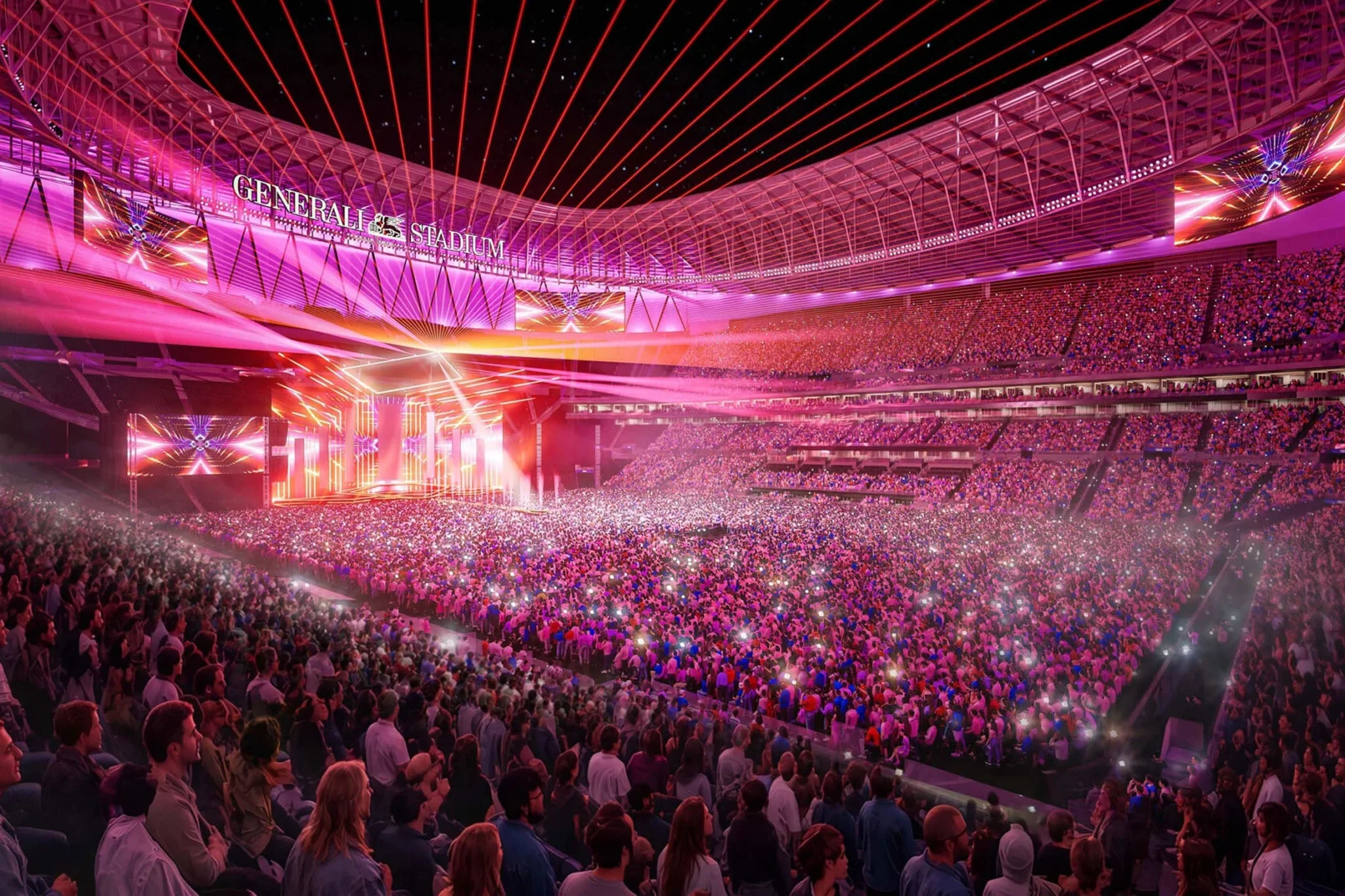
*The stadium is also intended to host concerts and other events. (Foster + Partners)*

