The conviction turns on what Richardson knew
The murder conviction of Simon Richardson turns on what jurors concluded he knew after striking cyclist Michael Mullins: that the 56-year-old was trapped beneath his vehicle, and that driving on could kill him. Richardson was also convicted of dangerous driving in a separate incident the day after the collision. The central question for the jury was therefore not simply how the crash happened, but what Richardson understood once the collision was over and what he chose to do with that knowledge.
That distinction matters. A collision can begin as a driving offence, but the prosecution’s case was that Richardson’s actions afterwards showed he knew Mullins was beneath the car and nevertheless continued. The verdict indicates that jurors accepted that account. It makes the drive away from the junction, and the attempts to free Mullins at the track, central to how they assessed Richardson’s state of mind.
A collision followed by a 1.3-mile drive
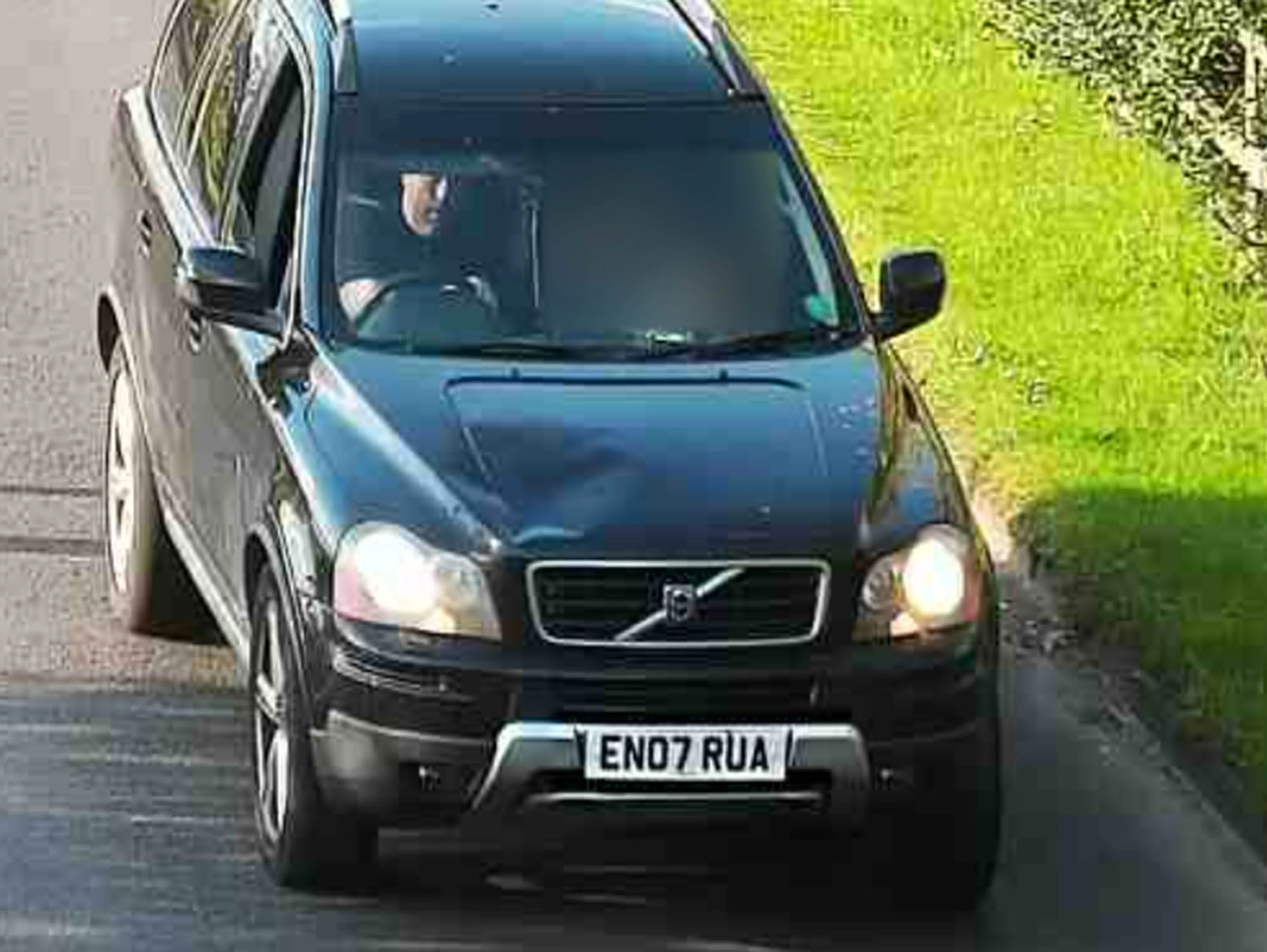
Mullins, a father of two and headteacher at Stretford Grammar School, was cycling home on the evening of 20 April when Richardson’s Volvo XC90 went through give-way markings at a junction on Paddock Lane in Warburton, Greater Manchester. The car hit Mullins, throwing him onto the bonnet and windscreen before he became caught in the vehicle’s suspension. The sequence left him attached to the vehicle as Richardson drove away from the junction.
Prosecutors said Richardson continued for 1.3 miles to a secluded farm track on Wet Gate Lane, Lymm, with Mullins lodged underneath. Richardson’s cousin and front-seat passenger, Gabrielle Debotte, testified that they heard “moaning” as they drove away. She said Richardson then remarked: “He’s under the car.” For the prosecution, those reported words and the sound Debotte described helped establish what Richardson had been told and heard during the journey.
At the track, Richardson tried twice to pull Mullins free. He then returned to the Volvo and swerved it sharply from side to side before driving onto a grass verge. Mullins came loose, but Richardson ran over him while reversing and drove away. The attempts to free Mullins sit alongside the decision to move the car in a way that dislodged him; jurors had to consider what those actions revealed about Richardson’s awareness and intentions. A confused and dangerous sequence, with Mullins’s life at its centre.
Prosecutors’ case and the verdict
Prosecutor Phil Barnes KC argued that Richardson understood Mullins was trapped and chose to leave the scene to avoid responsibility. Barnes told jurors Richardson “inevitably knew what the consequences of driving on would be, and he did it anyway.” He said Richardson briefly had the chance to get out and help, but instead drove away. That was the prosecution’s account of the choice at the heart of the murder charge: the danger, Barnes argued, was apparent to Richardson before Mullins was freed from beneath the vehicle.
Richardson denied murder, saying he did not know Mullins was beneath the car and had not refused to get out to free him. The jury therefore faced competing accounts of what he knew, with Debotte’s testimony and the events at the track forming part of the evidence. In cases like this, actions can carry particular weight because a person’s knowledge and intention must be inferred from the evidence presented. The verdict shows that the jurors rejected Richardson’s denial.
Jurors began deliberations on Wednesday and returned their verdicts at about 11.45am on Friday. Family members in the public gallery wept as the verdicts were read. The reaction in court conveyed the immediate human cost of the decision, but the verdict itself rests on the jury’s assessment of the evidence and the charges before it.
A motorcyclist had followed a trail of blood from Paddock Lane and found Mullins alone on a grass verge, barely breathing. Emergency crews could not save him. Mullins, who lived in Northwich, Cheshire, died from multiple injuries. The motorcyclist’s discovery came after the drive to the track and Richardson’s departure, leaving Mullins at the roadside until he was found.
Richardson was arrested the following day after a police pursuit. The separate dangerous-driving conviction relates to that pursuit on 21 April, a distinct incident from the collision that killed Mullins. Richardson was due to be sentenced on Monday. That hearing will address the consequences of the convictions; the account here establishes the jury’s findings, not what sentence will be imposed.
Family remembers Mullins
After the trial, Mullins’s family described him as devoted to them and said his death had left a lasting absence in their lives and at Stretford Grammar School, where he served as headteacher. Those are the losses most directly described by the people closest to him: a family member and a school leader whose absence continues beyond the courtroom. The verdict answers questions of criminal responsibility, while it cannot undo those consequences.
Judge Mrs Justice Brunner KC excused the jurors from jury service for 10 years, acknowledging that the case had been upsetting and included evidence they may have found distressing. The decision recognises the burden of hearing evidence about a fatal collision and its aftermath, without changing the jury’s findings.
What the case leaves in view
This is more significant than it looks: the conviction rests on the jury’s conclusion about Richardson’s knowledge after the initial impact, not just on the fact that a cyclist was struck. The reported words in the car, the continued drive, and the actions at the farm track were all part of the account the prosecution put before the jury. Taken together, those details made the aftermath central to the case.
If you’re working in road safety, transport, or local public life, the case is a stark reminder that a collision’s consequences can extend far beyond the point of impact. What happens in the minutes afterwards can shape both the immediate chances of help and the eventual legal account of events. And yet, the public record here supports only a careful conclusion: jurors found Richardson guilty of murder and dangerous driving, while the sentence was still to come.
That said, the reported facts leave no room for treating this as an abstract debate about driving conduct. Mullins was a father, a school leader and a cyclist returning home. His family described a lasting absence; the convictions establish the jury’s judgment on Richardson’s actions. The case’s wider significance lies in the consequences of that judgment and in the evidence that led to it.

