The discovery of Infernogallus jamesi adds a specialized fruit eater to the late Cretaceous food web. Its jaw and beak point to a dinosaur that chewed soft plants and fruit—evidence that theropod diets reached further than the familiar split between predators and plant eaters.
A small dinosaur with a specialized bite
About 66 million years ago, this turkey-sized theropod lived in what is now North Dakota and Montana. It measured roughly 5 feet (1.5 meters) long and weighed close to 25 pounds (11.3 kg). Researchers recovered an almost complete skeleton, along with separate palate and jaw bones.
The name means “hell chicken,” referring both to its birdlike features and to the Hell Creek rock formation where it was found. The formation stretches across Montana, North Dakota, South Dakota and Wyoming, and has yielded many notable dinosaur fossils.
Infernogallus inhabited a subtropical coastal floodplain alongside animals including Tyrannosaurus, Triceratops and Ankylosaurus. No skin or feather impressions were preserved, but researchers suspect it had plumage based on evidence from related species.
Its classification as a theropod places it within the broad group that includes T. rex, several plant-eating lineages and the ancestors of modern birds. Paleontologist Greg Funston of Stony Brook University, lead author of the study published in Nature Communications, said the find broadens the range of known dinosaur lifestyles and shows how adaptable theropods were.
Clues in the jaw
Researchers point to three features that support a fruit-eating diet: jaw muscles suited to back-and-forth chewing, a flexible joint that let the lower jaw slide forward, and ridges and grooves on the beak that could cut and mash soft vegetation.
Each feature has a parallel in modern animals that eat soft foods. Funston cited the fig-eating vulturine parrot and green sea turtles feeding on soft seagrass. But he said no living animal combines all three adaptations, making Infernogallus unusually specialized.
The beak also helps explain how this diet was possible without teeth. Funston said losing teeth and developing a beak can expand the range of available foods, including plants, provided the animal can digest them.
Many plant-eating theropods swallowed gastroliths—stomach stones that helped grind food. Infernogallus and related caenagnathids instead processed food through active chewing. Its possible menu included berries and drupes, fruits with a central stone, such as peaches, cherries, olives and mangoes.
Fruit and the Cretaceous ecosystem
Flowering plants, or angiosperms, first appeared roughly 130 to 140 million years ago and gradually became more widespread than earlier plant groups such as ginkgoes and conifers. The fossil evidence suggests at least some dinosaurs developed a close ecological relationship with this growing source of food.
Study co-author Thomas Dudgeon, a postdoctoral researcher at Toronto’s Royal Ontario Museum, said researchers had previously proposed that some dinosaurs ate fruit, but lacked evidence to support the idea. He described the find as evidence that dinosaur diets were more varied than assumed, and that flowering plants introduced a new food source with consequences for animals living alongside them.
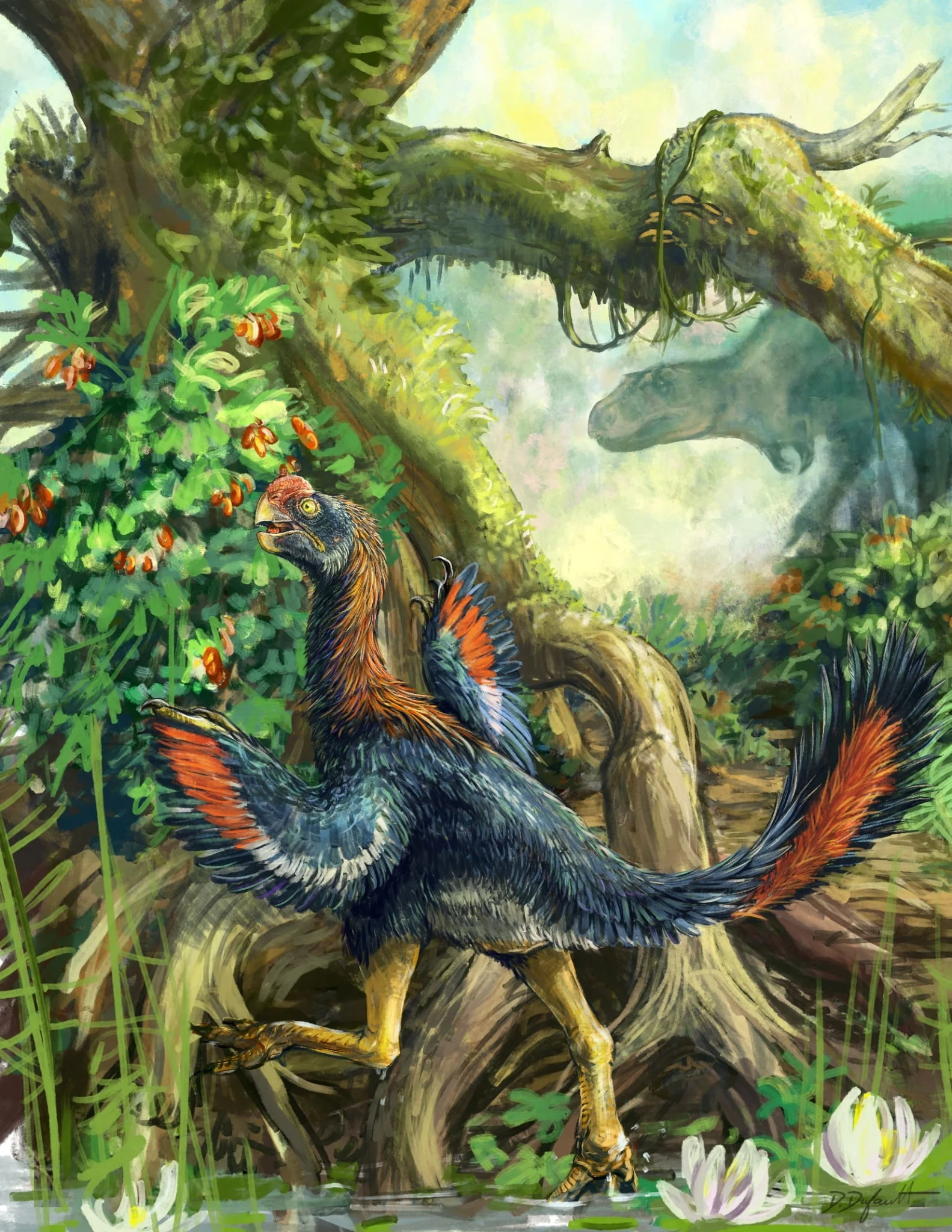
Fruit eaters can help flowering plants spread by dispersing seeds. Funston said mammals and birds likely ate fruit too, but lacked the same known specializations, and their small size in the Cretaceous may have limited how far they could carry large seeds. Caenagnathids could have helped spread the larger-seeded fruits then proliferating, he said, though more evidence is needed to establish that link.
For now, Infernogallus offers a rare anatomical record of a dinosaur adapted to fruit. Its specialized chewing suggests flowering plants had already begun reshaping the diets—and potentially the ecological roles—of some dinosaurs before the end of the Cretaceous.

