A leaking tap, and a large estimated loss
A leaking specialist tap in the emergency department at Glan Clwyd Hospital may have wasted more than 1.16 million litres of water during an 81-day period. The health board says the fault began as a minor drip and grew into a heavier flow before repairs were completed. That estimate makes the incident striking, but it depends on assuming the tap ran continuously at a rate drawn from a campaign group’s guidance.
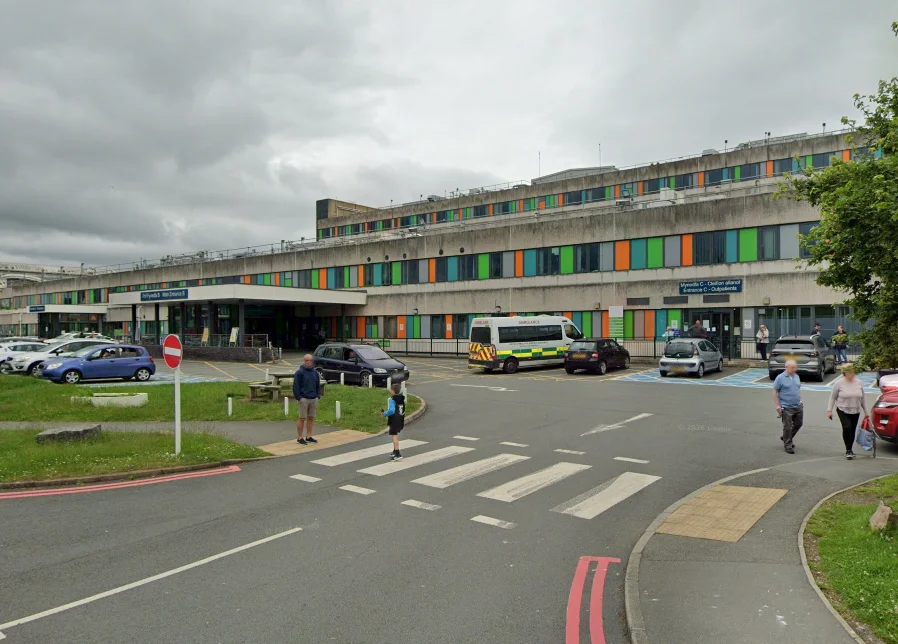
The tap, in the hospital’s emergency department in Denbighshire, was repaired on 26 October, according to Betsi Cadwaladr University Health Board. A sticker beside it showed the problem had been reported on 7 August, the BBC’s Local Democracy Reporting Service reported. The dates establish a long wait between the recorded report and the repair, though they don’t show how the fault changed day by day.
Using the campaign group Let’s Save Water’s estimate of 10 litres per minute for a running tap, 81 days of flow could amount to 1,166,400 litres. The figure is an estimate based on that rate. It shouldn’t be read as a meter reading or a measured total: the board’s account says the leak worsened over time, while the calculation applies one assumed rate across the full period.
Repair delayed by specialist part
Arwel Hughes, the health board’s operational estates chief, said the reported fault was initially “a minor drip from a specialist clinical tap”. He said the board ordered a replacement part promptly, but supplier lead times delayed the repair until 26 October. That explanation identifies procurement as a key constraint; it doesn’t, by itself, explain what other repair options were considered during the wait.
Hughes said decisions about isolating or taking the tap out of service had to account for patient care and the availability of essential handwashing facilities in a busy clinical area. In a clinical setting, a tap can serve a safety function beyond delivering water, so shutting it off may create a different operational problem. The board said the drip worsened into “a more substantial flow” while the repair was pending. Here’s the thing: the dilemma is real, but it also makes clear why a long wait for a part needs an interim plan.
It is now working with suppliers to review the availability and delivery times of specialist replacement parts, Hughes said, with the aim of reducing future repair delays. That review could help the board understand where supply delays are most likely to affect maintenance. Its value will depend on whether it leads to practical changes when a part can’t be obtained quickly.
Calls for faster response
Waterwise chief executive Nicci Russell told the BBC the waste was “absolutely horrific”. She pointed to warnings from the climate change committee that drought is among the UK’s top three climate risks, adding that parts of Wales were still experiencing drought. The comment places this local maintenance failure against wider concern about water scarcity, though the estimated loss here remains an estimate rather than a confirmed volume.
Denbighshire County Council member Chris Evans said a constituent sent him a video of the tap, filmed on 11 October. He told the BBC: “It sums up what is wrong with Betsi, that they can’t even sort a running tap that’s been running since August.” The video gave the complaint a visible focus, but the account from the health board points to a more specific cause: a specialist part that had been ordered but had not arrived in time to complete the repair.
What the incident reveals about maintenance
The episode leaves a practical challenge for hospital estates teams: balancing access to essential clinical facilities against the need to contain a fault, while specialist parts may take weeks to arrive. This is more significant than it looks because a small leak can become a costly, public problem when repair timelines stretch and the fault worsens. The case also shows why reporting a fault, ordering a part and resolving the problem are distinct stages, each of which can affect how long water continues to run.
If you're working in this space, the useful question is what happens between the initial report and the arrival of a replacement: whether the leak is monitored, whether its severity is reassessed, and whether a safe temporary response is available. The health board says it’s reviewing supply and delivery times, but the source doesn’t specify what changes that review will produce. Faster repairs depend on more than identifying a delay. On the ground.
(And this is the part most people overlook.) The headline total is memorable, yet the operational lesson is less tidy: a clinical facility can’t treat every tap as an ordinary fixture, and a specialist component can turn a routine repair into a prolonged service issue. That said, the 81-day gap and the reported worsening flow leave a straightforward question for the board: how will it limit water loss when the required part isn’t immediately available?

