The Canada–EU summit in Montreal produced a new alliance and a timetable for defining a closer relationship. The central question is whether Canada could become the bloc’s first “associate member,” a label whose meaning remains unsettled. That uncertainty matters: the summit created momentum for closer ties, but it didn’t settle what membership would grant Canada or what commitments it would require.
Canadian prime minister Mark Carney said Friday that the two sides would work out the relationship’s scope over the coming months, with a target of reaching agreement by a 2027 summit. He described the goal as the “deepest possible partnership, short of accession,” and said it could make Canada the EU’s first associate member. The phrasing points to a deliberate middle ground: deeper cooperation than a conventional partnership, without Canada joining the bloc as a full member.
That title is contested inside the bloc. Germany and several other member states oppose it, and it has no legal meaning. The term was also left out of the summit’s final statement, despite European Commission president Ursula von der Leyen saying a day earlier that discussions were continuing. The gap between public discussion and the agreed statement is a reminder that a political label can move faster than the institutions expected to give it substance.
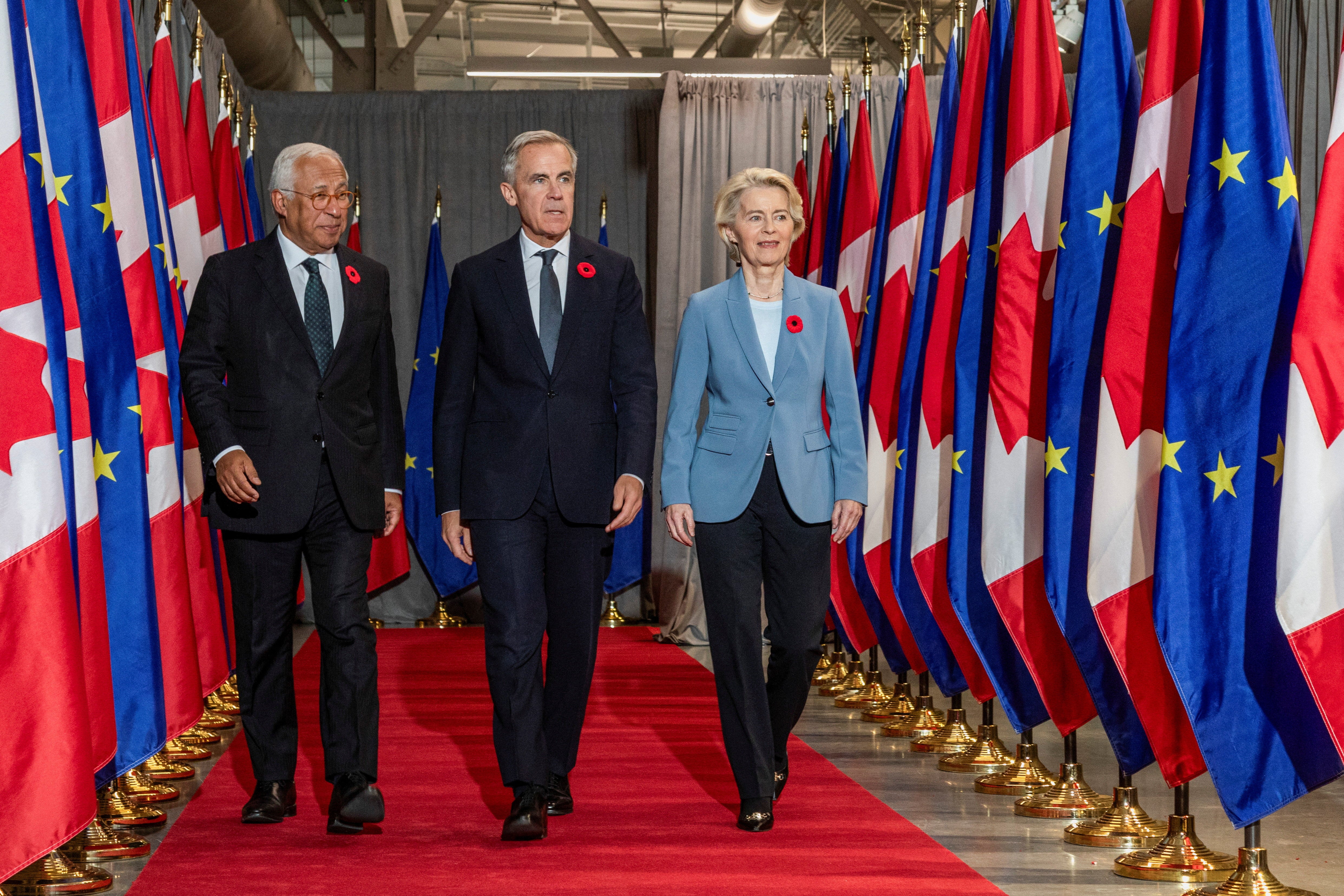
A proposed alliance with practical priorities
The proposed “Alliance for the Future” is intended to bring Canada, the EU and other like-minded countries together to tackle shared challenges. Carney said its priorities include resilience in AI, energy and critical minerals. Those areas connect economic policy to questions of supply, infrastructure and security: cooperation could help the partners coordinate their approach, though the summit announcement doesn’t yet explain how the alliance would operate or what decisions it could make.
The two sides also concluded talks on a digital trade agreement designed to complement their existing trade deal. That is a more defined step than the associate-member proposal, but the available description leaves its scope unclear. A digital agreement can address how trade works across online services and data-dependent activity; its practical value will depend on the terms the parties settle and how it fits with the existing arrangement.
Security and trade priorities
A joint statement from Canada and the 27 EU member states reaffirmed their commitment to multilateral cooperation, democracy and the rules-based international order. It also set out plans to work on conflicts in Ukraine and the Middle East and to deepen security ties, including in the Arctic. The statement’s breadth signals shared political aims, while the reference to specific regions gives the partnership a security dimension beyond commercial ties.
That breadth also raises a practical question: how much can a new alliance deliver when its members have different national priorities? The statement records common ground, but it doesn’t by itself resolve disagreements or establish a single policy. Here’s the thing: a framework can make coordination easier, but only repeated work on defined issues will show whether it changes outcomes.
The announcement comes amid strained relations between Canada and the United States. US president Donald Trump threatened trade sanctions last month after von der Leyen proposed a new status for EU–Canada ties. Carney has called Canada “the most European of non-European countries”; recent discussions on US–Canada trade have made only modest progress. The timing gives the Montreal announcement added weight, as Canada seeks stronger connections with European partners while its relationship with its closest neighbour faces pressure.
That context doesn’t establish that the proposed alliance is a response to Washington, and the summit statement doesn’t say that it is. Still, the overlap between trade tensions and closer EU–Canada discussions makes the partnership’s economic and security ambitions harder to read as routine diplomacy. The numbers here are underwhelming only if measured by immediate deliverables; the more consequential test is whether the parties can turn broad alignment into durable cooperation.
Carney said the alliance would extend beyond trade to the industries and infrastructure underpinning shared security. He has accepted an invitation from European Council president Antonio Costa to attend meetings in Europe next June, where he expects discussions on the closer relationship to conclude. That meeting gives negotiators a nearer point at which to narrow the questions left open in Montreal. (And this is the part most people overlook.) The label may draw attention, but the definition will determine whether it carries practical weight.

What the timetable will test
The next milestone is concrete: the two sides have until 2027 to define what their deeper association would involve. For now, the alliance sets shared priorities; its eventual form will depend on whether EU members can agree on terms that satisfy both sides. That leaves a significant amount of work between a summit announcement and a settled arrangement.
If you’re working in this space, watch for the substance behind the title: which areas receive formal commitments, how the digital trade agreement fits with existing ties, and whether security cooperation gains specific shape. The timetable offers a measure of momentum, but the internal opposition to “associate member” status shows that agreement on the relationship’s name may be the easiest part. The harder task is defining a partnership both sides can explain and sustain.

