Regional pipeline points beyond Metro Manila
Jollibee Foods Corporation’s Philippine expansion plans point to a broader growth opportunity than a simple store count: the company has identified more than 1,500 potential trade areas for 2027 to 2030, most beyond Metro Manila. A trade area is a market the company sees as a possible fit for its restaurants; it doesn’t guarantee that a site will be secured or that a store will open. The size of the pipeline gives investors and competitors a sense of where JFC sees room to grow, while leaving the pace and scale of actual expansion unresolved.
In a disclosure on Thursday, October 29, JFC said about 71% of those areas are outside the capital region. The company sees room there for Jollibee, Mang Inasal and Chowking, which together account for nearly 90% of its systemwide sales in the Philippines. Jollibee alone contributes 62%. That concentration makes the performance of these three brands central to JFC’s domestic growth plans, even as the group operates other concepts.
That pipeline doesn’t mean 1,500 new restaurants are coming. JFC hasn’t specified locations, required investment or yearly opening targets, so the figure describes identified opportunities rather than a construction schedule. Each site will depend on availability, commercial viability and expected returns. Those conditions matter: an attractive market on paper still has to support a store that can draw customers and earn an adequate return.
Growth depends on formats as well as locations
JFC’s expansion plans come as it has trimmed its global store-opening target for 2026. The company lowered its forecast from 1,200 to 1,300 new stores to 1,000 to 1,100 in its updated full-year guidance for the second quarter of 2026. The change puts the domestic pipeline in context: JFC is still pursuing expansion, but its revised global target signals that planned growth has to be weighed against the conditions facing the business.
Its Philippine business grew systemwide sales by 5.7% in Q2 2026, while same-store sales rose 1.3%. The gap suggests that new outlets are doing more of the work in driving sales growth, making site selection and store economics especially relevant to the expansion pipeline. Same-store sales track performance at locations open long enough to be compared across periods; systemwide sales also reflect the contribution of newer outlets. That distinction matters because opening more stores can lift total sales even when existing locations are growing more slowly.
JFC is also testing formats that could lift sales at existing locations. Mang Inasal’s eight drive-thru restaurants, operating as of the first half of 2026, recorded average daily sales about 40% higher than its other stores. That result offers a concrete signal of how the group may adapt its brands as it enters new markets. It’s an encouraging comparison, though the number of locations is small enough that it can’t, by itself, establish how the format would perform at scale.
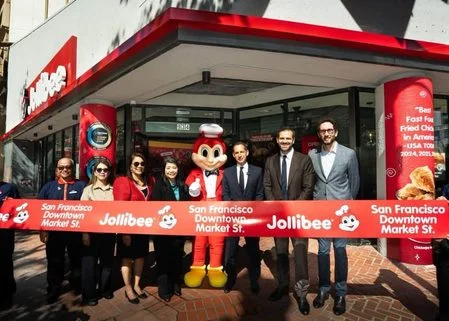
International profile and a proposed spin-off
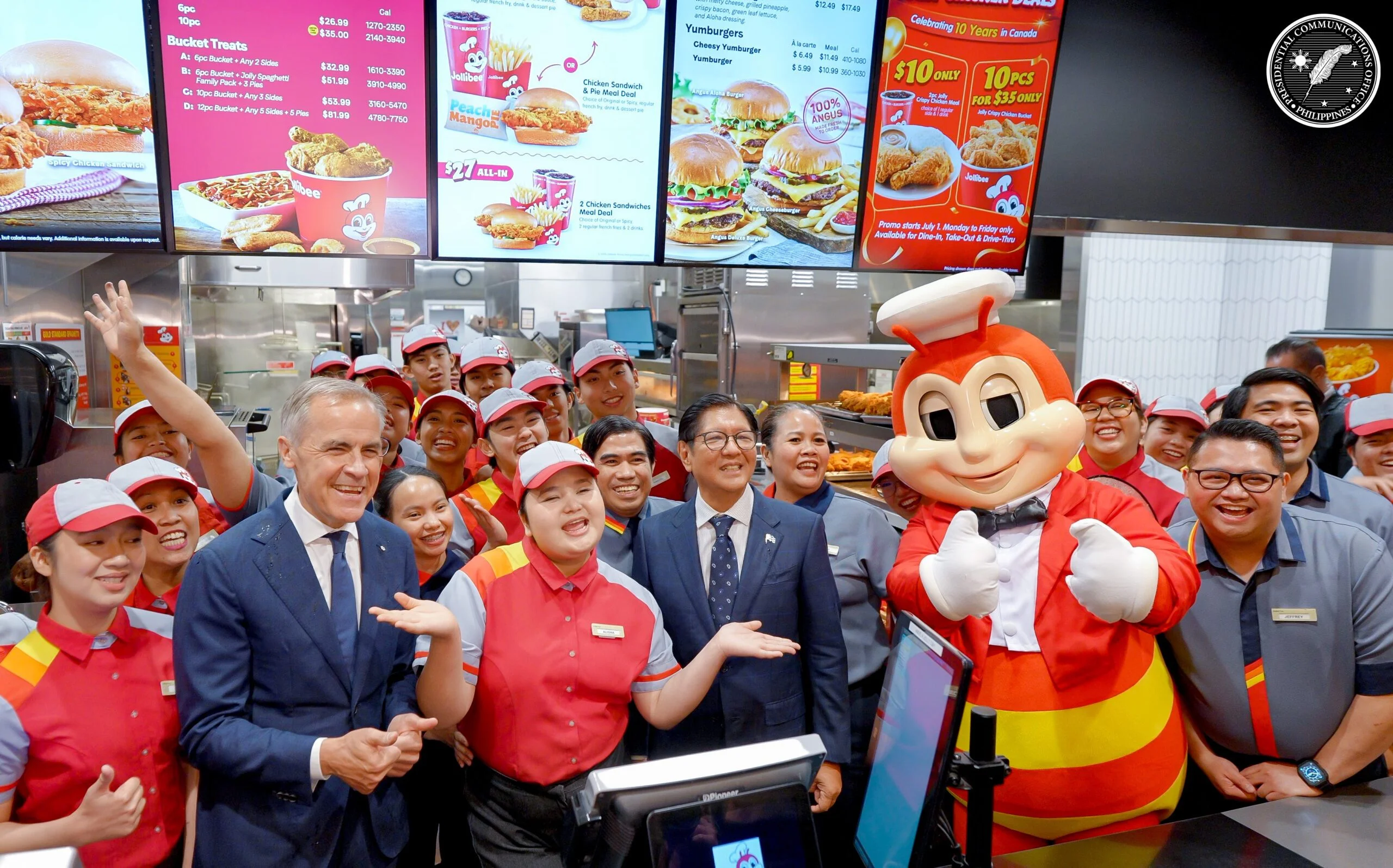
Jollibee’s visibility abroad has also brought it into high-profile visits. In July, Philippine President Ferdinand Marcos Jr. and Canadian Prime Minister Mark Carney stopped at a Vancouver branch after bilateral meetings. A restaurant visit doesn’t establish how much business the brand is doing in Canada, but it shows how the company’s stores can serve as public settings for the Filipino brand abroad.
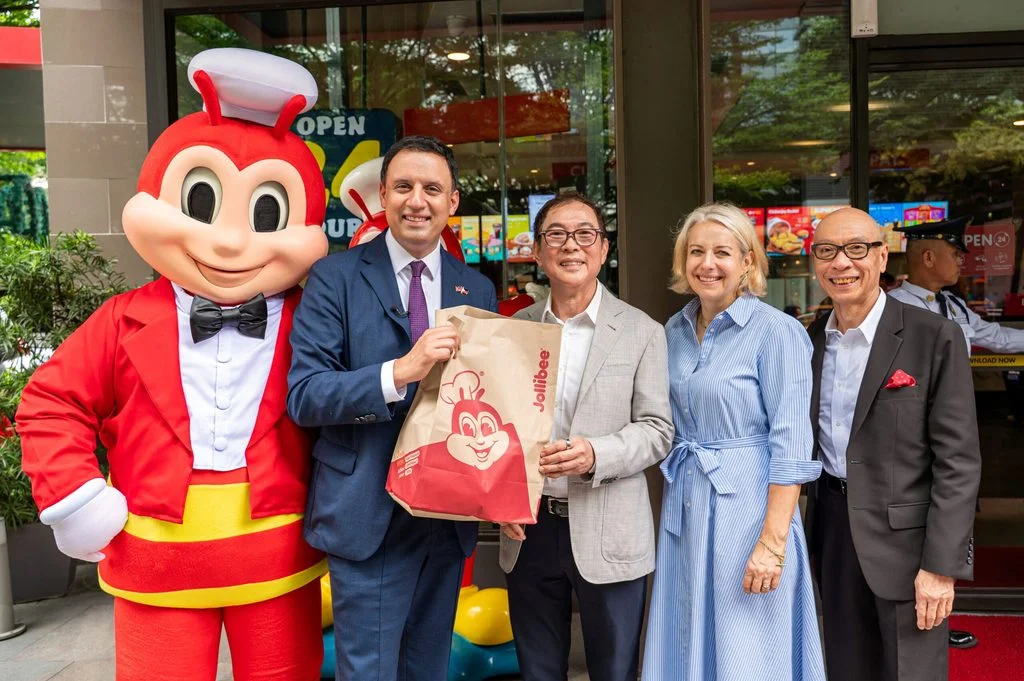
In September, British Trade Minister Anas Sarwar visited a Jollibee in Bonifacio Global City during the first Philippine visit by a UK trade minister in nine years. He met founder Tony Tan Caktiong, tried the menu and received a Jollibee Funko Pop wearing a Barong Tagalog. The visit brought together the company’s local identity and its international ambitions in a highly visible setting. It doesn’t, on its own, tell us how quickly the brand can grow in Britain or other overseas markets.
The company is also preparing a separate corporate structure for its overseas operations. JFC plans to spin them off into Jollibee Foods Corporation International (JFCI), with Hong Kong now proposed as the listing venue instead of the United States. The change in proposed venue is a concrete development in the plan, but the company hasn’t said that the transaction is complete or provided a final timetable.
Under the proposed restructuring, the Philippine business would stay listed on the Philippine Stock Exchange, while investors could hold shares in a separately traded international company. JFC is considering a listing by late 2027. On October 20, it said reports of a Q3 2027 target were premature. The transaction remains subject to restructuring, market conditions and regulatory approvals. For now, the proposed structure describes a possible way to distinguish the domestic and overseas businesses; the details and timing remain unsettled.
What the pipeline will test
As of the first half of 2026, JFC operated 3,516 stores in the Philippines and 7,251 internationally. Its next phase of growth will turn on how many of the identified markets can support viable outlets—and whether formats such as Mang Inasal’s drive-thrus can raise sales in the process. The store totals underline the group’s international reach, while the domestic trade-area pipeline points to a separate question: whether growth outside Metro Manila can add sales without relying only on the largest brand.
This is more significant than it looks: a large pipeline can signal opportunity, but execution will decide whether it becomes durable growth. If you’re working in this space, the key measures to watch are the pace of openings, same-store sales and whether newer formats can repeat their early results. The numbers here are promising in places, but they don’t yet show how much of the pipeline will translate into profitable stores. And this is the part most people overlook: a market can be suitable for a brand while still being a poor fit for a particular store format.
Potential markets. Actual returns will take longer to establish.

